Teachers, support staff and early learning, paid right.
School systems employ teachers on attendance models built around class time, education support staff on term-time arrangements, operational staff on shifts and on call, and early learning educators held to ratios. Our product applies each agreement to the work each group actually does.
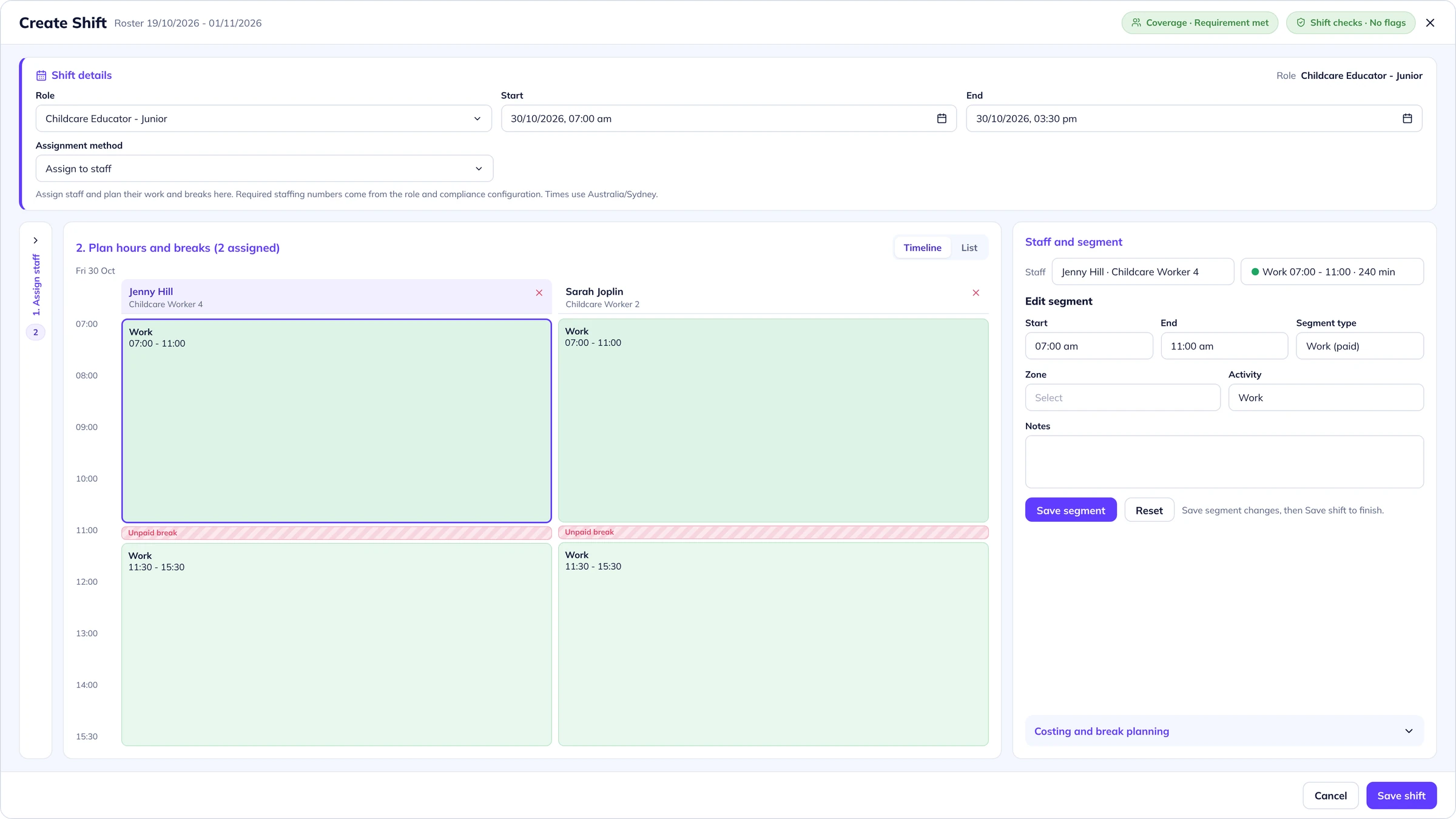
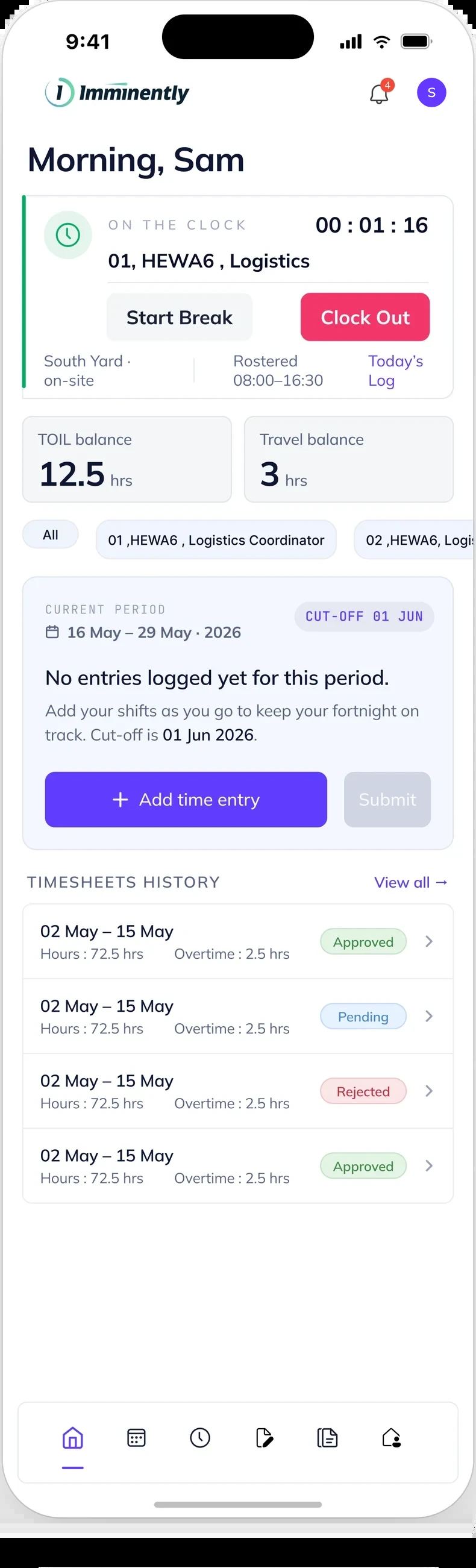
Two qualified educators assigned with the staffing requirement met, and an educator on the clock in the app.
THE SCHOOL WORKFORCE
One agreement, many ways of working.
A single school system agreement usually covers several cohorts in separate parts, each with its own model of hours and pay. Early learning often sits under a separate employer and agreement.
Class time
Teachers
An attendance model built around scheduled class time, with maxima by sector, planning time, yard duty, relief cover for absent colleagues and time in lieu for camps and school activities.
Class-time maxima
Camps and activities
Relief cover
Teacher registration
Daily
Casual relief teachers
Daily engagements, often at a rate pegged to the award, deployed at short notice to cover absences.
Short-notice deployment
Registration
Working with children check
Term time
Education support staff
Aides, administration, wellbeing and health staff, often on term-time arrangements with paid non-term weeks and a recall allowance when called in during the holidays.
Term-time annualisation
Holiday recall
Overtime or time in lieu
Shifts
Operational and grounds staff
Maintenance, grounds, cleaning and bus drivers, with weekend, shift and broken-shift loadings, on call with recall minimums, and resident caretaker arrangements.
Shift loadings
On call
Recall minimums
Leadership
Principals and positions of leadership
Principals, deputies and positions of leadership, with allowances and loadings set by the agreement, and acting arrangements during absences.
Leadership allowances
Higher duties
Ratios
Early learning
Long day care and kindergarten, frequently run by a separate entity under its own agreement, with educator-to-child ratios by age group, qualification requirements and an early childhood teacher by service size.
Ratios by age group
Qualifications
Separate agreement
THE INSTRUMENTS
A comprehensive agreement over the award floor.
Non-government school systems are national system employers. Their operative instrument is usually a comprehensive enterprise agreement, sometimes covering several employers, that carries its own salary schedules and sits over the education awards without excluding them, so the awards apply where the agreement is silent.
01
National Employment StandardsFair Work Act 2009
The statutory minimum beneath every instrument.
The floor
02
The education awardsTeachers, school general staff and children’s services
The modern award floor for teachers, for non-teaching school staff and for early childhood educators.
Apply where the agreement is silent, and peg some rates
03
The enterprise agreementCohort parts
Teachers, leadership, education support, operational staff and office staff in separate parts, each with its own hours, pay and allowances.
Governs each component with its own rate
04
Employer policiesCamps, on call, close-down, accreditation
The policies that bound pay, conditions or who may be rostered, such as camps and excursions, on-call and accreditation to teach.
In scope where they affect pay or rostering
05
Early learning agreementA separate entity
Early learning centres often run under their own employer, agreement and the children’s services award.
A separate instrument and workstream
Clause typeWhat it providesWhat makes it hardWhat our product does
What it providesMaximum scheduled class time by sector, sometimes averaged over a week, with reductions for early-career teachers.
What makes it hardPart-time teachers are paid on a class-time ratio, not a simple fraction.
What our product doesHolds each teacher’s scheduled load against the maxima and the part-time basis the agreement uses.
What it providesTime in lieu for camps and activities, at different rates for time on duty and on call, with deadlines for taking or paying it out.
What makes it hardEach activity creates a balance with its own deadline.
What our product doesLedgers record the activity, accrue time in lieu at the right rate and warn before the deadline.
What it providesRelief cover by colleagues and casual relief teachers engaged by the day, often at an award-pegged rate.
What makes it hardThe rule sits in the agreement, the rate in the award.
What our product doesWires the rule from the agreement and reads the rate from the award, so a change to either flows through.
What it providesAnnualised categories for education support staff, with paid non-term weeks and a recall allowance.
What makes it hardHours worked in a holiday change what is owed.
What our product doesApplies the category for the period and the recall allowance when staff are called in.
What it providesWeekend, shift and broken-shift loadings, on-call allowances and recall minimums for operational staff.
What makes it hardEach call and each break in a shift is a separate fact.
What our product doesRecords shifts, breaks and calls, and applies each loading and minimum.
What it providesEducator-to-child ratios by age group, qualification mix, teacher registration and working with children checks, which differ by state.
What makes it hardAn unqualified or unchecked person cannot count toward the requirement.
What our product doesCredentials are held with expiry dates, and an assignment that lacks a mandatory credential is flagged as invalid.
SYSTEMS AND INTEGRATION
Keep your HR, payroll and timetable.
Your HR system stays the source of people, positions and leave; the timetable stays in the student system; payroll keeps paying. Our product rosters the work that needs it, captures the time, applies the agreement and returns payroll-ready outcomes.
From your systems
People and credentials
Employees, positions and the reporting hierarchy
Work patterns and term calendars
Pending and approved leave
Teacher registration, working with children checks and first aid, with expiry dates
Imminently Attendance Management
Rosters, Timesheets and Awards
Coverage and ratios checked as the roster is built
Time captured on the phone, by the method each site allows
The agreement applied for each cohort
Ledgers for time in lieu from camps and activities
To payroll
Payroll-ready outcomes
Pay codes, hours and units
Allowances, loadings and recall payments
Separate outputs for a separate early learning entity
TodayTime in lieu tracked on paper or in spreadsheets, and missed deadlines.
With our productClaims and time in lieu recorded in one place, at the right rate, with warnings before the deadline.
Early learning rosters
TodayRatios checked by hand at the start of the day.
With our productCoverage checked against the staff each role requires, room by room, with unqualified assignments flagged as invalid.
Credentials
TodayA lapsed check found after the shift.
With our productAn assignment flagged as invalid where a mandatory credential is not recorded; reminders before a check lapses can be configured with you.
Two instruments
TodayRates read from the award by hand when the agreement refers to it.
With our productThe rule from the agreement and the rate from the award, both maintained.
Evidence
TodayPay decisions that cannot be explained later.
With our productA determination report for every work period, linked to the clauses relied on.
A WEEK IN A SCHOOL SYSTEM
An early learning week, screen by screen.
Rostering an early learning service to its ratios, an educator’s day on the phone, excursion claims and leave.
Manager, staff and approver
From the roster to an approved claim.
01 / 09
Imminently Rosters · two-week roster
Step 01 of 09 · Manager
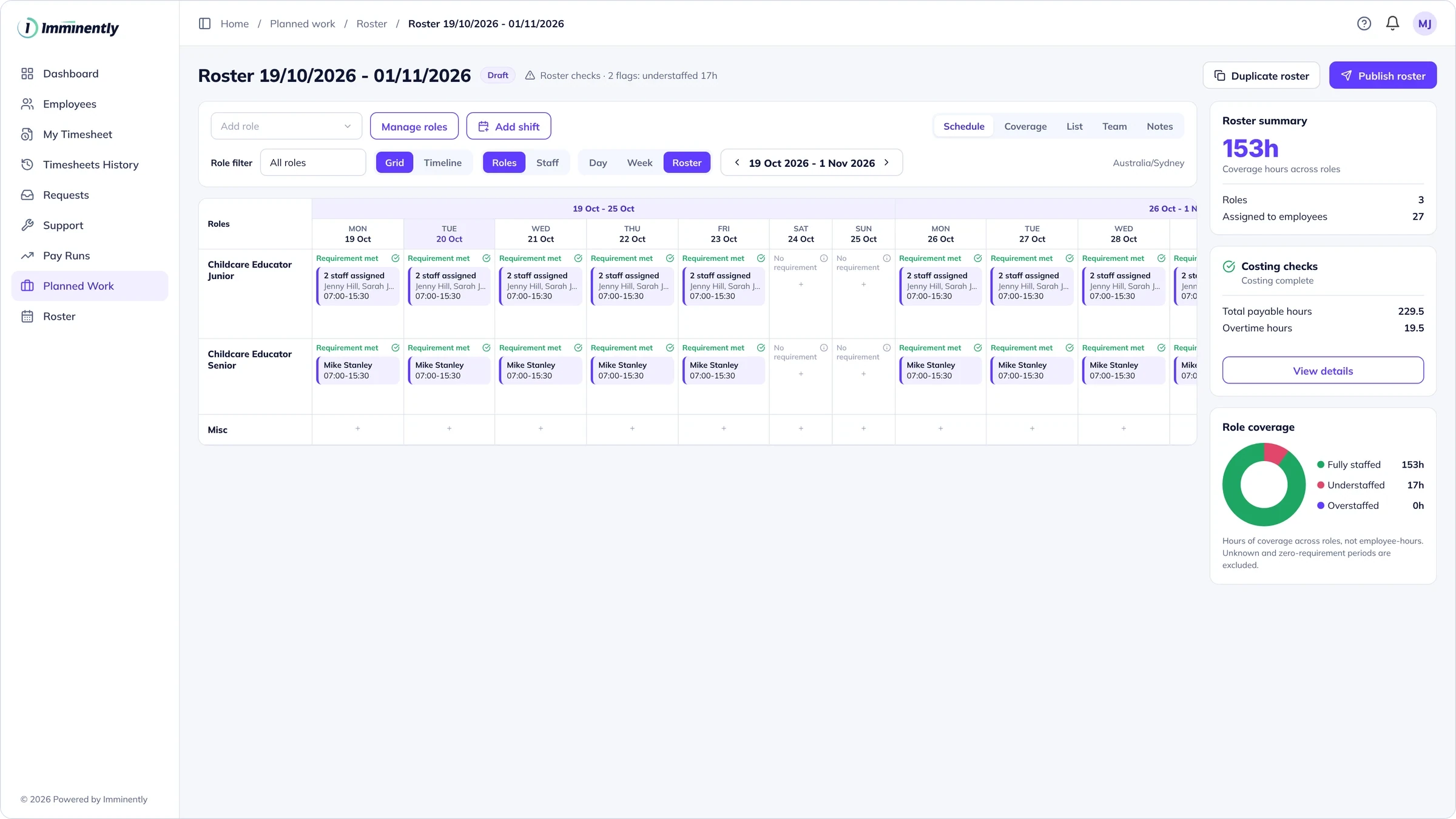
Each day shows whether the requirement is met.
A two-week roster by role for an early learning service. Days that are understaffed are marked before anyone is rostered.
Imminently Rosters · create shift
Step 02 of 09 · Manager
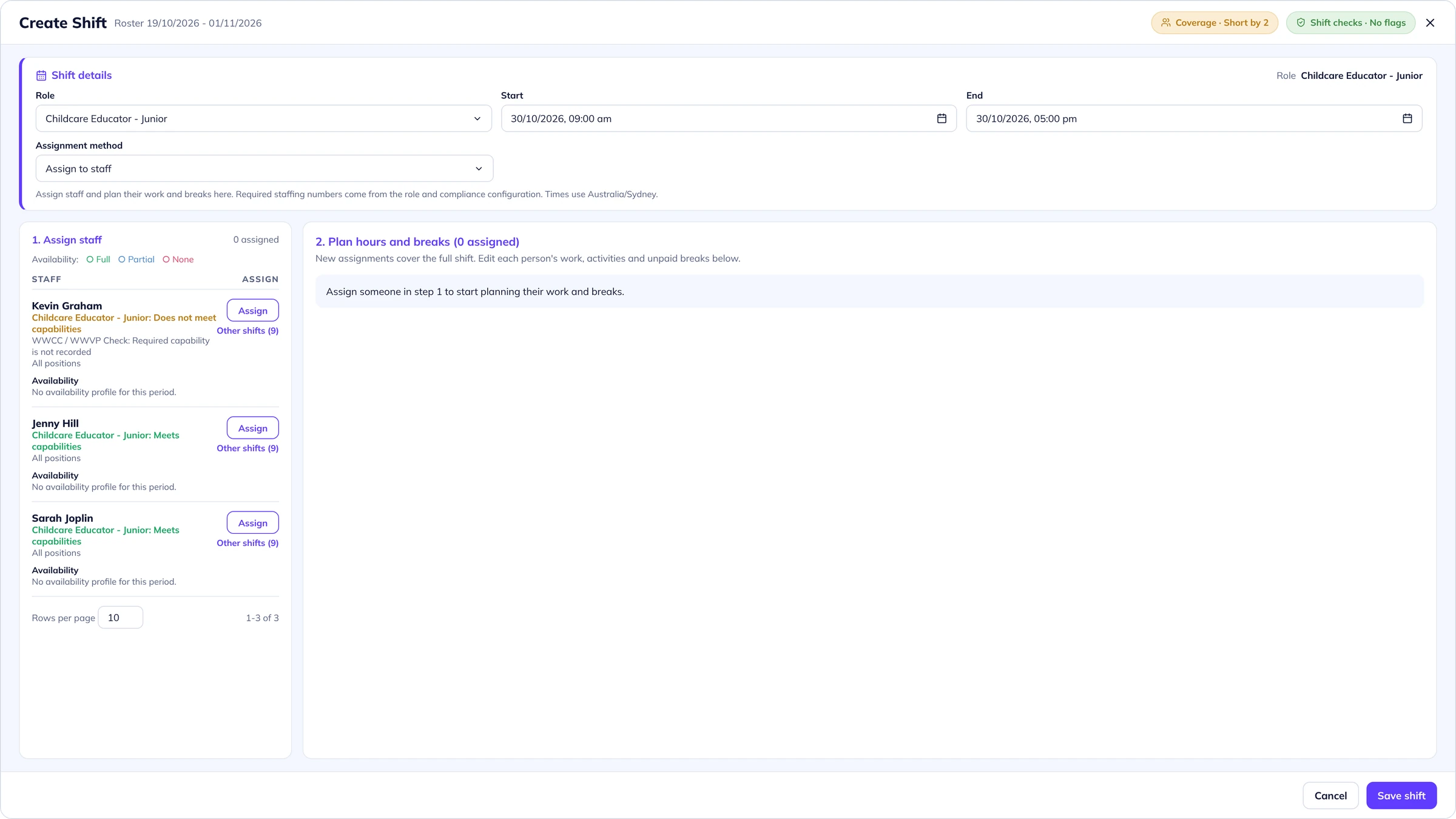
Every person is checked against the role.
Creating the shift, each person is checked against the role’s required capabilities, such as qualifications and checks, as they are assigned.
Step 03 of 09 · Employee
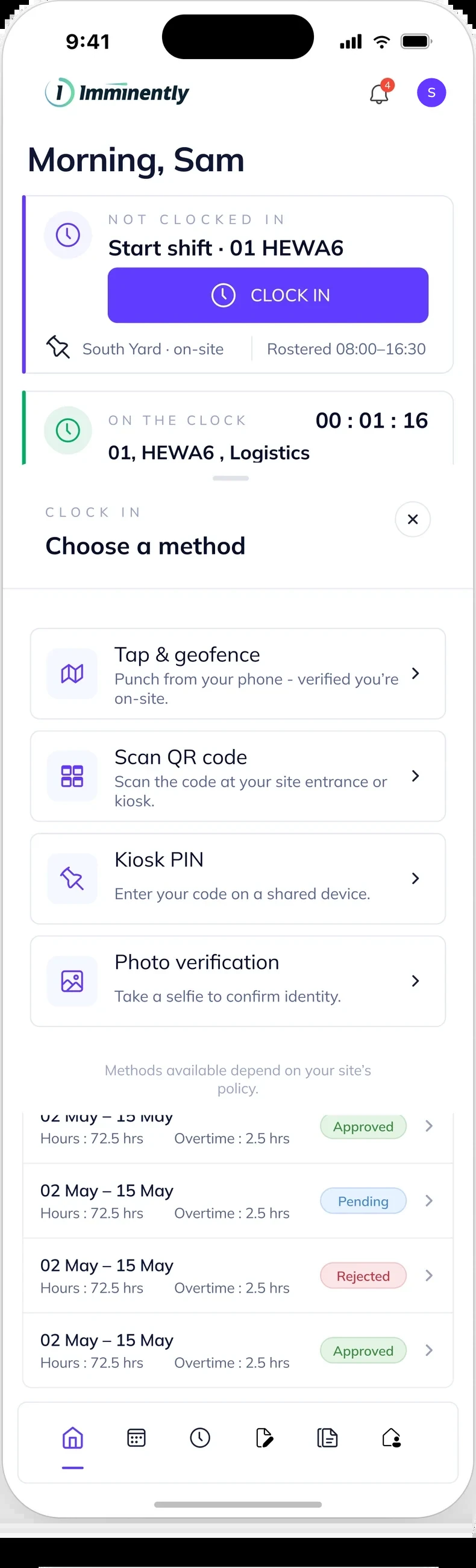
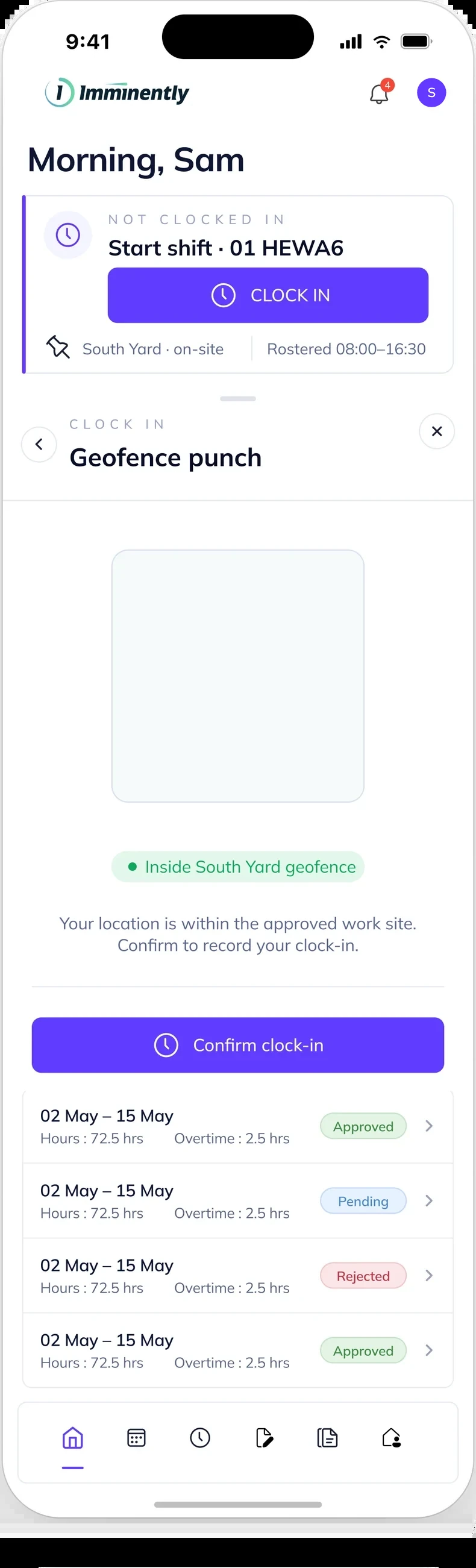
Clock in the way the centre allows.
At arrival, the educator clocks in on their own phone by the method the centre’s policy allows, here inside the centre’s geofence.
Imminently Rosters · invalid assignment
Step 04 of 09 · Manager
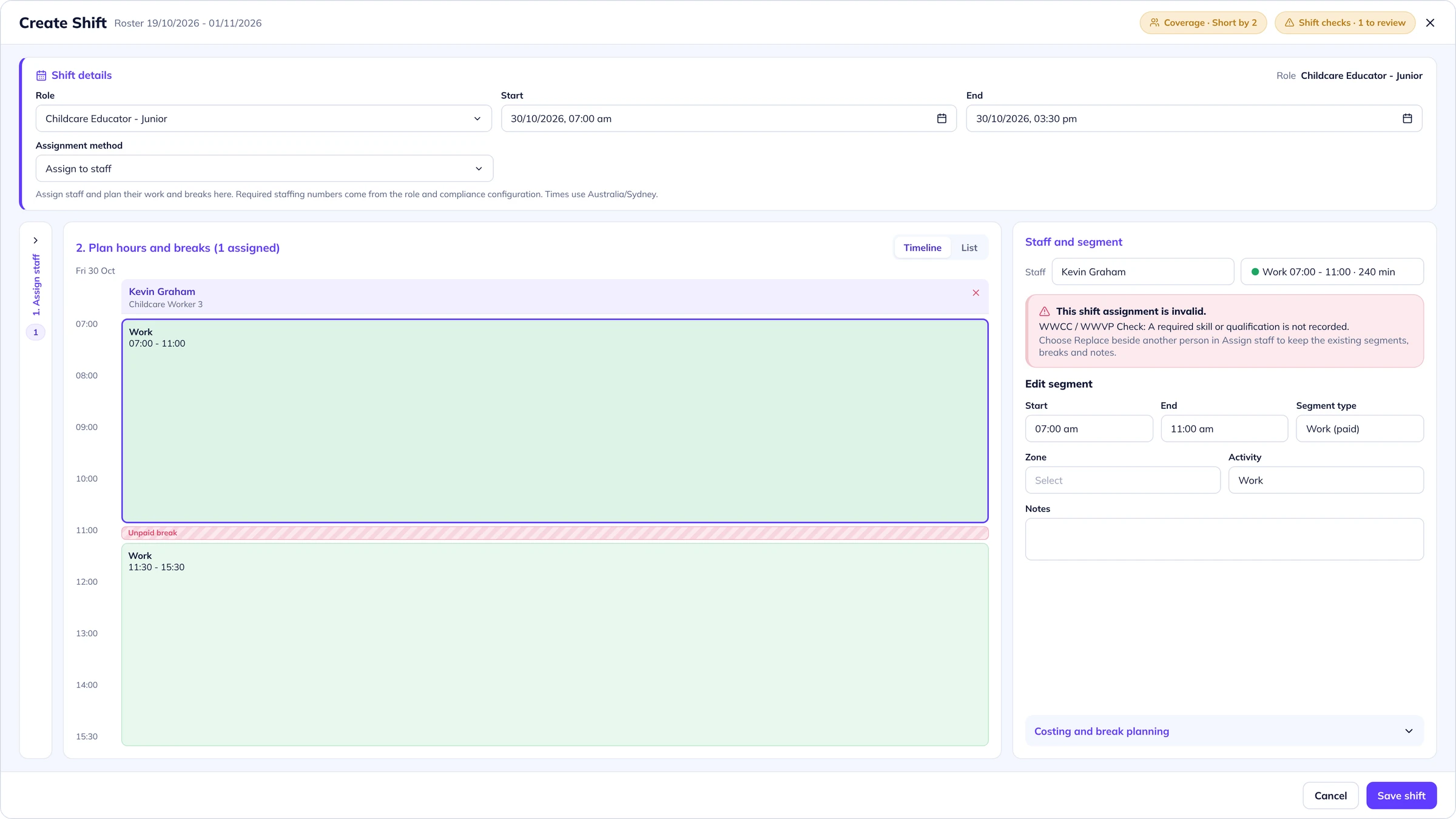
An educator without a recorded check is flagged.
Assigning someone without a recorded Working with Children Check is flagged as invalid before the shift is saved, with the way to fix it, so a missing or lapsed check is seen before the roster relies on it.
Step 05 of 09 · Employee
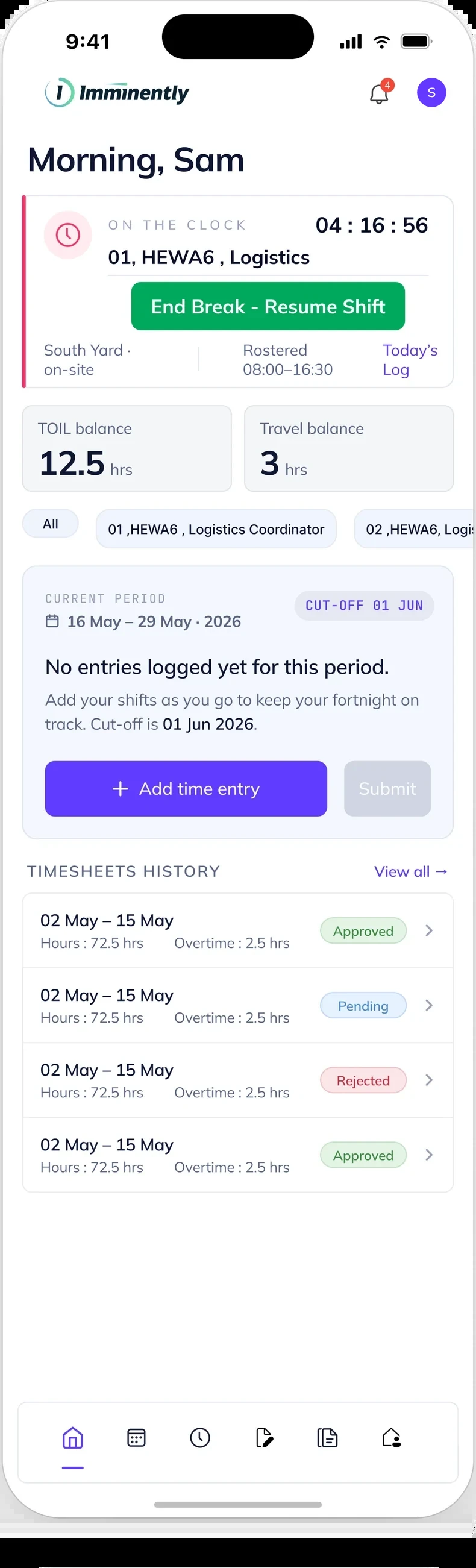
Breaks recorded as they happen.
The educator starts the break in the app, then ends it and resumes the shift, so the time on the floor is known for the ratios.
Step 06 of 09 · Employee
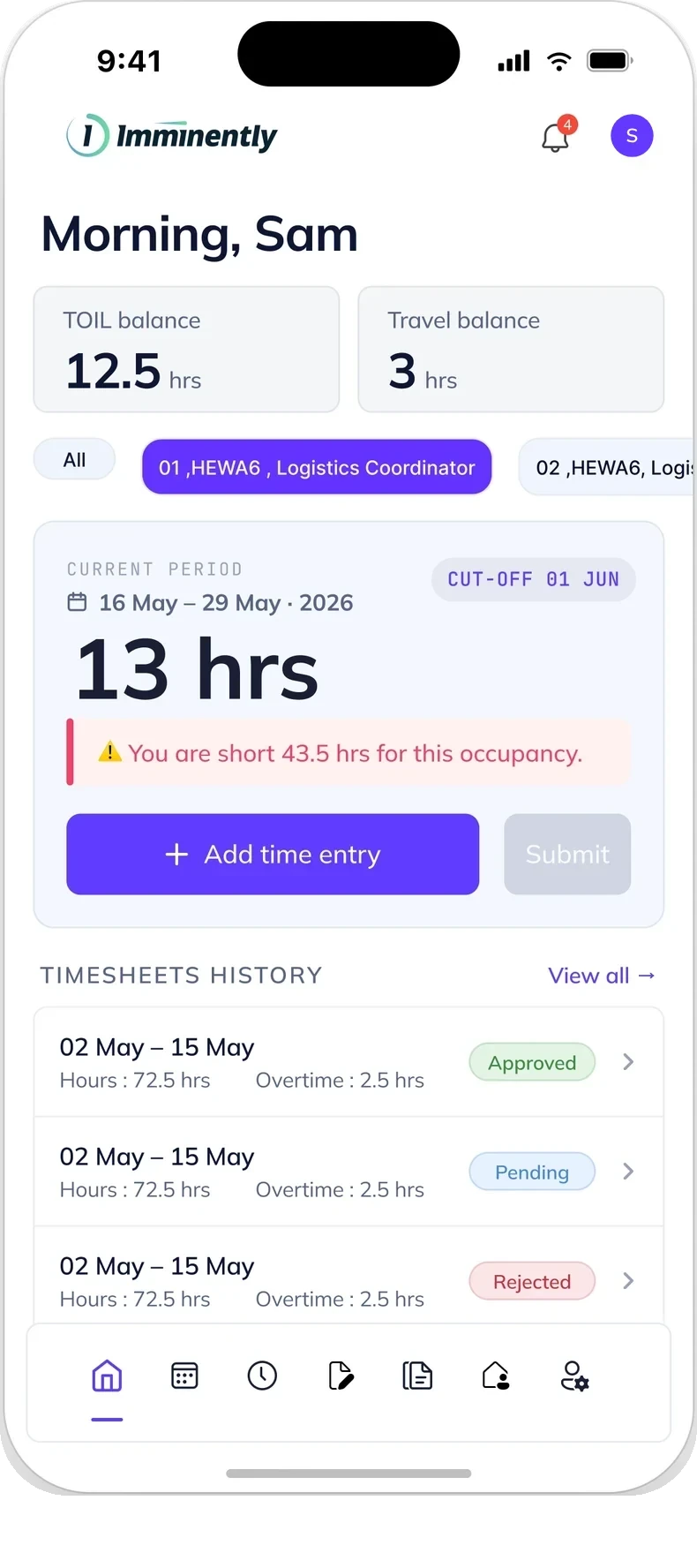
The hours for the period, in view.
The educator sees the hours logged for the period and any shortfall for the position before the timesheet is submitted.
Imminently Timesheets · claims and leave
Step 07 of 09 · Employee
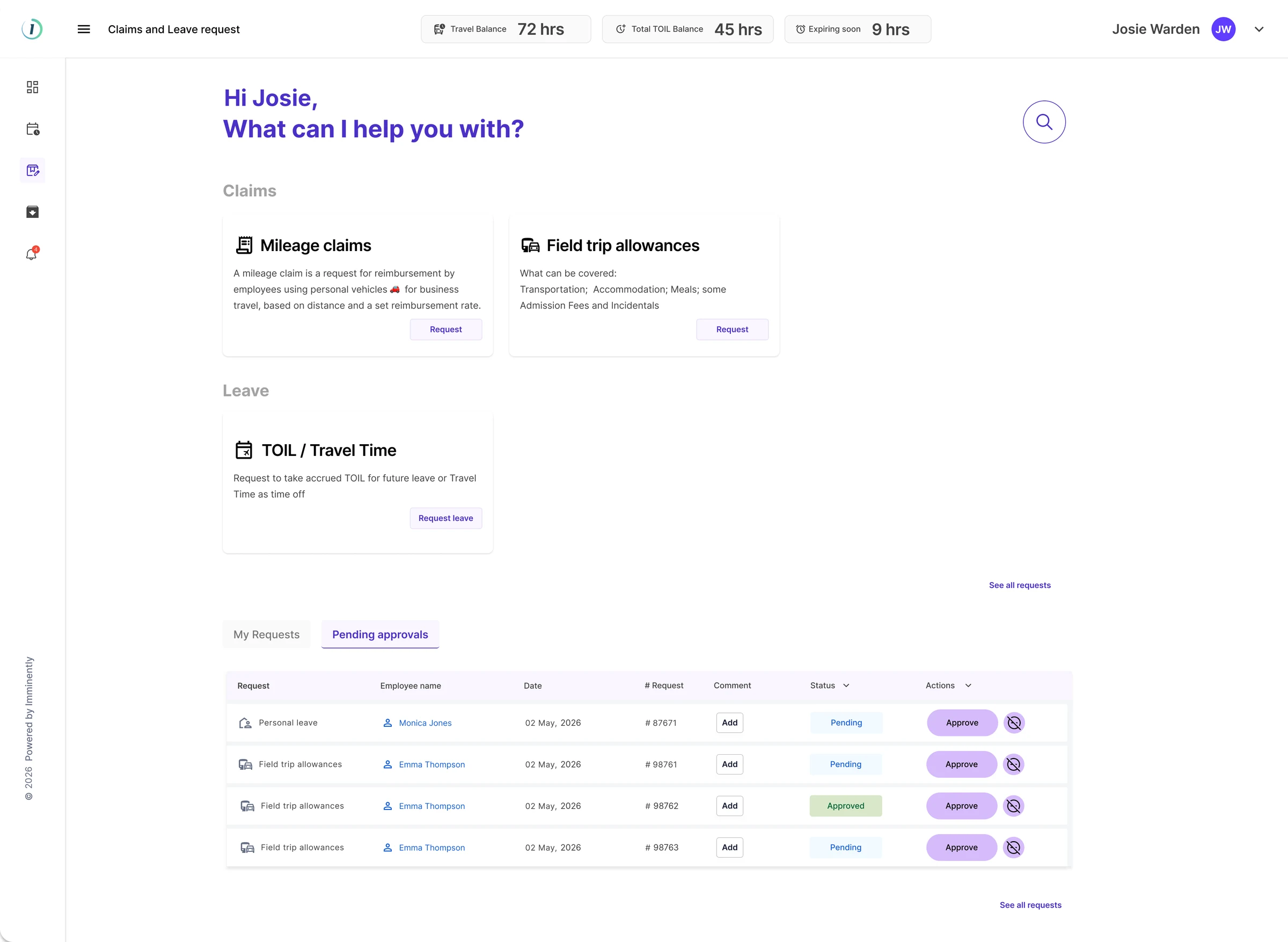
Claims and requests in one place.
Mileage and field trip allowances, time in lieu and travel time requests start from one page, with pending approvals beneath.
Step 08 of 09 · Employee
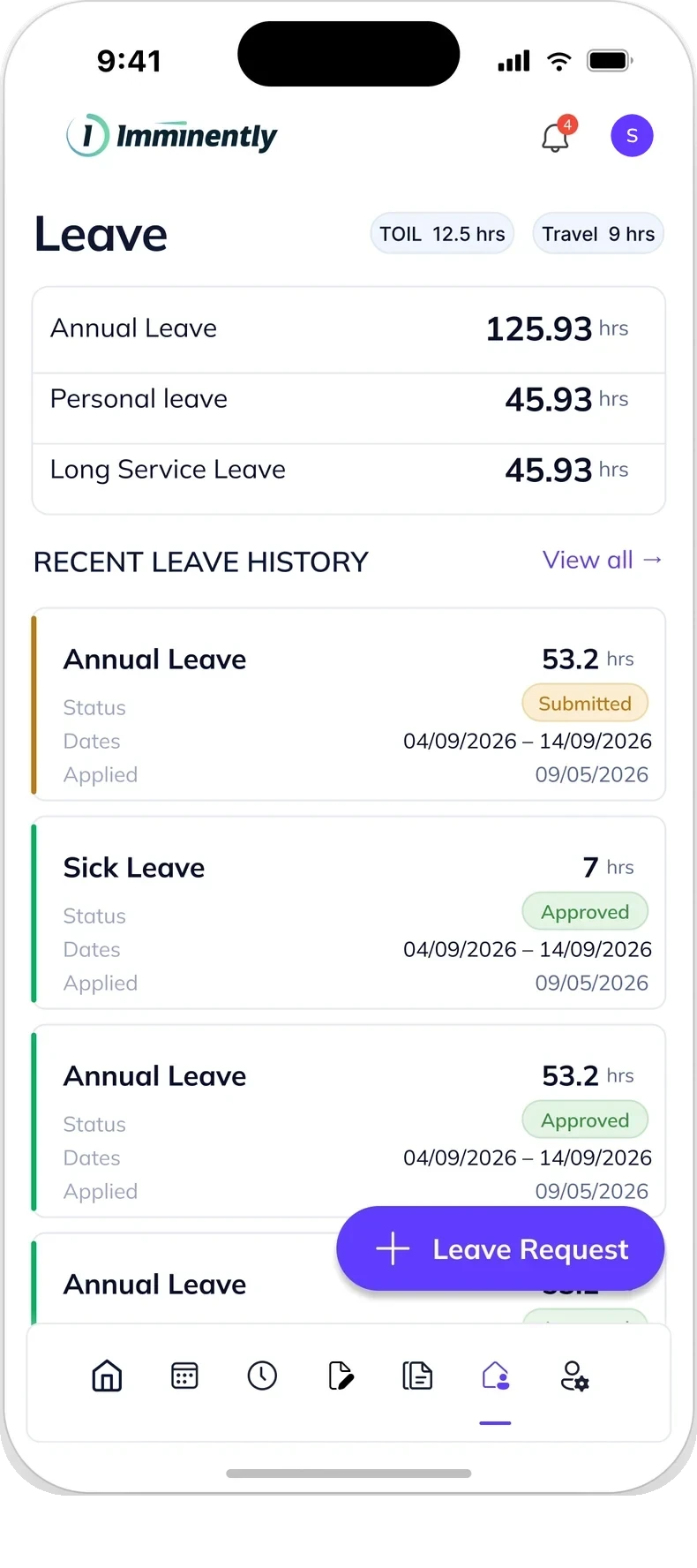
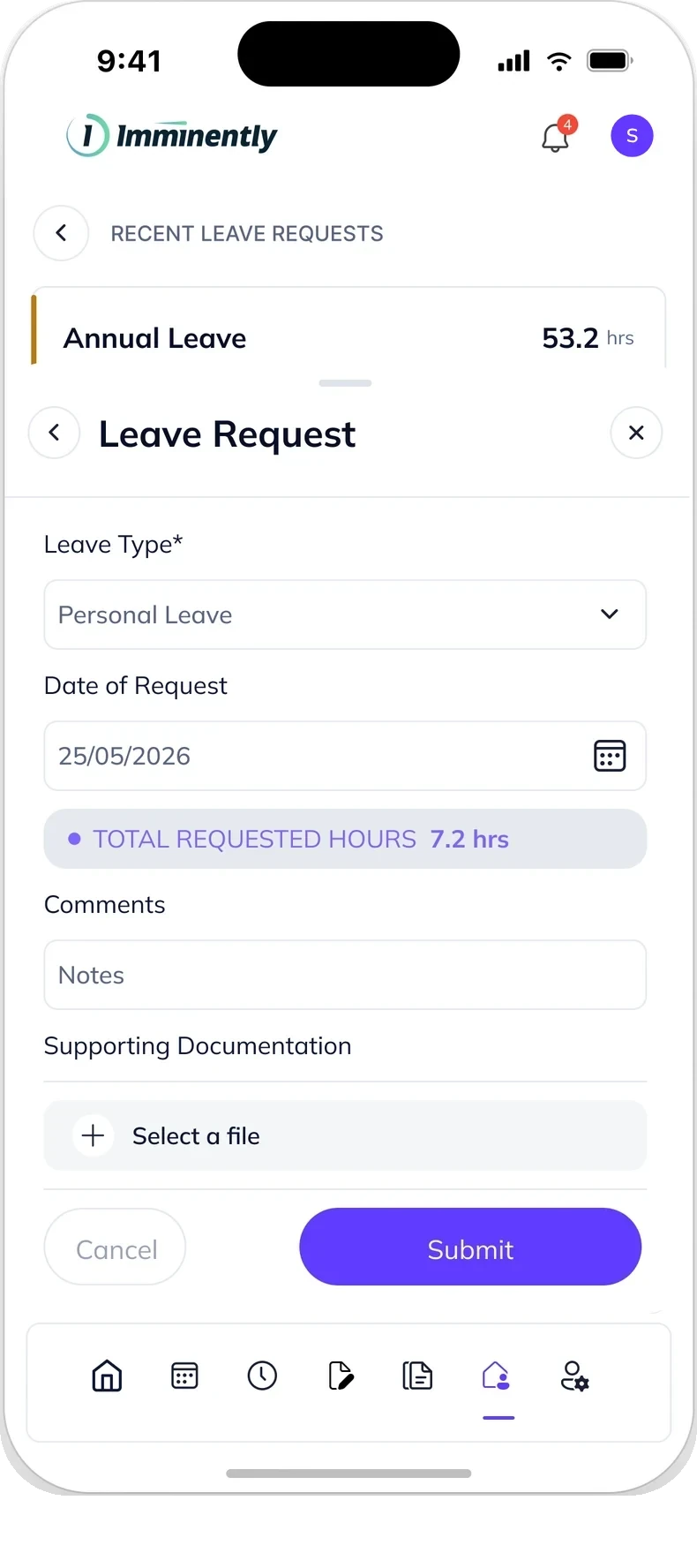
Know the balance, then ask.
Leave balances and recent history, then a request with its type, dates, hours, comments and supporting documents.
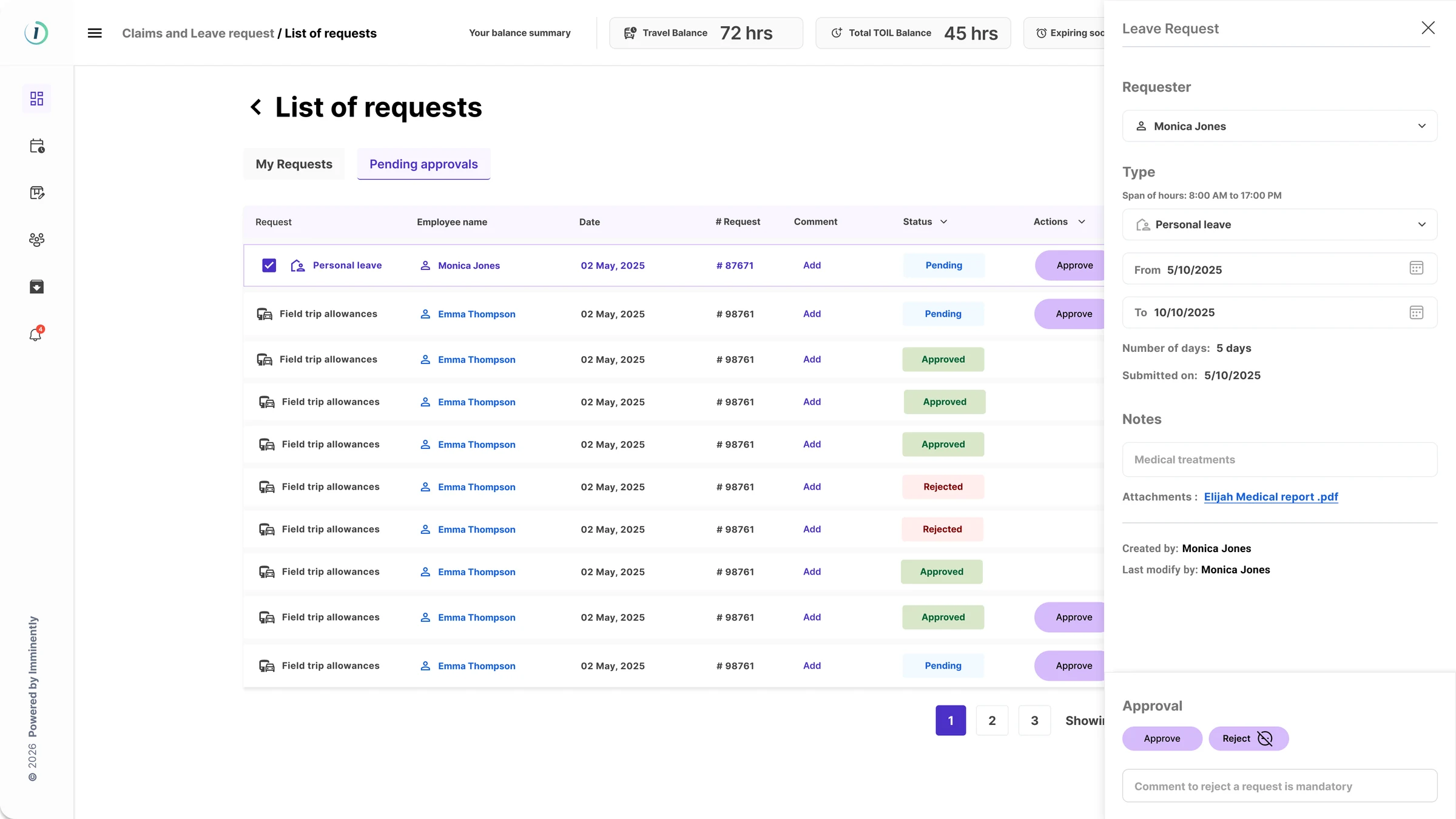
Imminently Timesheets · approve a request
Step 09 of 09 · Approver
The approver sees the evidence.
The request opens beside the list with its dates, notes and attachment. Approving is one click; rejecting needs a comment.
People and the centre shown are examples.
HOW WE START
A scoping method built for school systems.
Education employers are multi-entity, multi-cohort and multi-instrument by design. Our method starts with who employs whom under which agreement, before any rule is built.
What we establish first
The employing entities: the schools company, any separate early learning company, colleges and the office.
The operative agreements and the award floor beneath each cohort, with the places the agreement defers a rate to an award.
Every pay and condition component, cohort by cohort, tagged to the clause, including those that sit with payroll rather than interpretation.
The rostering use cases: teacher registration and working with children checks by state, ratios, casual relief deployment, camps and operational on call.
Services run by contractors, such as outside school hours care, recorded as out of scope.
Every assumption, recorded for your confirmation.
How it goes live
01Mobilise
Agree the boundaries, owners, governance and the delivery plan.
02Plan
Map the entities, agreements, cohorts and components, and confirm the assumptions with you.
03Deliver
Digitise the agreement and the award references, and configure ledgers, roster models and pay codes.
04Test
Scenario testing cohort by cohort, user acceptance and a parallel pay run.
05Deploy
Go live by module or by cohort, on the same tenancy.
06Operate
Agreement and award changes applied, tested and released as part of the service.
PROOF
Built with education, in production in education.
Co-designedWith the education sector
Our timesheets were co-designed with Queensland University of Technology (QUT) and the education sector, so several appointments, casual engagements and minimum engagement are handled as standard.
In productionMore than 7,000 staff
Our timesheets, with Awards, run at QUT for more than 7,000 professional, casual and sessional staff under two enterprise agreements.
AssuranceISO 27001 and SOC 2 Type 2
Data processed and stored in Australian data centres, each customer in its own tenancy with separate environments.
SERVICES AS SOFTWARE
Your agreement is part of the service.
We provide, digitise and maintain your in-scope agreements and the award references they rely on. Your organisation confirms its interpretations, data and acceptance decisions.
No. It concerns employees, their work and the instruments that decide their pay.
Does it replace timetabling?
No. Timetabling stays in your student system. Scheduled activity can be integrated where it helps employees confirm their work.
Can early learning run under its own agreement and entity?
Yes. A separate entity is configured with its own agreement, roster models, ratios and payroll output.
How are camps handled?
Camp and activity time is recorded against the activity, accrued as time in lieu at the rate the agreement sets for time on duty or on call, and tracked to its deadline.
Can staff use their phones?
Yes. Staff clock in on the Imminently app, on iOS or Android, by the method the site allows. Arrangements such as a shared kiosk where people arrive together, or check-ins room by room, can be configured with you.
How is Higher Education different?
The Higher Education page covers multiple appointments, professional staff and sessional academic work.
See it in your context
Bring a real school term.
Bring your agreement, a camp, a relief day and an early learning roster. We will show them in our product, clause by clause.