Office and policy staff
Flextime within a bandwidth, flex balances and settlement, working from home and part-time arrangements.
- Flex balances
- Working from home
Service-wide bargaining brought common conditions to the Australian Public Service, but each agency still interprets and pays its own enterprise agreement, across shift-based operations, field staff and offices on flextime. Our product applies each agreement, with the clause behind every outcome, inside the systems agencies already run.
Within one agency, the same agreement is applied to people working very differently.
Flextime within a bandwidth, flex balances and settlement, working from home and part-time arrangements.
Classification decides whether extra hours earn paid overtime or time off in lieu.
Shift rosters, weekend and night work, restriction and on-call arrangements.
Travel, field allowances and extended days away from a fixed site.
Acting arrangements that change pay, approval rights and sometimes the instrument provisions that apply.
Fixed-term and casual engagements with their own hours and loadings.
Agency enterprise agreements made under service-wide bargaining share common conditions, with each agency’s own provisions, determinations, policies and individual flexibility arrangements beneath them. Since 1 January 2025, intentional underpayment of wages has been a criminal offence under the Fair Work Act, which raises the bar for proving that every payment is lawful.
What it providesA bandwidth, flex credits and debits, settlement periods and limits on what can be carried.
What makes it hardFlex interacts with overtime and with time off in lieu.
What our product doesLedgers track flex with its limits and settlement, separately from overtime and time off in lieu.
What it providesPaid overtime for some classifications, time off in lieu for others, with pre-approval.
What makes it hardActing changes the classification and the treatment.
What our product doesApplies the treatment for the classification held on the day, and checks pre-approval at entry.
What it providesShift penalties, restriction or on-call allowances, and minimum payments for recall.
What makes it hardEach recall is its own event.
What our product doesRecords each period and each recall, and applies the allowance and minimum payment.
What it providesPayment for performing higher duties, sometimes after a qualifying period.
What makes it hardThe period can span pay runs.
What our product doesTracks the acting period and applies the higher rate when it qualifies.
What it providesArrangements varying the agreement for an individual, with the better-off test.
What makes it hardThe arrangement changes every following hour until it ends.
What our product doesManages the request, conditions, approval, application and expiry of each arrangement.
Our product adds the interpretation the ERP and payroll do not carry, by interface, without replacing them. The agency keeps its HR, payroll and shared-service provider.
TodayConditional legal language reduced to configuration tables at go-live.
With our productEach agreement applied from its own text, kept current as it changes.
TodayNo clause-level evidence that a payment was lawful.
With our productA determination report for every work period, linking each outcome to its clause.
TodayHistoric exposure reviewed by hand, once a decade.
With our productEarlier periods recalculated under the rules in force at the time, on the same engine.
TodayEvery agreement change reconfigured and retested.
With our productDate-effective versions, regression testing and future-dated activation.
the employee is working full or part-time hours outside the ordinary for the positionSatisfied
Value:trueAward 13.1 · work period Wed 4.30 pm to 6.00 pm
AllNot satisfied
Value:falseOutside the spread of hours
the position is full or part-timeSatisfied
Value:trueInput
the employee is working for the positionSatisfied
Value:trueInput
Not (the employee is working within the spread of hours for the position)Not satisfied
Value:falseInterpretation
it is during the standard spread of ordinary hoursSatisfied
Value:trueAward 12.1
it is a weekdaySatisfied
Value:trueInput
it is between 6 am and 6 pmSatisfied
Value:trueAward 12.1
AllSatisfied
Value:truePast the daily maximum
the position is full or part-timeSatisfied
Value:trueInput
the employee is working past the daily maximum of ordinary hours for the positionSatisfied
Value:trueAward 13.1
the maximum number of ordinary hours on any day (hours) = 9
Value:9Award 12.2
the overtime rate for the work period
Value:1.5Award 13.3
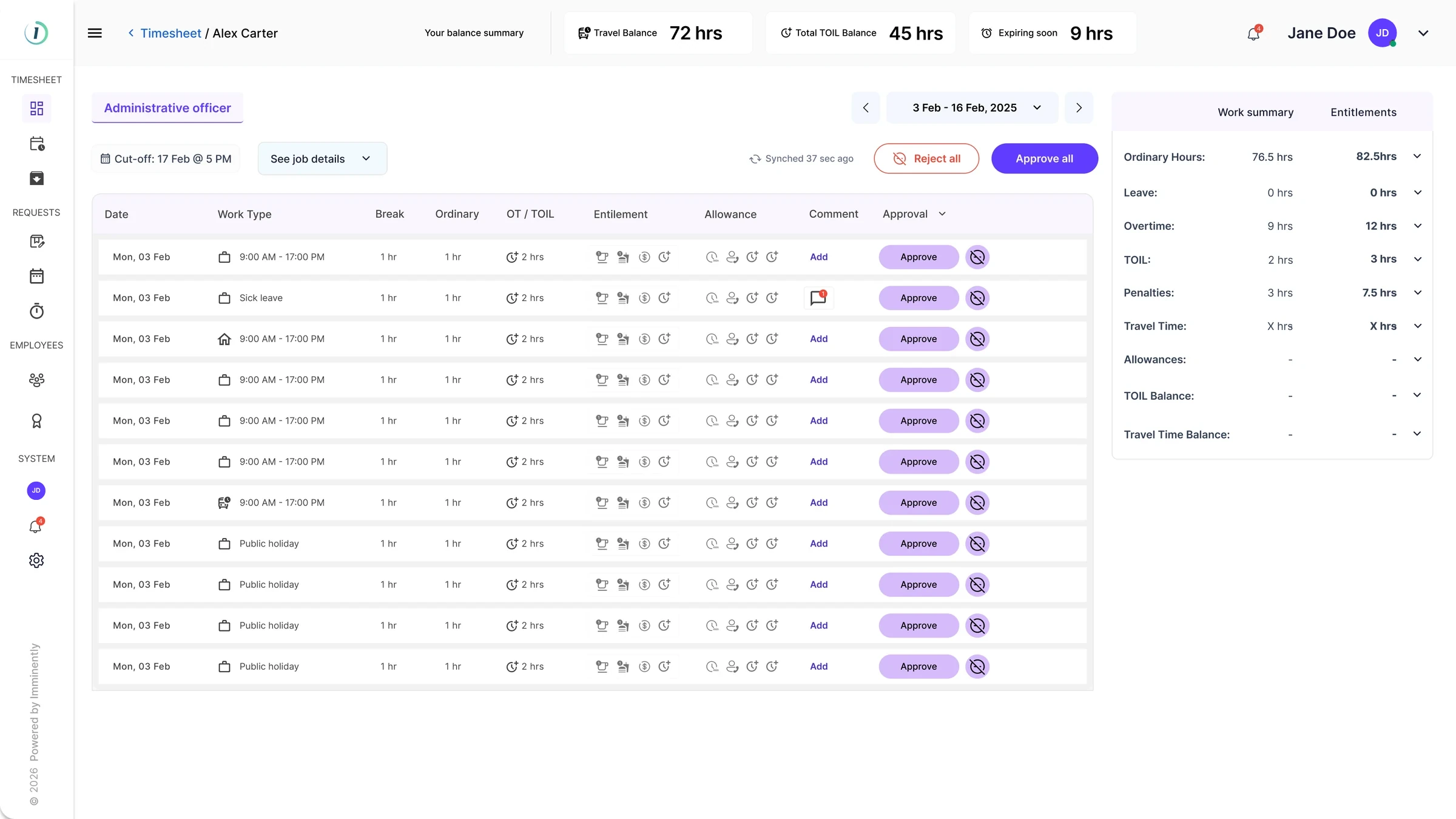
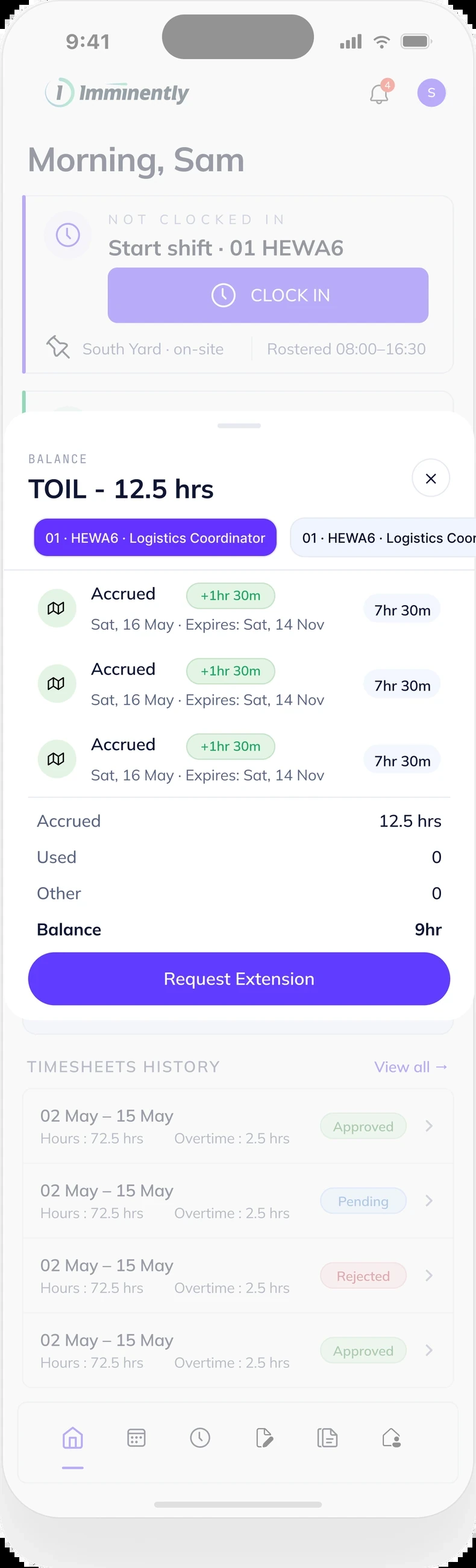
Clocking in on the phone, recording extra hours, flexibility arrangements, requests and delegated approval, through to payroll.
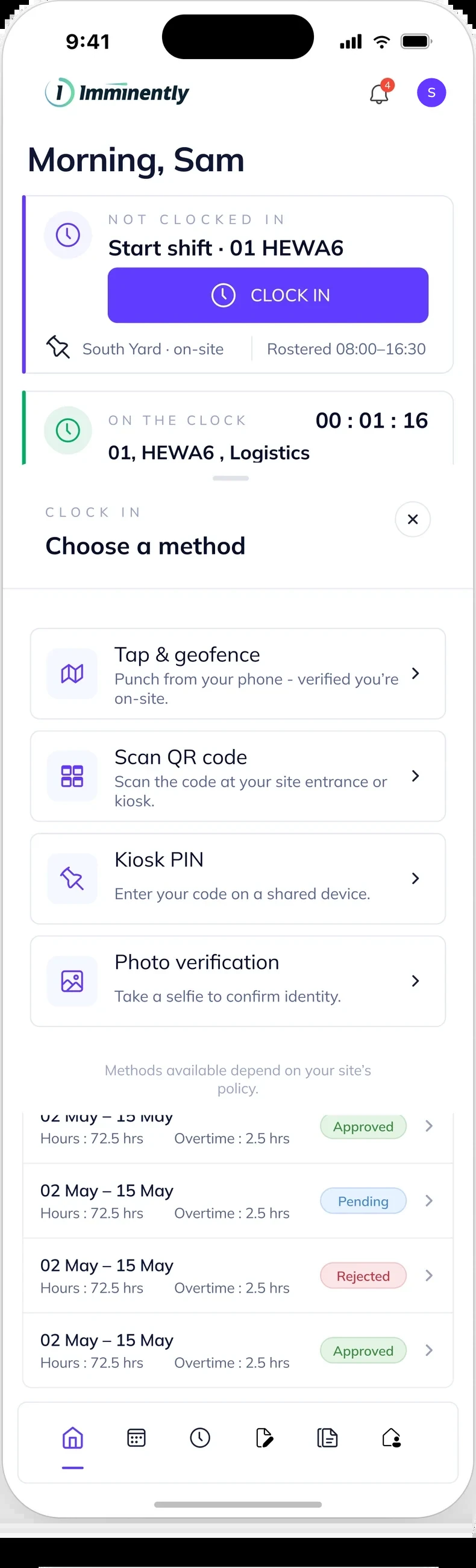
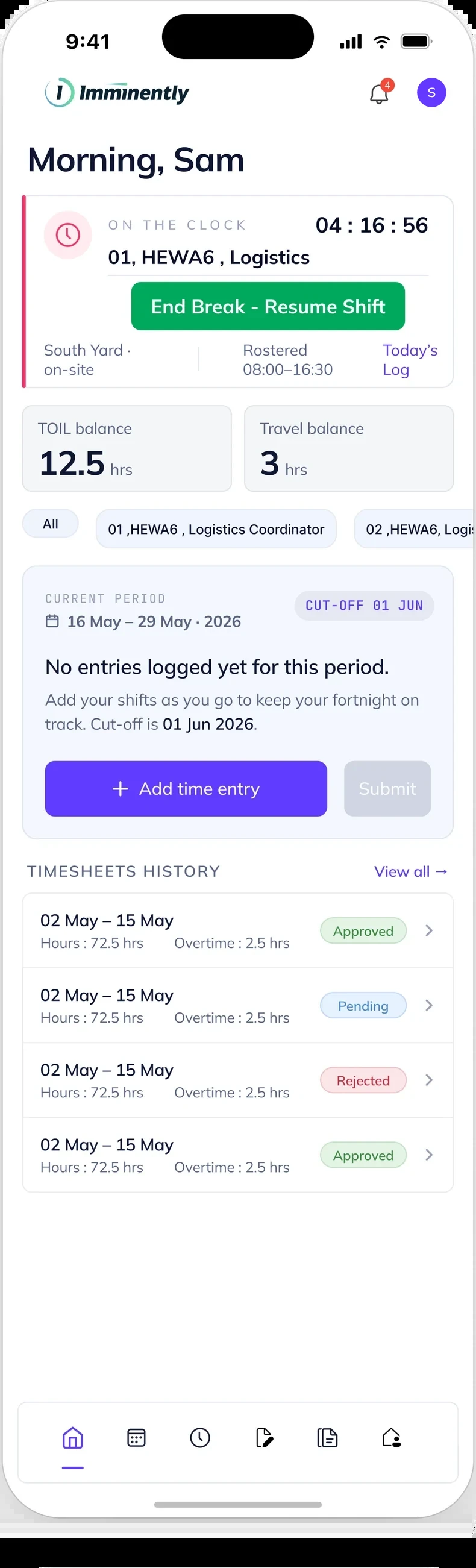
The employee chooses how to clock in, as the site’s policy allows, and starts and ends breaks in the app.
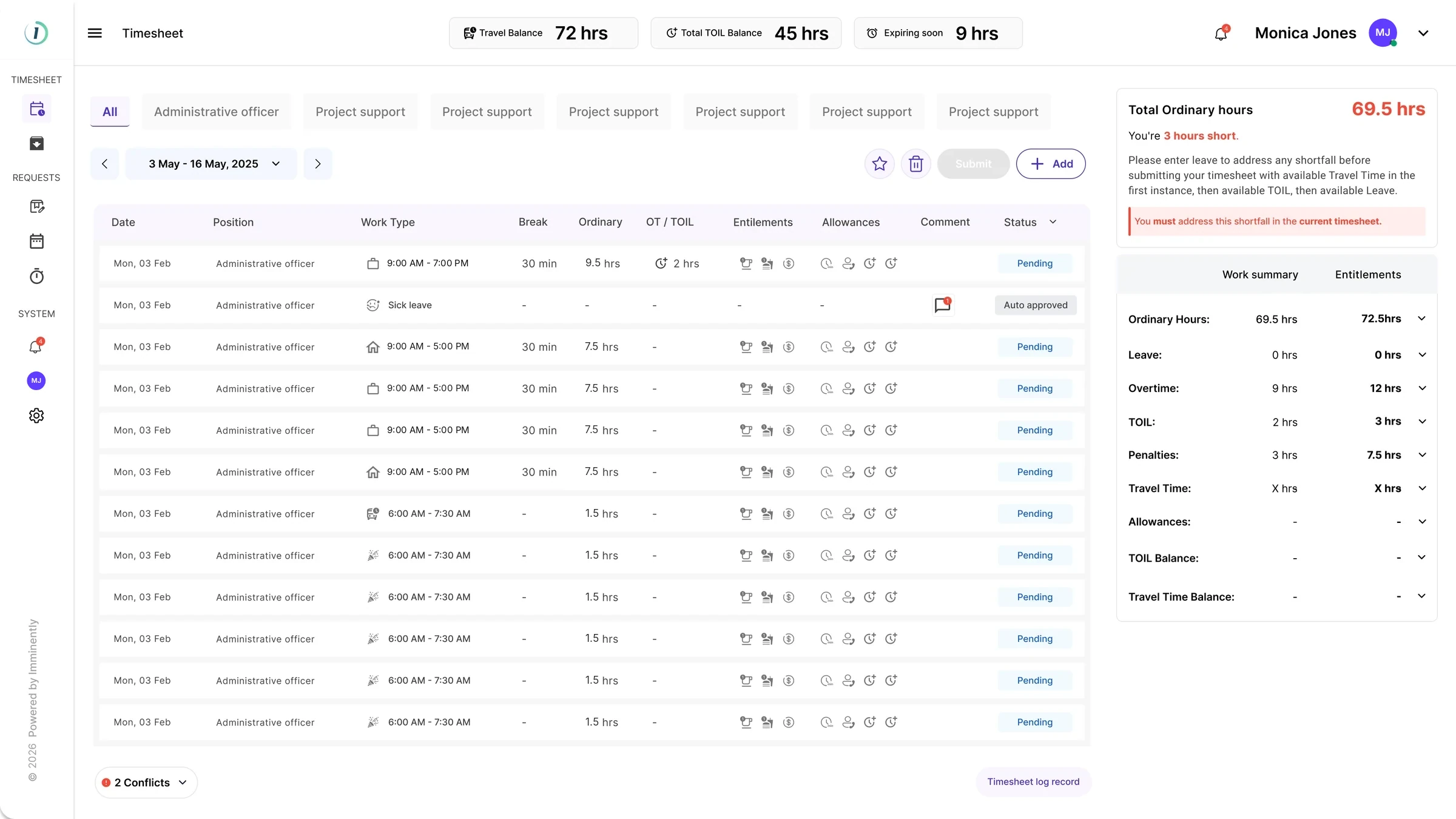
Each entry shows its break, ordinary hours, overtime or time off in lieu, entitlements and allowances, and a shortfall is shown before submission.
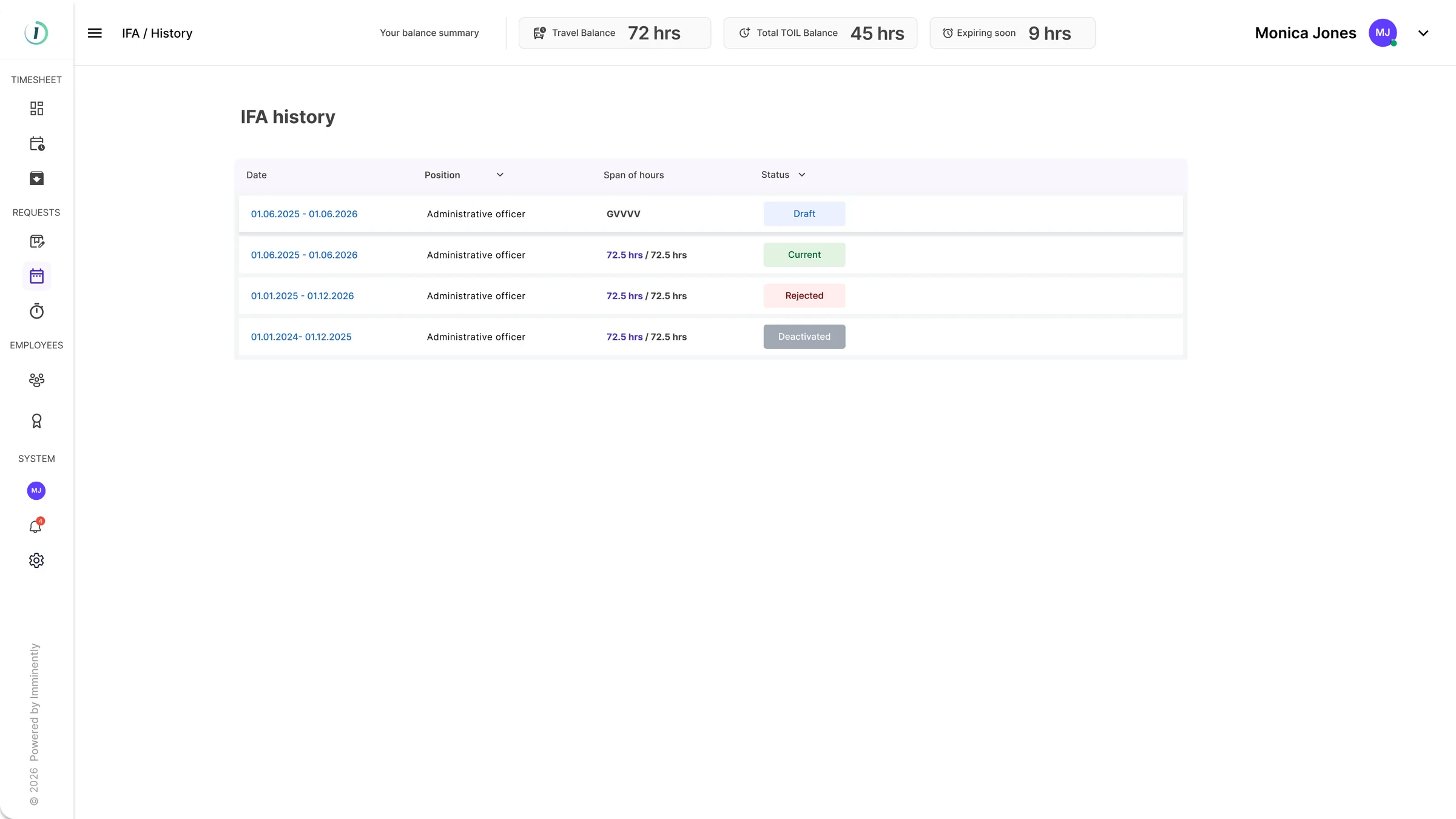
Draft, current, rejected and deactivated arrangements are kept with their dates and hours, so the hours that applied on any day can be shown.
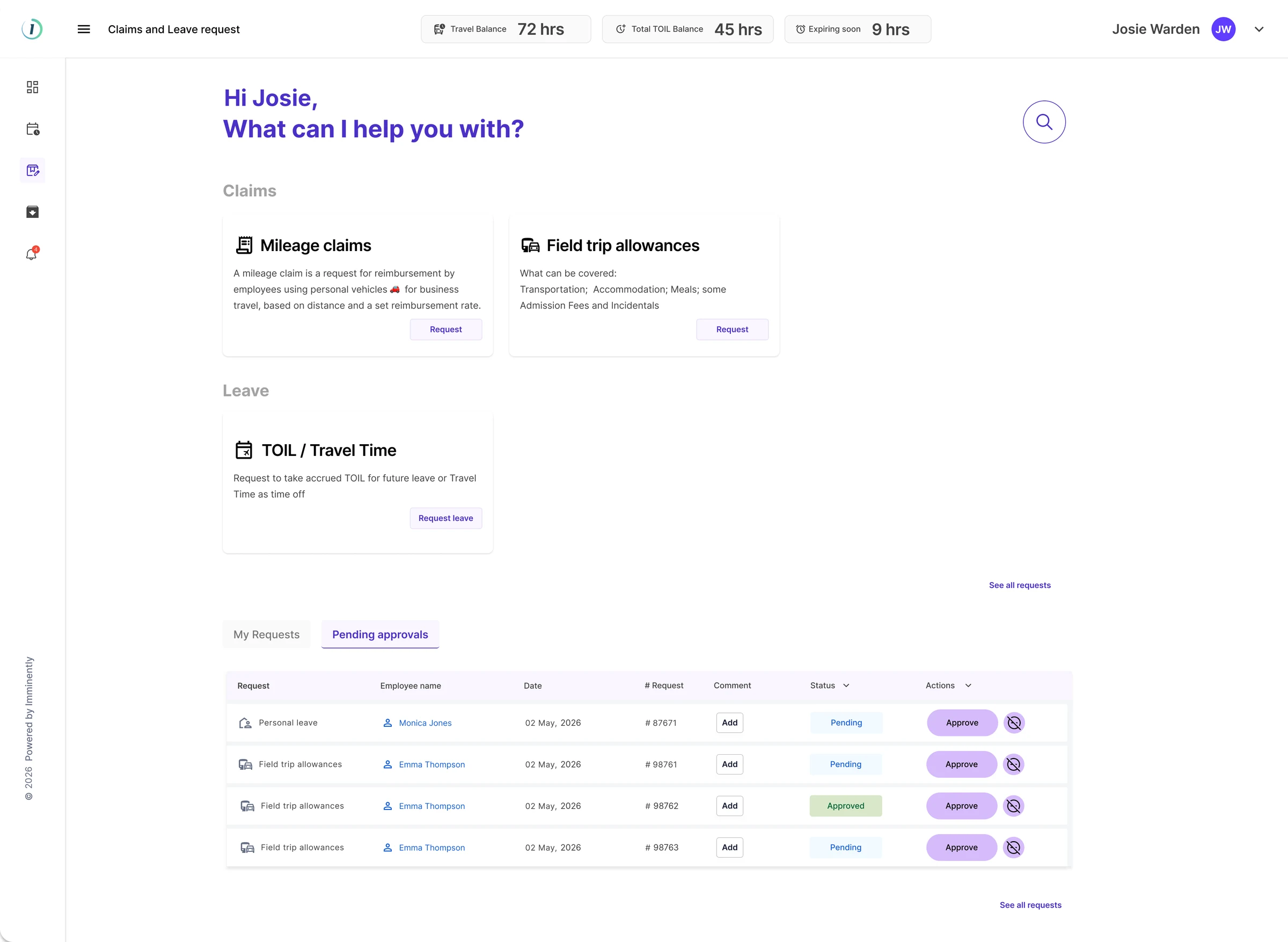
Claims and leave requests start from one page, each with its own approval route.
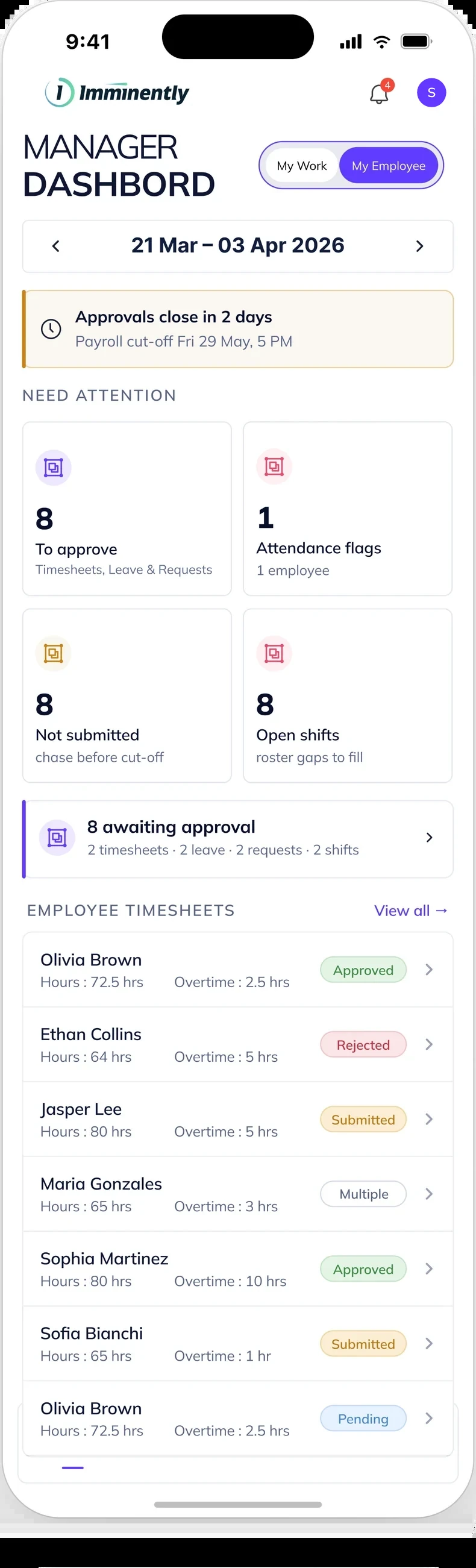
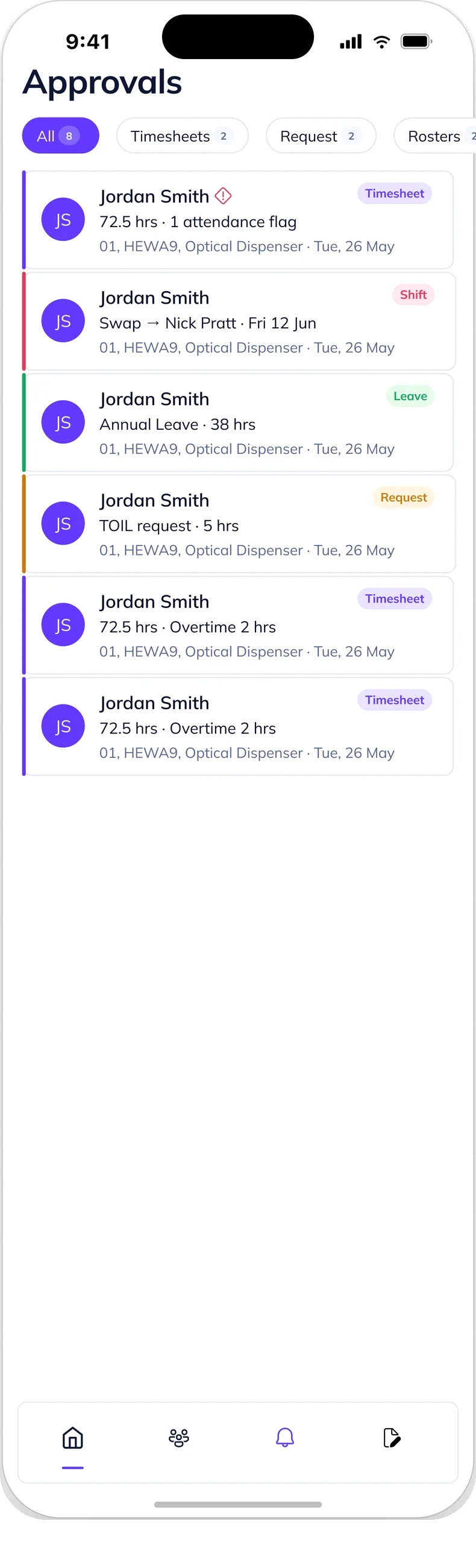
The manager sees what closes soon, what to approve and attendance flags, with one inbox for timesheets, requests, roster changes and leave.
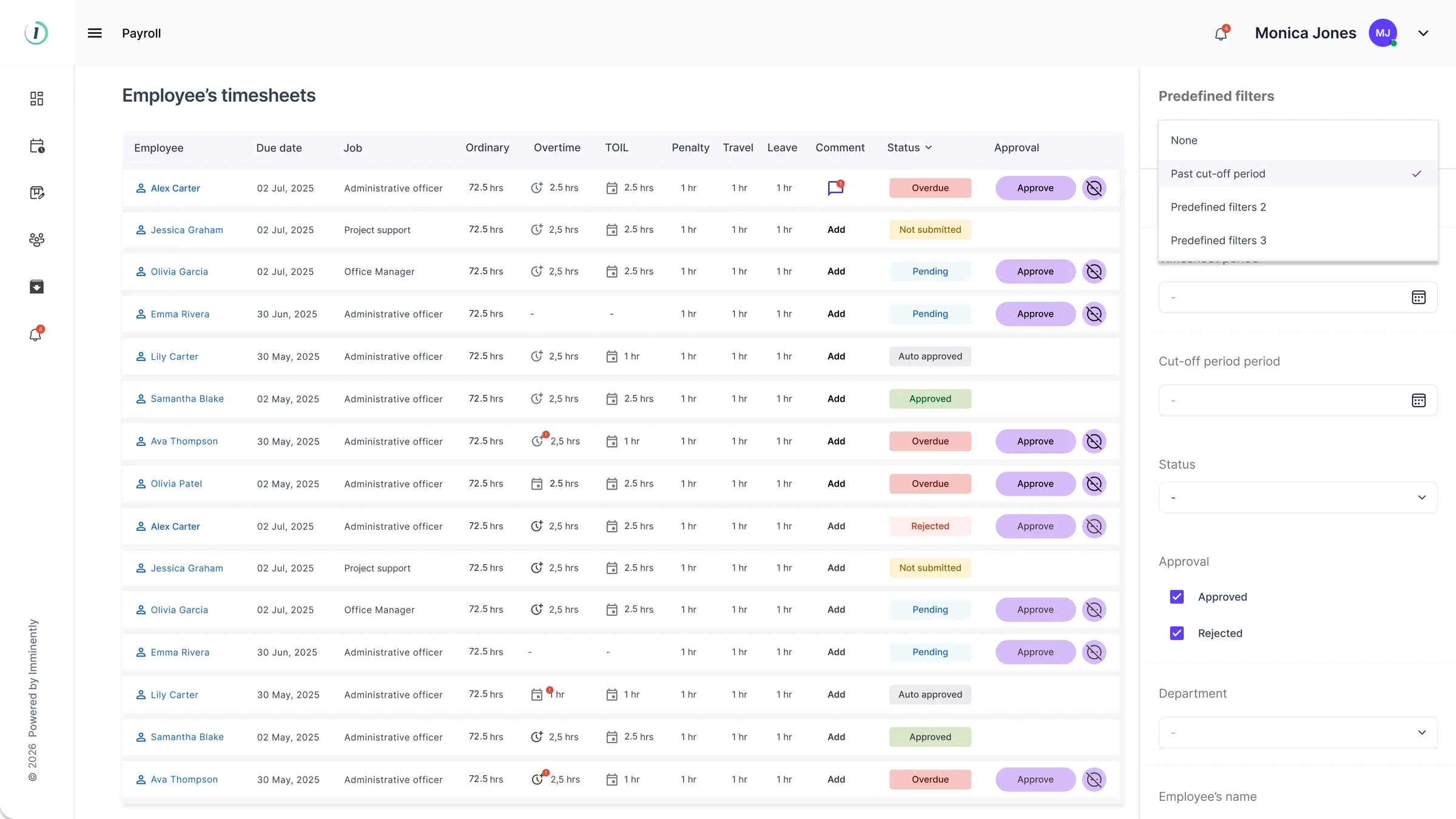
Payroll sees every employee’s hours by type and the status of every timesheet before cut-off, and approves what is ready.
People, positions and hours shown are examples.
Commonwealth enterprise agreements have already been digitised in our product. We start with a representative group, prove the outcomes against what was paid, then extend.
Agree the boundaries, owners, governance and the delivery plan.
Choose a representative group and record every assumption.
Digitise the agreement, and configure approvals and the payroll delivery.
Recalculate a past period and compare with what was paid.
Go live group by group, on the same rules.
Agreement changes applied and tested as part of the service.
Commonwealth enterprise agreements have already been digitised in our product, clause by clause, ready to be shown on your own scenarios.
Processed with real-time determinations, on Microsoft Azure with horizontal and vertical scaling.
Data processed and stored in Australian data centres, each customer in its own tenancy with separate environments.
We provide, digitise and maintain the in-scope agreement as part of the software outcome. The agency confirms its interpretations, data and acceptance decisions.
Yes. Common conditions are held once and each agency’s own provisions are applied on top, each with its effective dates.
No. Our product adds the interpretation layer by interface; HR and payroll keep their responsibilities.
No. Interpretation is deterministic: the same facts and rule version produce the same outcome, every time, with the clause behind it.
In Australian data centres on Microsoft Azure, or deployed into your own managed cloud, with ISO 27001 certification and a SOC 2 Type 2 report.
Choose a representative group, one working period and the cases your HR and payroll teams reconcile by hand today.
Commonwealth agencies pay entitlements, fund programs through providers and grants, administer migration law and apply legislation at scale. The same Legal Reasoning Platform applies an Act the way it applies an agreement: rules beside the provisions, a decision report for every determination, and a safe path off legacy systems.
Acts, regulations, policy guides and procedures taken top down into source-linked rules, proved in a parallel run beside the systems you run today, with our work for a national welfare agency as the worked example.
Entitlement ManagementPayments and grantsPayments made through providers, and grants paid under program guidelines, checked against the legislation, the guidelines and your audit practice, with each finding explained to the provision and decided by a person.
Integrity ManagementMigration and mobilityVisa rules applied the same way in every digital service, with the guided interview asking only what the law needs and a decision report for every applicant.
Global Mobility ManagementBring an agency agreement and a period your teams reconciled by hand. We will show the outcomes and the clauses behind them.