Frontline and operational services
Shift rosters across the day and night, weekend and night penalties, minimum breaks between shifts, on call and recall.
- Shift penalties
- Breaks between shifts
- On call
State agencies run 24-hour frontline services, field and regional teams and policy offices on flexitime, often across several instruments and a shared payroll. Our product applies each instrument as work is planned and recorded, and gives the payroll service an explained, payroll-ready result.
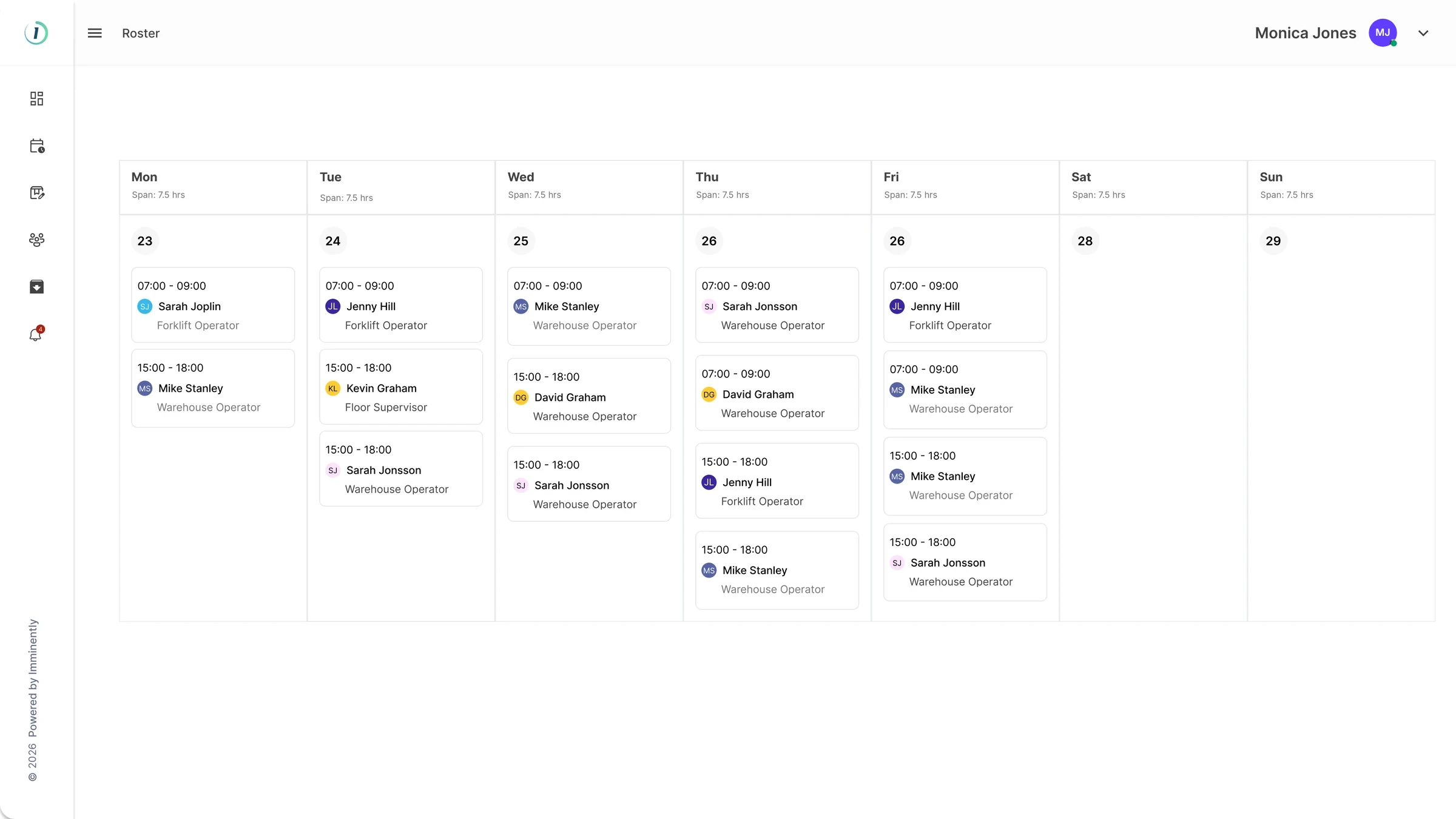
A department can hold every pattern of work at once, each under different provisions of the same instruments.
Shift rosters across the day and night, weekend and night penalties, minimum breaks between shifts, on call and recall.
Extended days, travel and field allowances, camping out on remote work, and work away from a fixed site.
Flexitime within a bandwidth, settlement periods and carry-over limits, time in lieu, and working from home.
Frequent acting arrangements that change both pay and who approves.
Seasonal peaks and emergency activation, with minimum engagements and short-notice rosters.
Several agencies feeding one payroll service, each with its own approvals and cost structure.
State public sectors operate under their own industrial systems, with sector awards and agreements, determinations and policies. Machinery-of-government changes move people between agencies and instruments with effective dates, and every period must be paid under the rules that applied to it.
What it providesA bandwidth for flexible hours, settlement periods, debit and credit limits and carry-over caps.
What makes it hardBalances interact with overtime and time in lieu.
What our product doesLedgers track the balance, warn at limits and apply the settlement rules.
What it providesPaid overtime for some classifications and time in lieu for others, with pre-approval rules.
What makes it hardClassification decides the treatment, and acting changes the classification.
What our product doesApplies the treatment for the classification held on the day, and checks pre-approval at entry.
What it providesAfternoon, night, weekend and public holiday penalties, with a minimum break between shifts.
What makes it hardA shift change can create a breach as well as a penalty.
What our product doesDetermines the penalties for each shift. A roster check for the break between shifts is configured in the deployment.
What it providesOn-call allowances and minimum payments for each recall.
What makes it hardEach recall is a separate event with its own minimum.
What our product doesRecords each on-call period and recall, and applies the allowance and minimum.
What it providesTravel time, meal, camping and field allowances for work away from base.
What makes it hardThe facts that decide the allowance are rarely on a timesheet.
What our product doesAsks the question the instrument needs, only when it applies.
What it providesPayment for acting in a higher classification, often after a qualifying period.
What makes it hardThe qualifying period may span pay periods.
What our product doesTracks the acting period and applies the higher rate when it qualifies.
Agency HR supplies the employment facts, managers approve within their delegations, and the shared payroll service receives a consistent, explained output.
TodayPay rules configured in payroll and checked by hand.
With our productEach instrument applied from its own text, with the clause behind each outcome.
TodayA transfer mid-period paid under the wrong instrument.
With our productEffective-dated rules and positions, so each day is paid under what applied.
TodayItems missed or paid twice around cut-off.
With our productIntegration status on every timesheet, and late items flagged for the next pay run.
TodayHistoric underpayments found years later, reviewed by hand.
With our productEarlier periods recalculated under the rules in force at the time, and compared with what was paid.
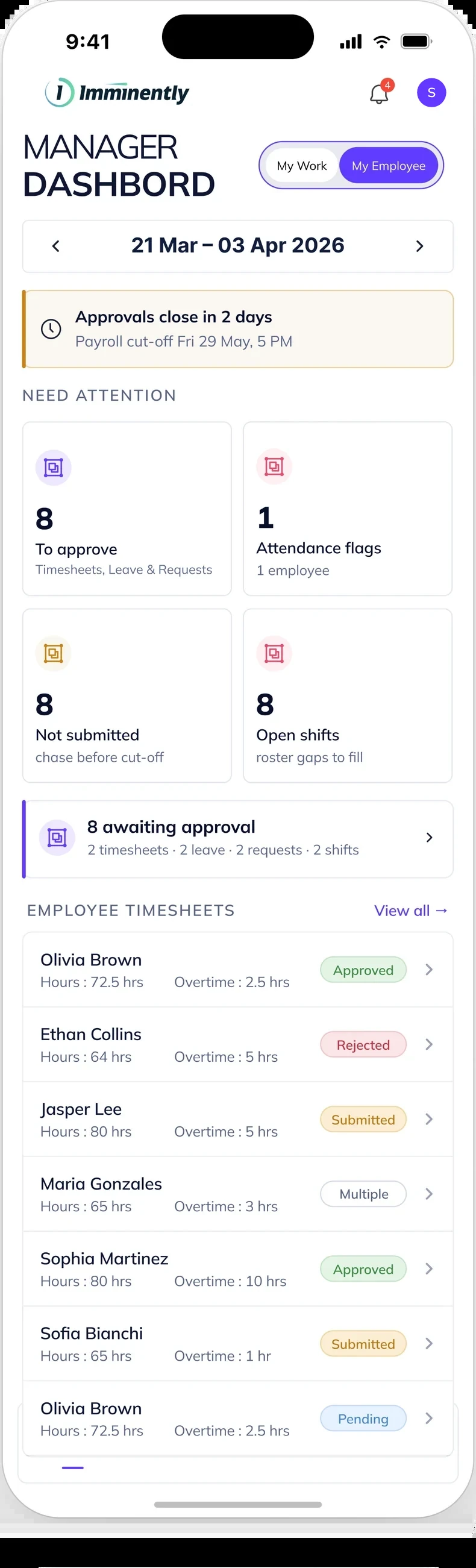
A roster checked as it is built, staff responding on the phone, requests and corrections, and every timesheet checked before the shared pay run.
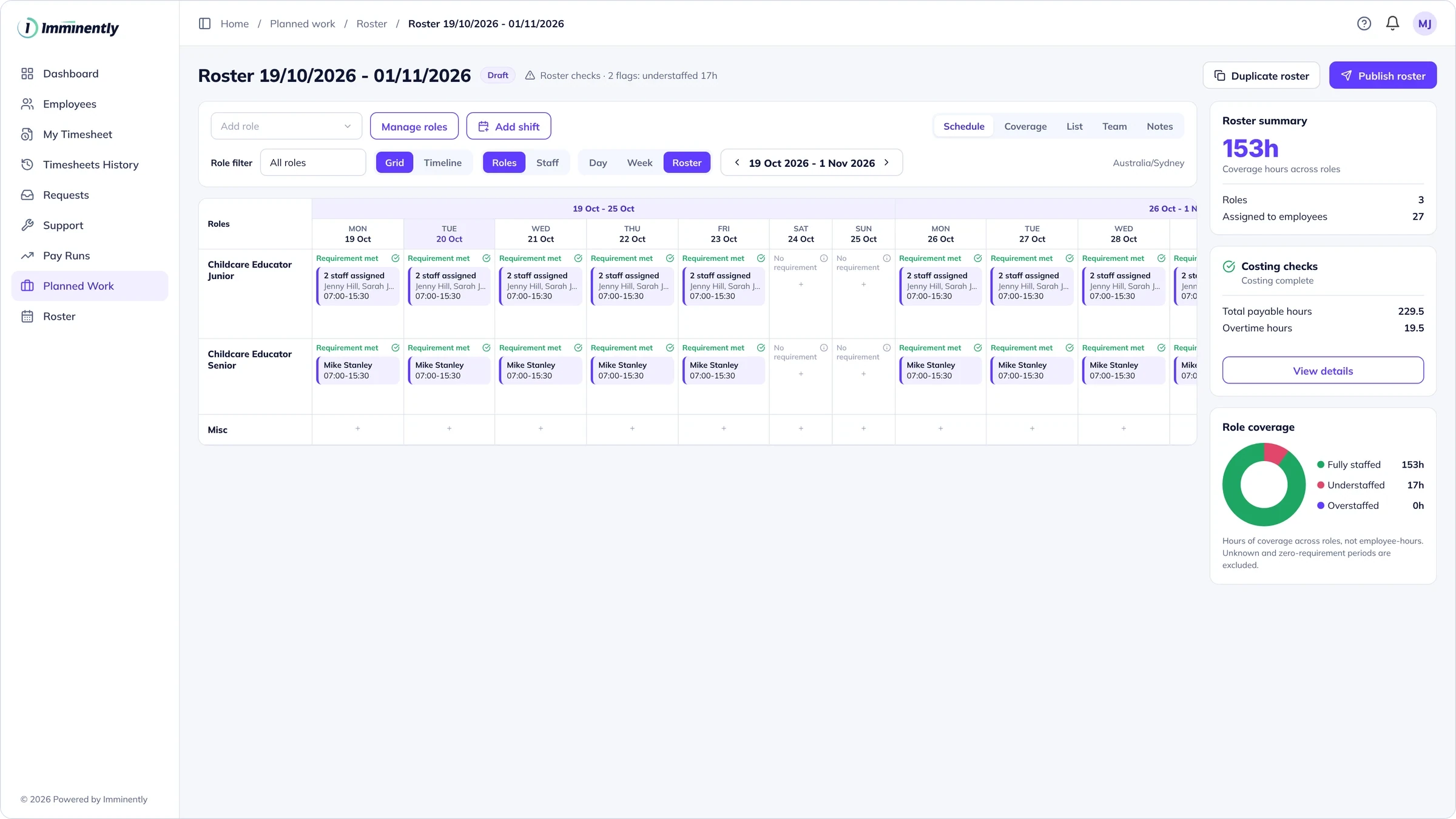
Shifts are placed by role across the period, and each day shows whether each role’s staffing requirement is met, with the shift, payable and overtime hours totalled before publication.
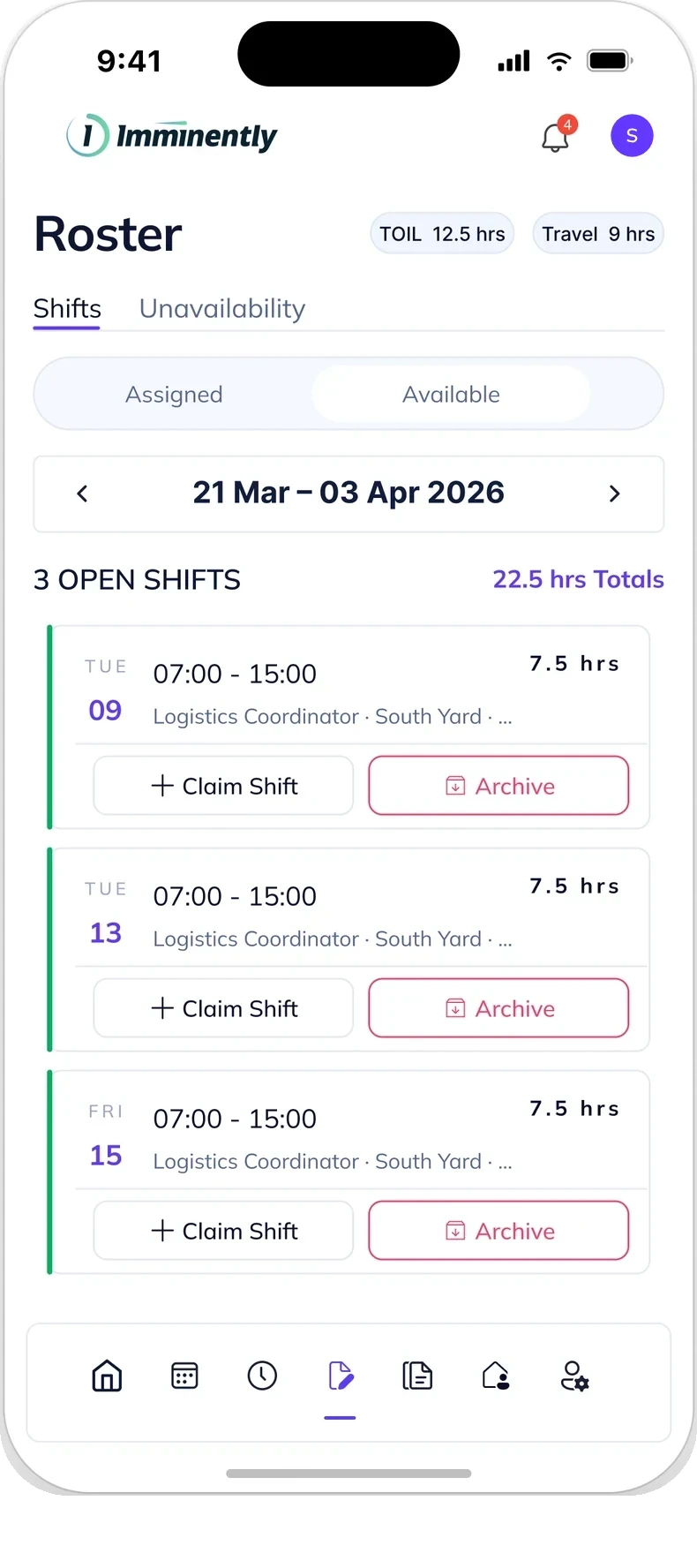
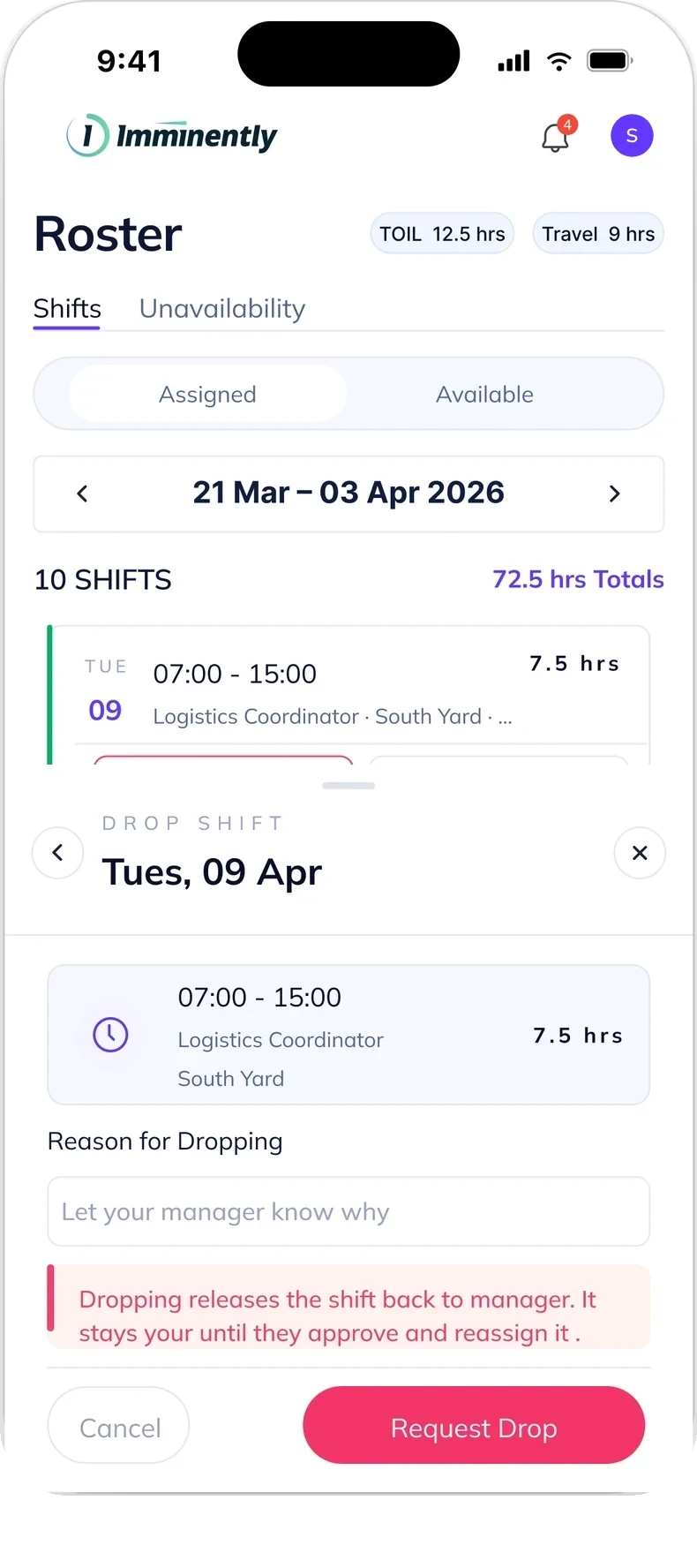
Open shifts are offered to staff eligible to work them, and a shift can be released with a reason; it stays theirs until the manager approves.
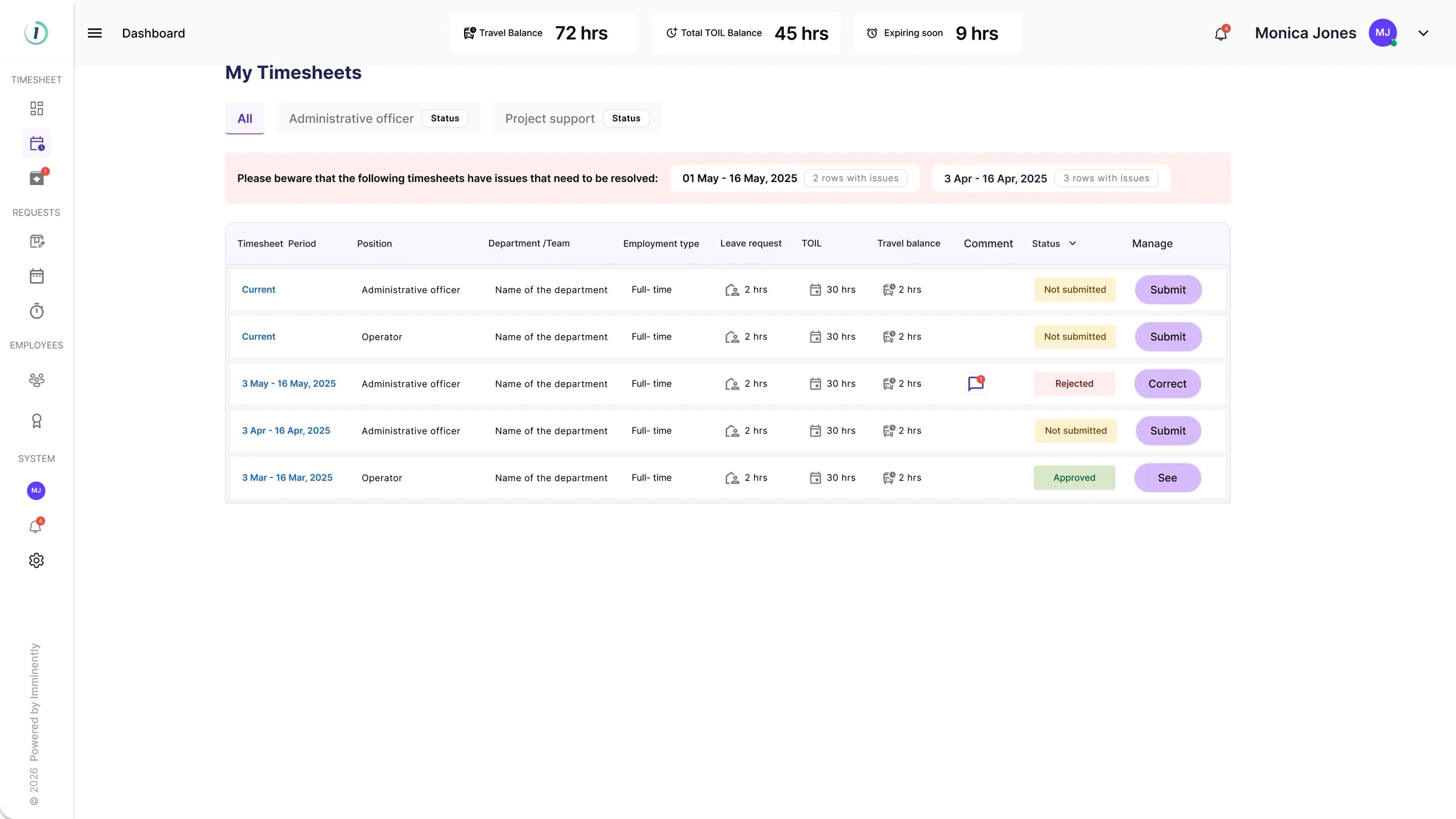
The employee’s timesheet history lists the periods with rows that have issues, with the status of each period and the action to submit, correct or see it.
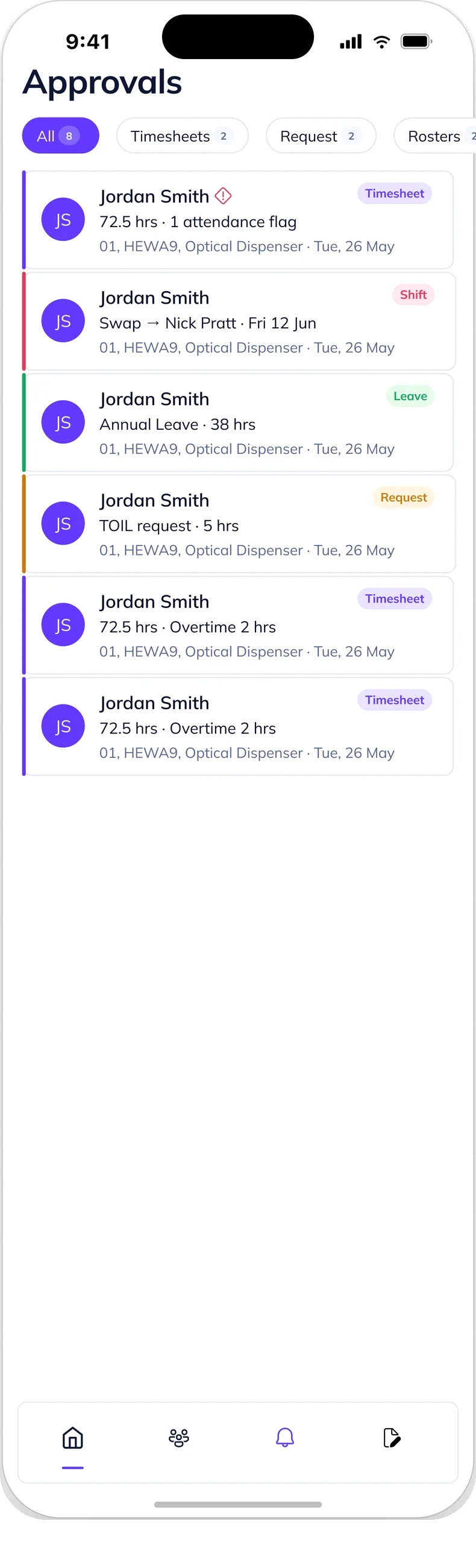
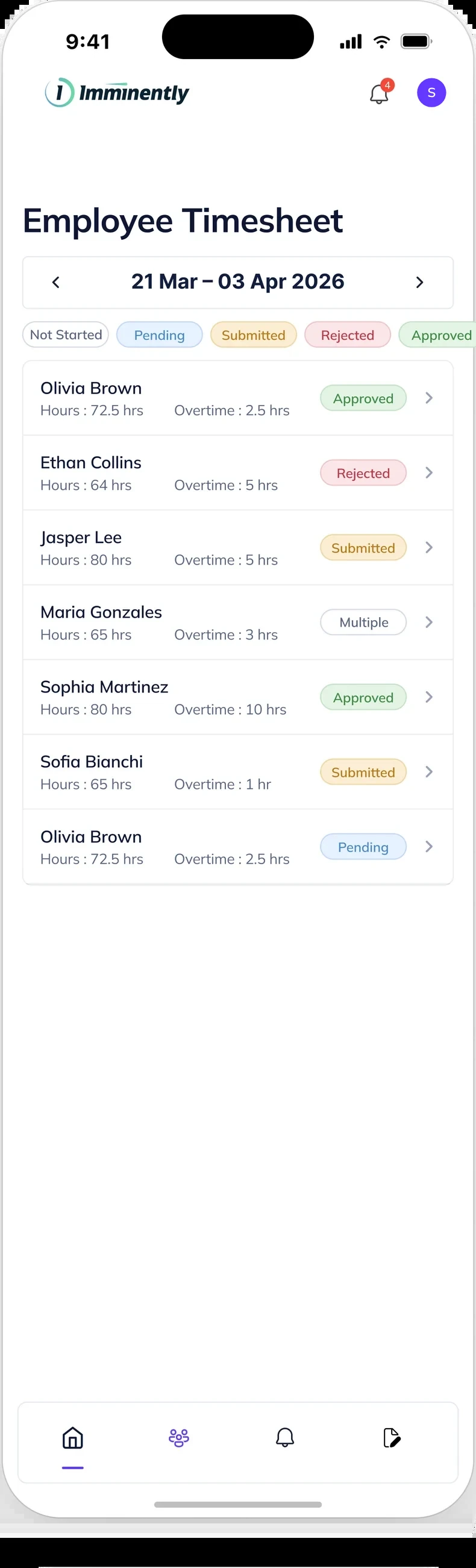
One inbox holds timesheets, requests, roster changes and leave, and the team list shows every timesheet’s status for the period.
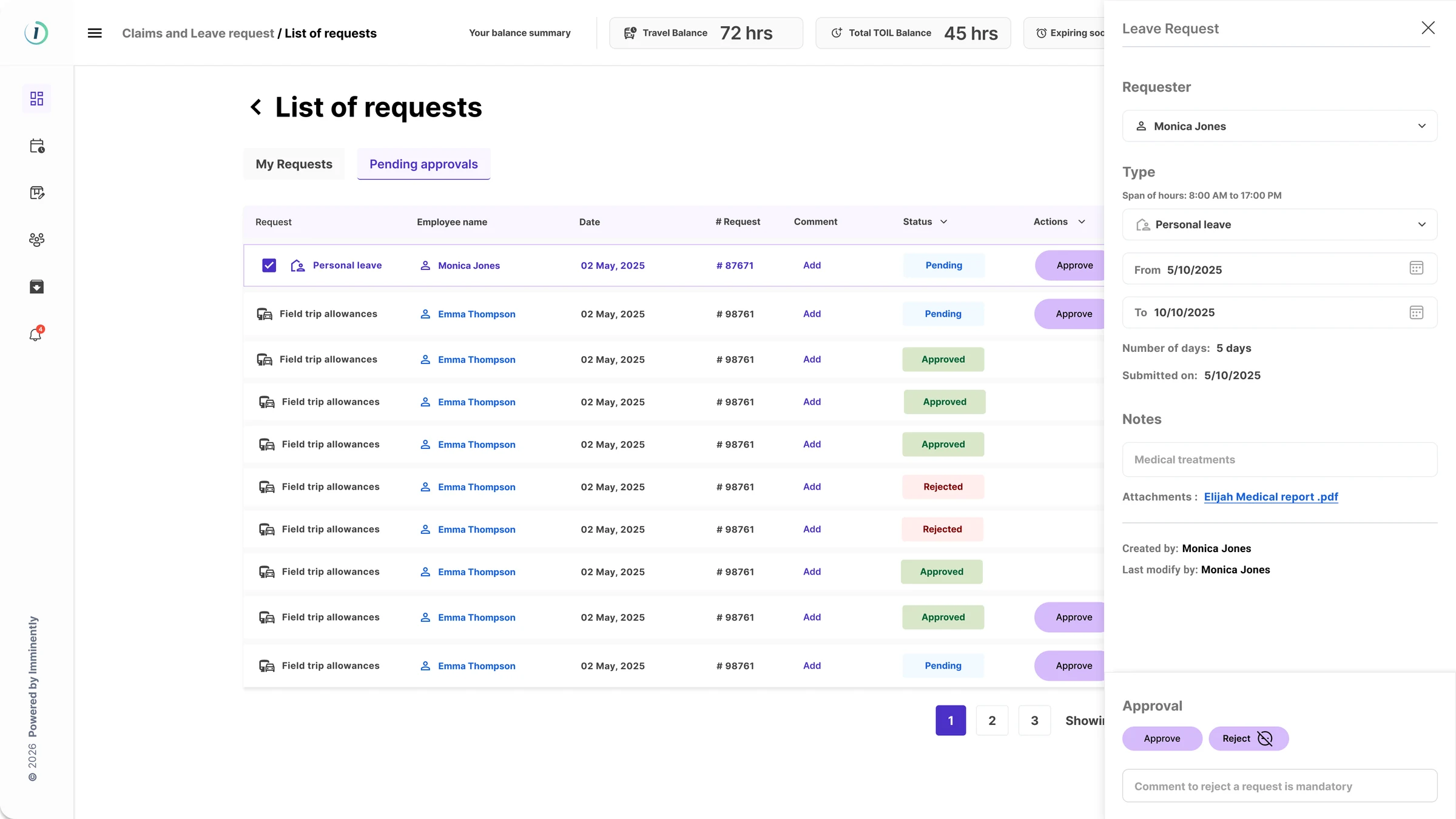
The request opens with its dates, notes and attachment. Approving is one click; rejecting needs a comment.
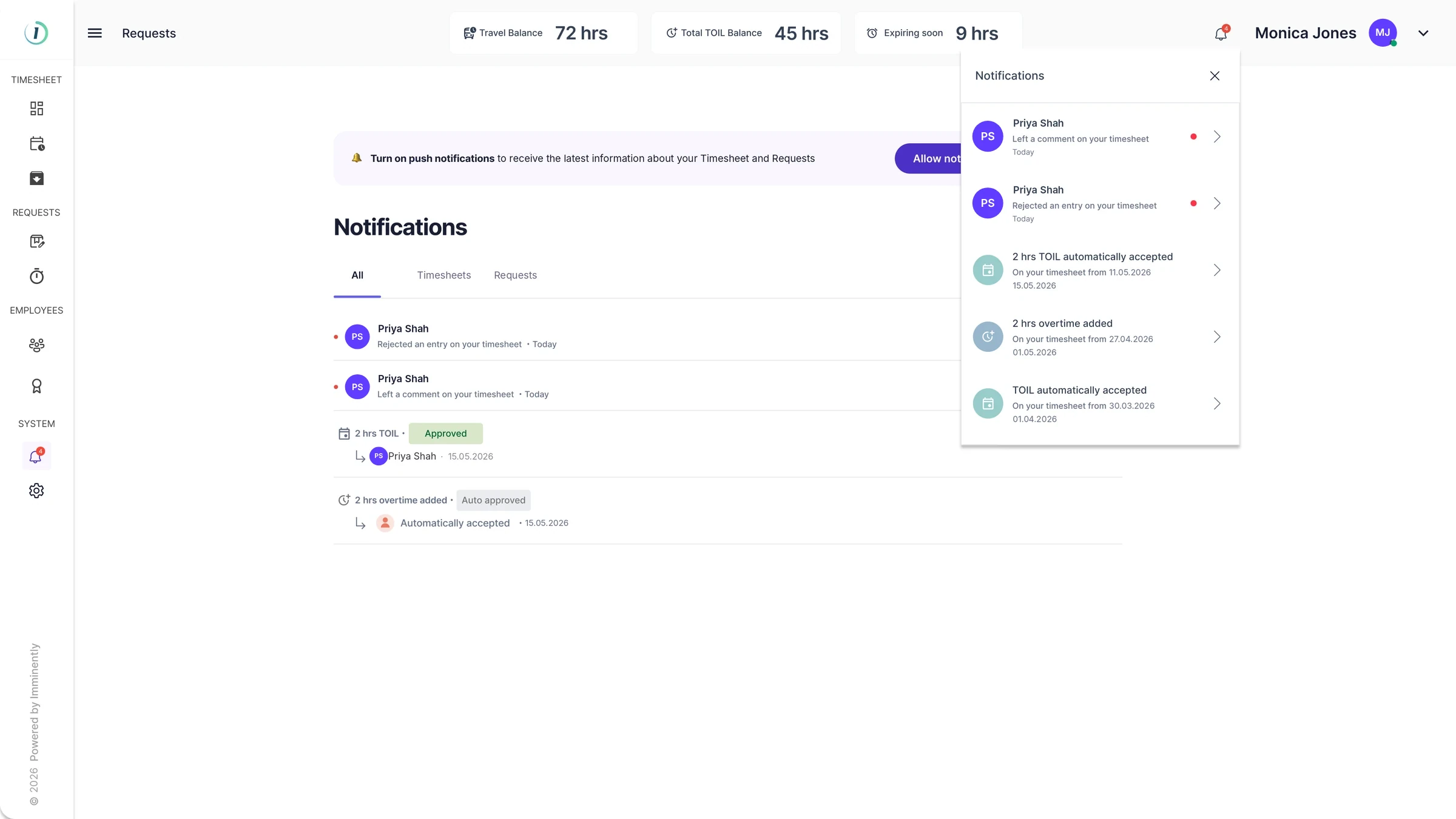
Notifications tell the employee when overtime or time in lieu was accepted automatically, or when a manager commented.
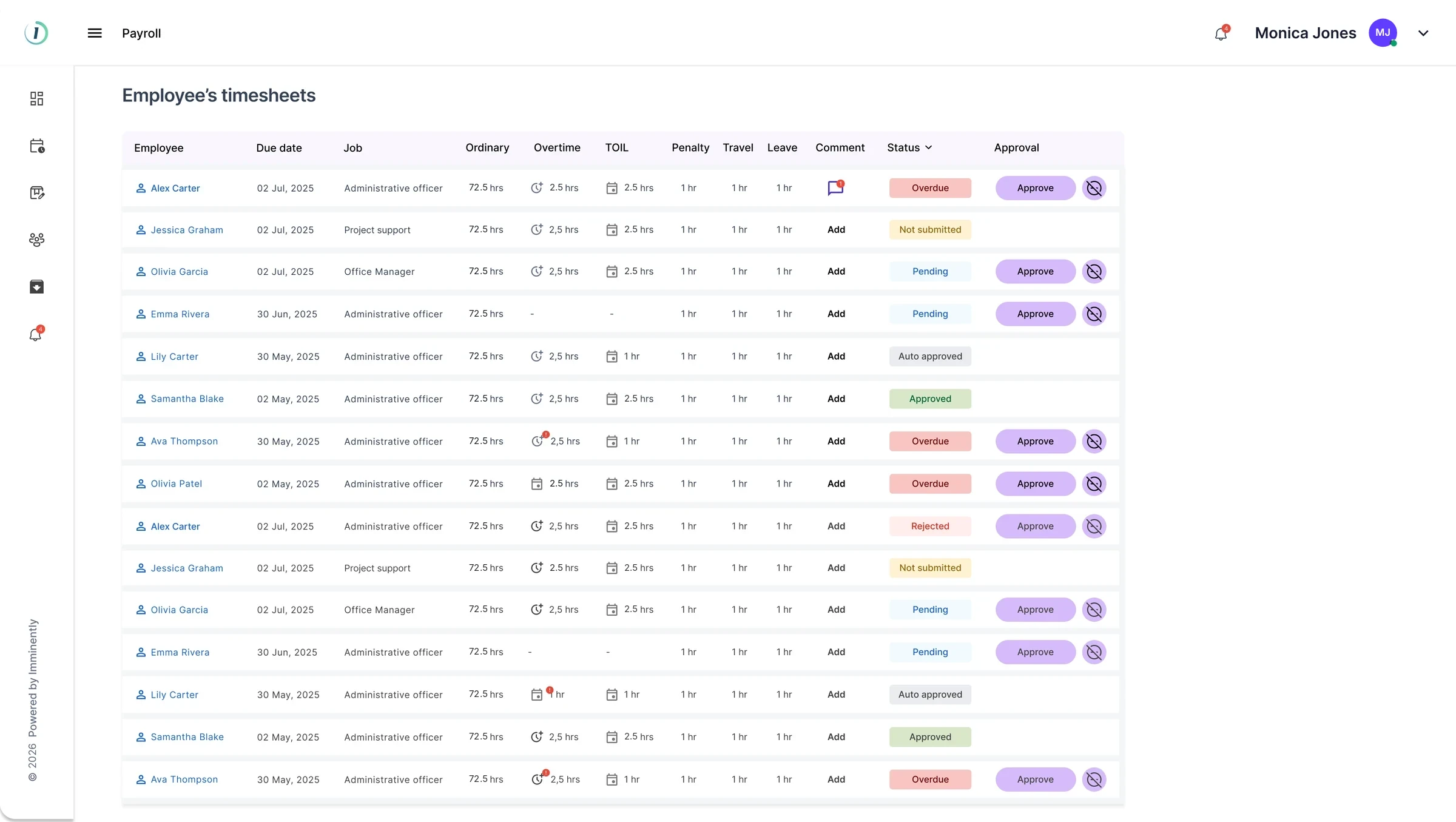
The payroll service sees each employee’s hours by type and the status of every timesheet, filtered to the cut-off period.
People, locations, hours and amounts shown are examples.
We seed in one place, prove the result against what was paid, then extend across groups and agencies on the same rules.
Agree the boundaries, owners, governance and the delivery plan.
Choose a representative group and its instruments, and record every assumption.
Digitise the instruments, and configure approvals and the payroll delivery.
Run a past period and compare the outcomes with what was paid.
Go live group by group and agency by agency, on the same rules.
Instrument changes applied and tested as part of the service.
Our timesheets, with Awards, run at Queensland University of Technology (QUT) for more than 7,000 professional, casual and sessional staff under two enterprise agreements.
Processed with real-time determinations, on Microsoft Azure with horizontal and vertical scaling.
Data processed and stored in Australian data centres, each customer in its own tenancy with separate environments.
We provide, digitise and maintain the in-scope instruments as part of the software outcome. Agencies confirm their interpretations, data and acceptance decisions.
Yes. The certified adapter connects TechnologyOne, and open integration connects other systems, each with its own delivery contract.
Yes. Earlier periods can be recalculated under the rules in force at the time and compared with what was paid, so historic exposure is found and quantified.
No. This page covers the workforce. Revenue Management concerns government revenue collection.
In Australian data centres on Microsoft Azure, or in your own managed cloud, with ISO 27001 certification and a SOC 2 Type 2 report.
Yes. Rollout can follow employee groups, instruments or agencies, with acceptance criteria for each wave.
State agencies assess revenue, administer concessions, fund services and grants and apply legislation in every service channel. The same Legal Reasoning Platform applies an Act the way it applies an agreement: rules beside the provisions, a decision report for every determination, and a safe path off legacy systems.
Acts, regulations, policy guides and procedures taken top down into source-linked rules, proved in a parallel run beside the systems you run today, with our work for a national welfare agency as the worked example.
Entitlement ManagementRates, land tax and dutiesOne governed rules layer for every revenue line, with notice runs reviewed before release and every assessment explained to the section, shaped by our work for revenue offices.
Revenue ManagementPayments and grantsPayments made through providers, and grants paid under program guidelines, checked against the legislation, the guidelines and your audit practice, with each finding explained to the provision and decided by a person.
Integrity ManagementSkills and regionsOne pathway for a profession or a region that needs skills, with the visa and registration rules applied the same way every time and applications that already meet them.
Global Mobility ManagementBring an employee group, its instruments and a period you reconciled by hand. We will show the result in our product.