People move.
The rules move with them.

Every move across a border engages immigration law, visa conditions, posted worker and social security rules and tax obligations. Global Mobility Management applies them to each move, for the employer sending people abroad and for the person deciding where to go, and keeps everyone informed until the last obligation is met.

Global Mobility Management · for employers
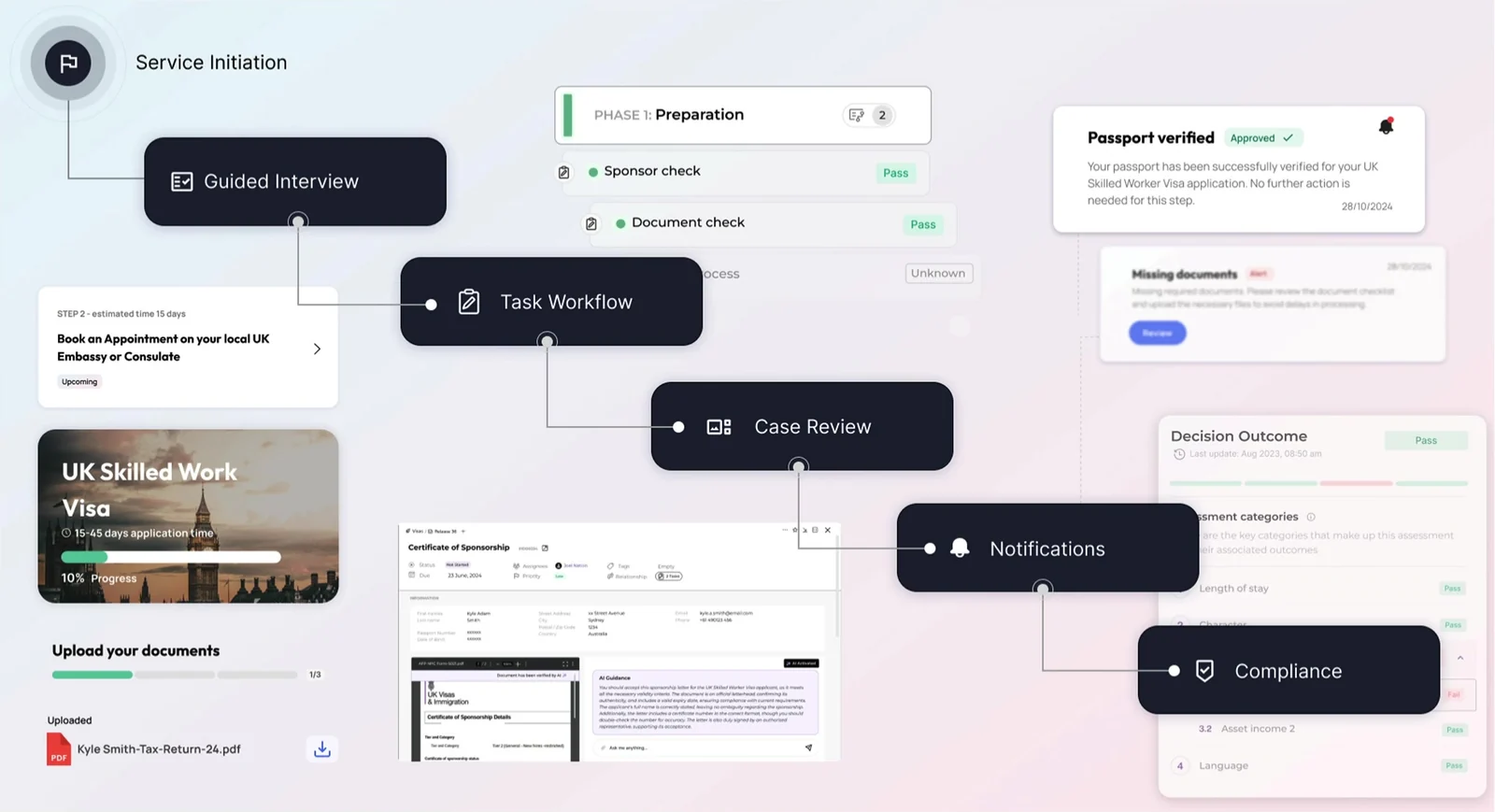
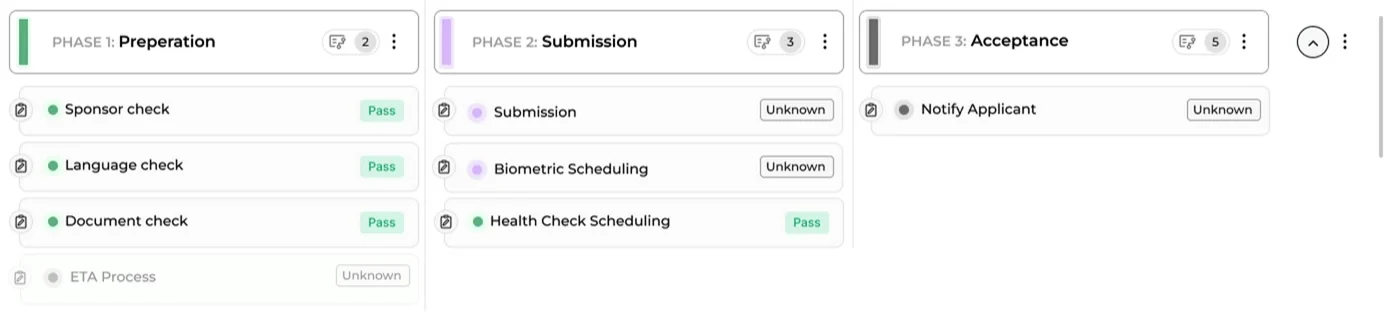
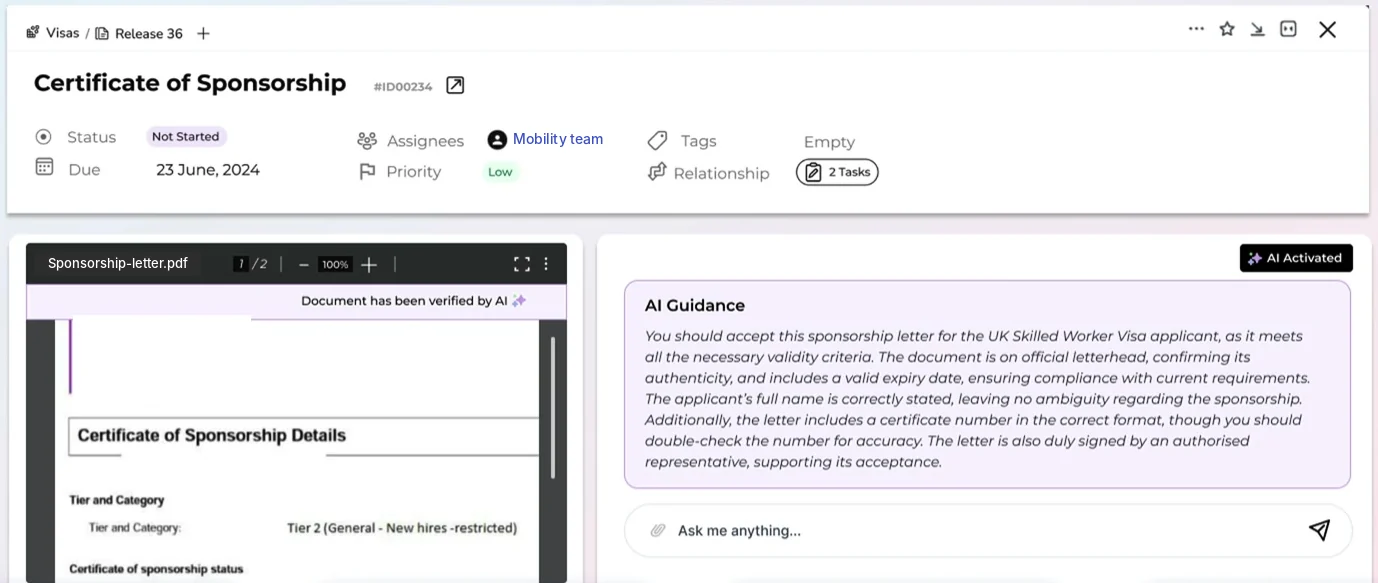
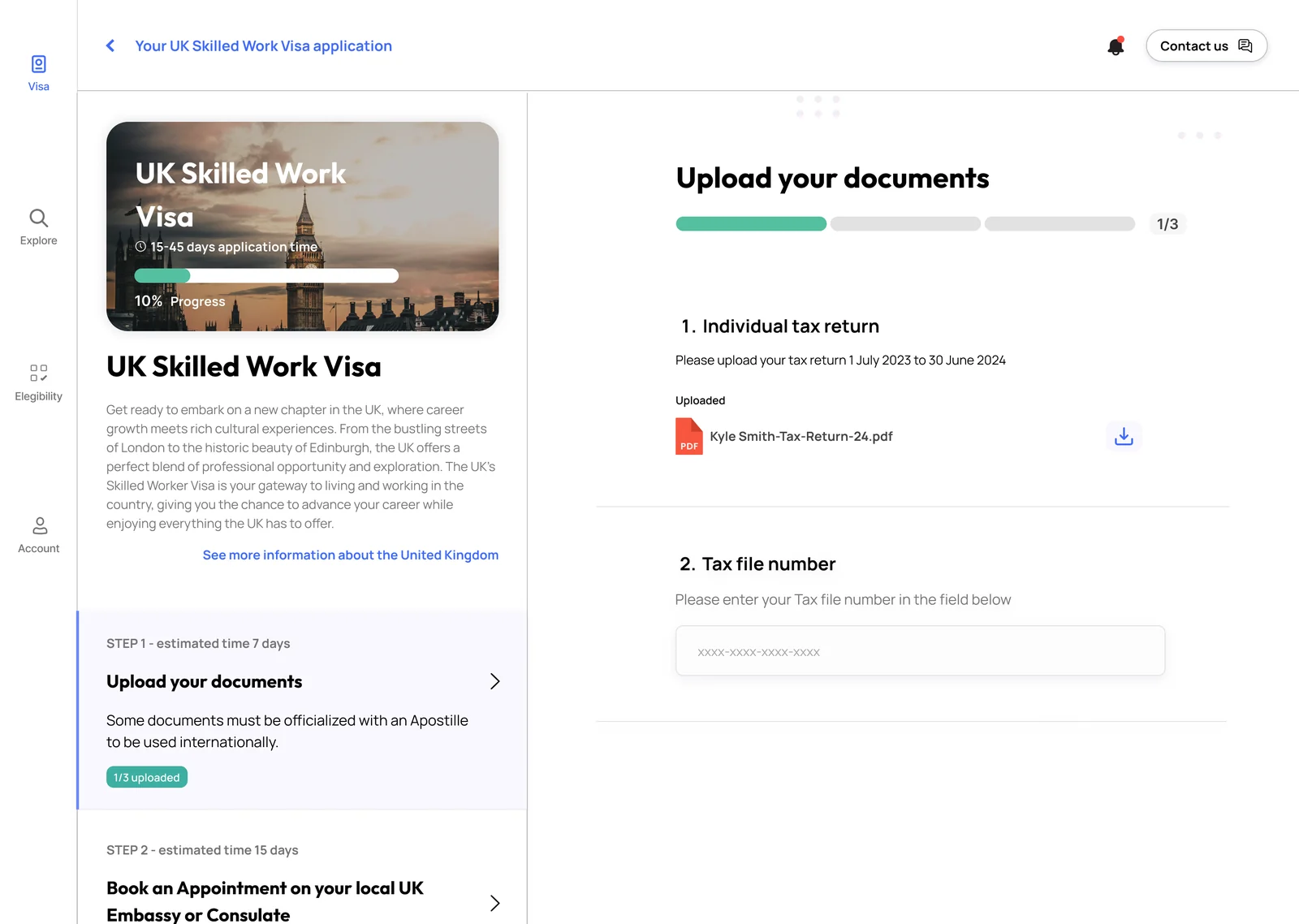
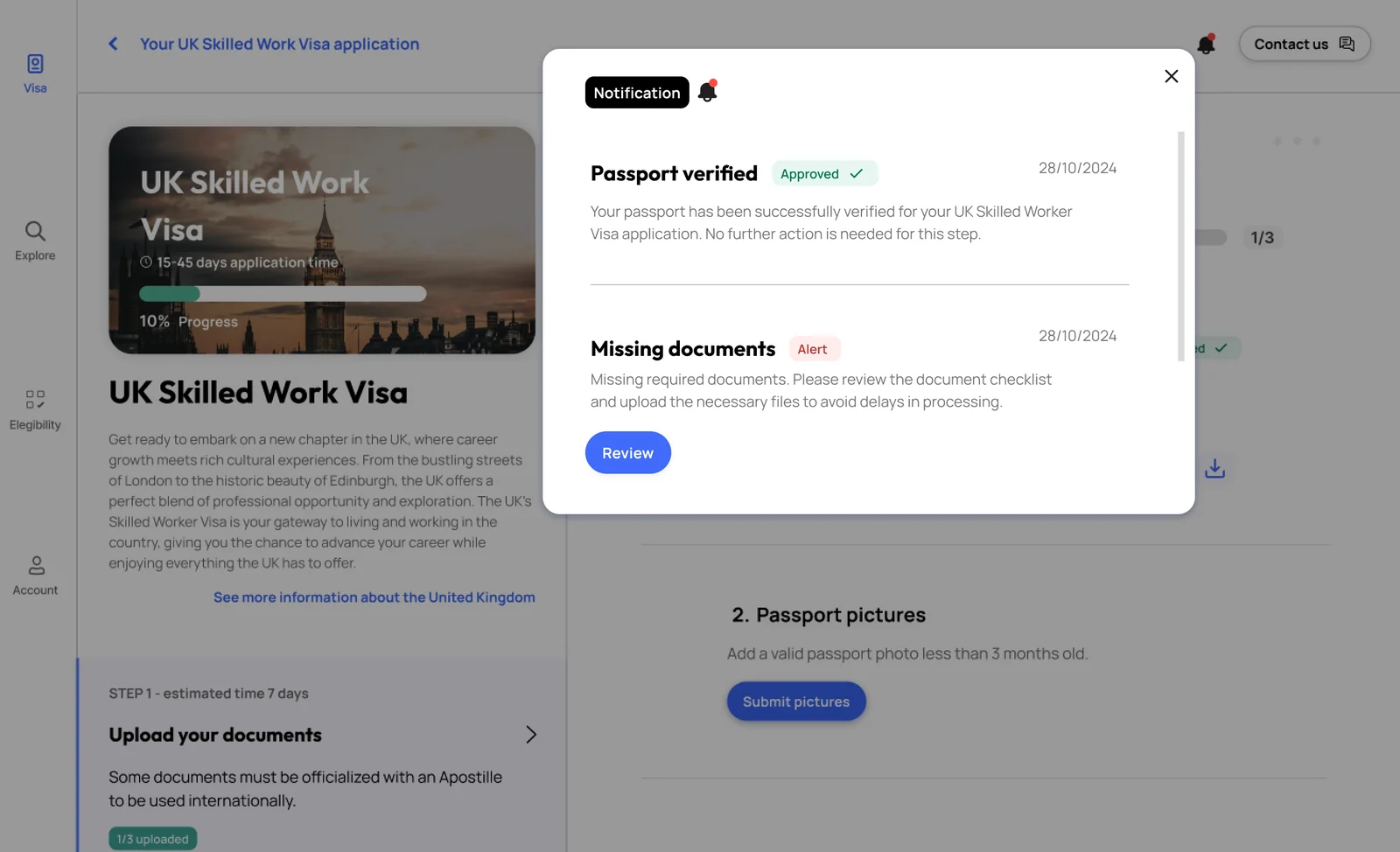
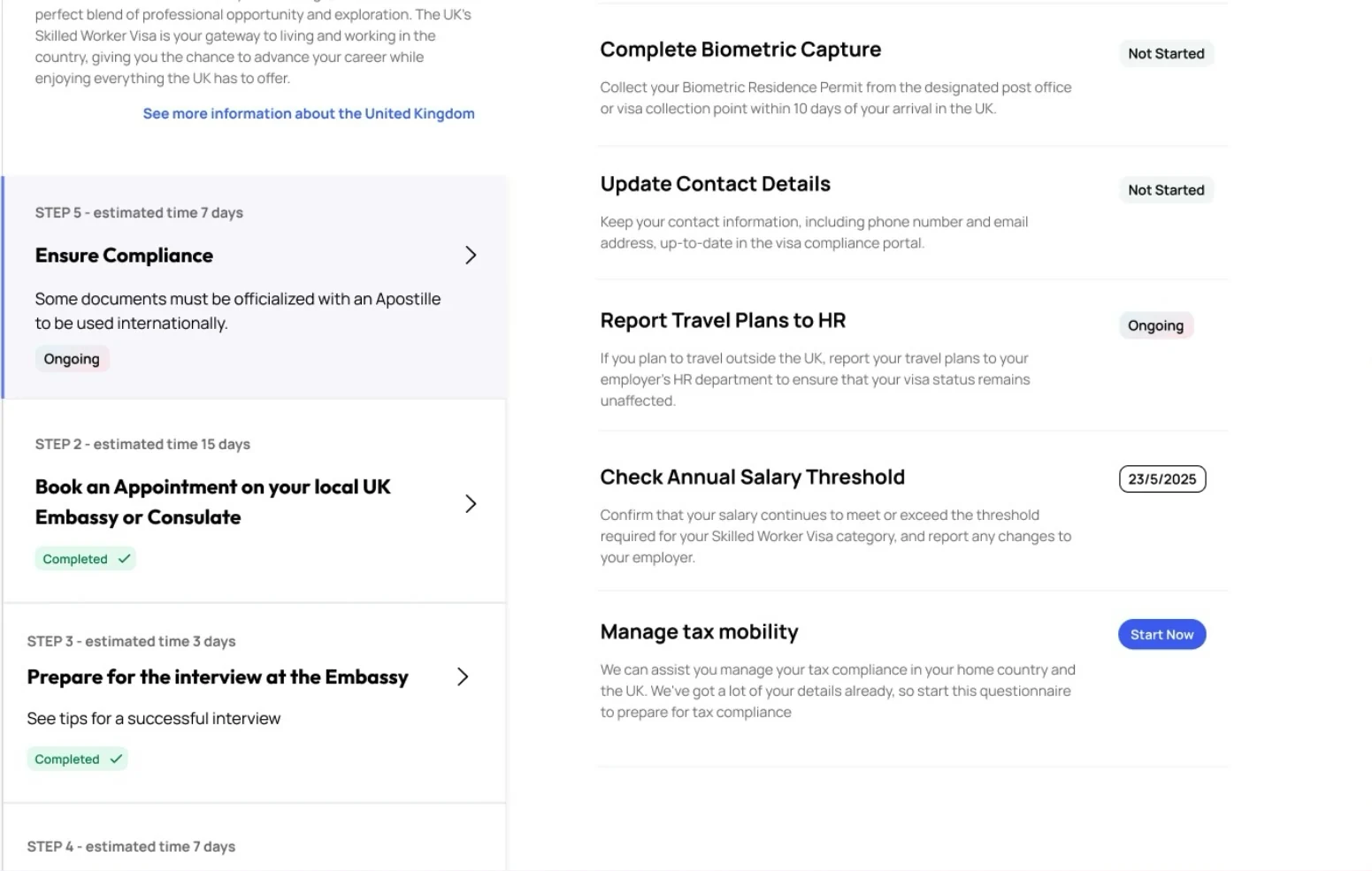
The employer’s service map: guided interview, task workflow, case review, notifications and compliance, with the screens behind each: phase 1 preparation with sponsor and document checks, a UK Skilled Work Visa at 10% progress, uploaded documents, a certificate of sponsorship, passport verified and the decision outcome
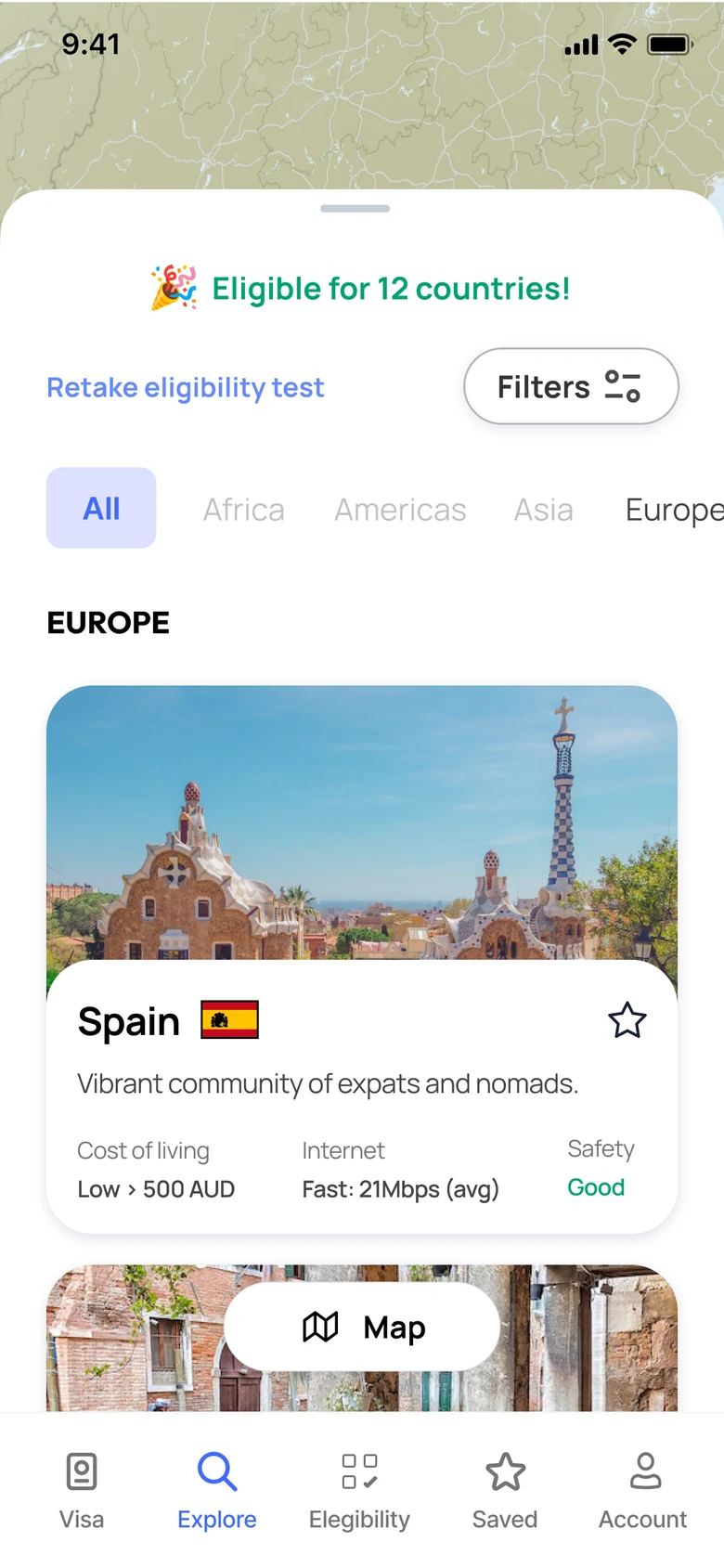
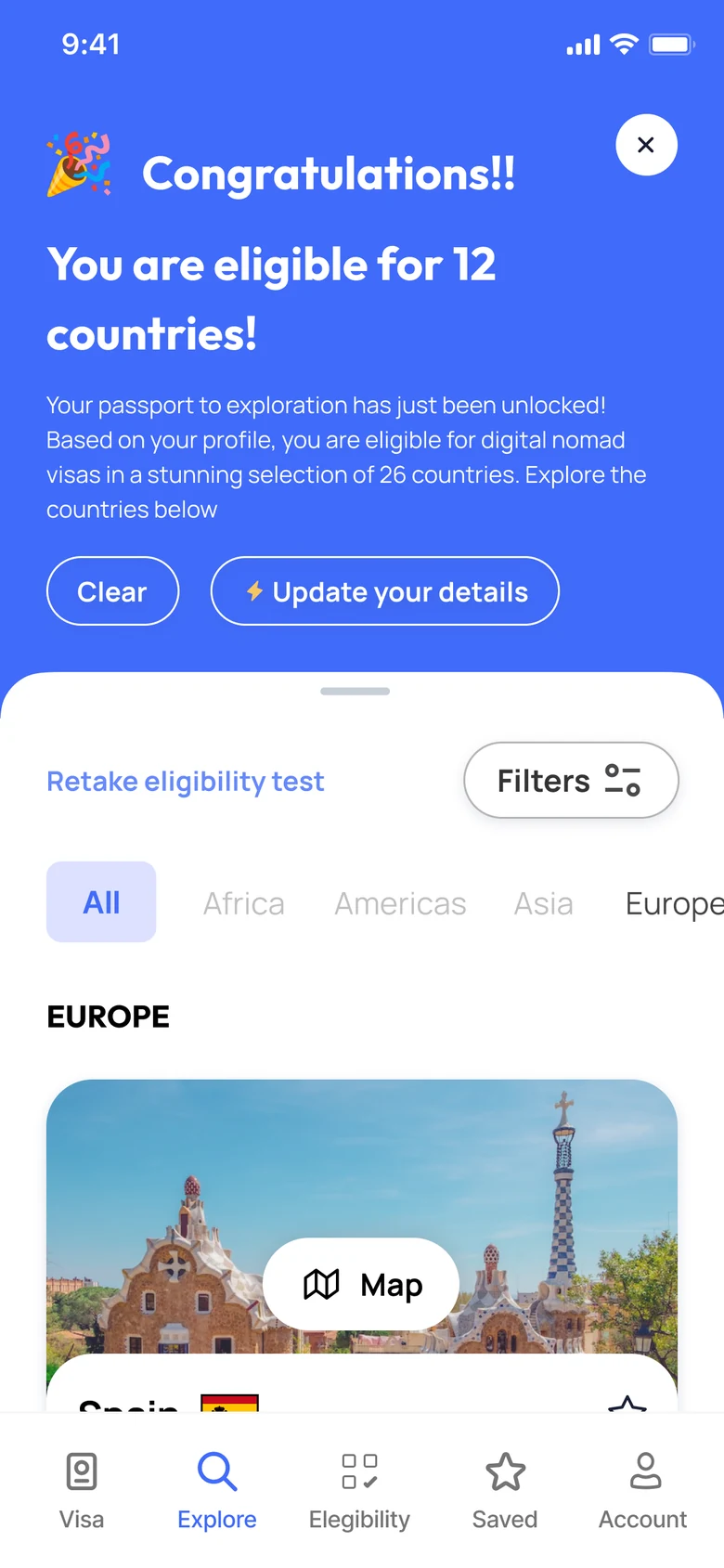
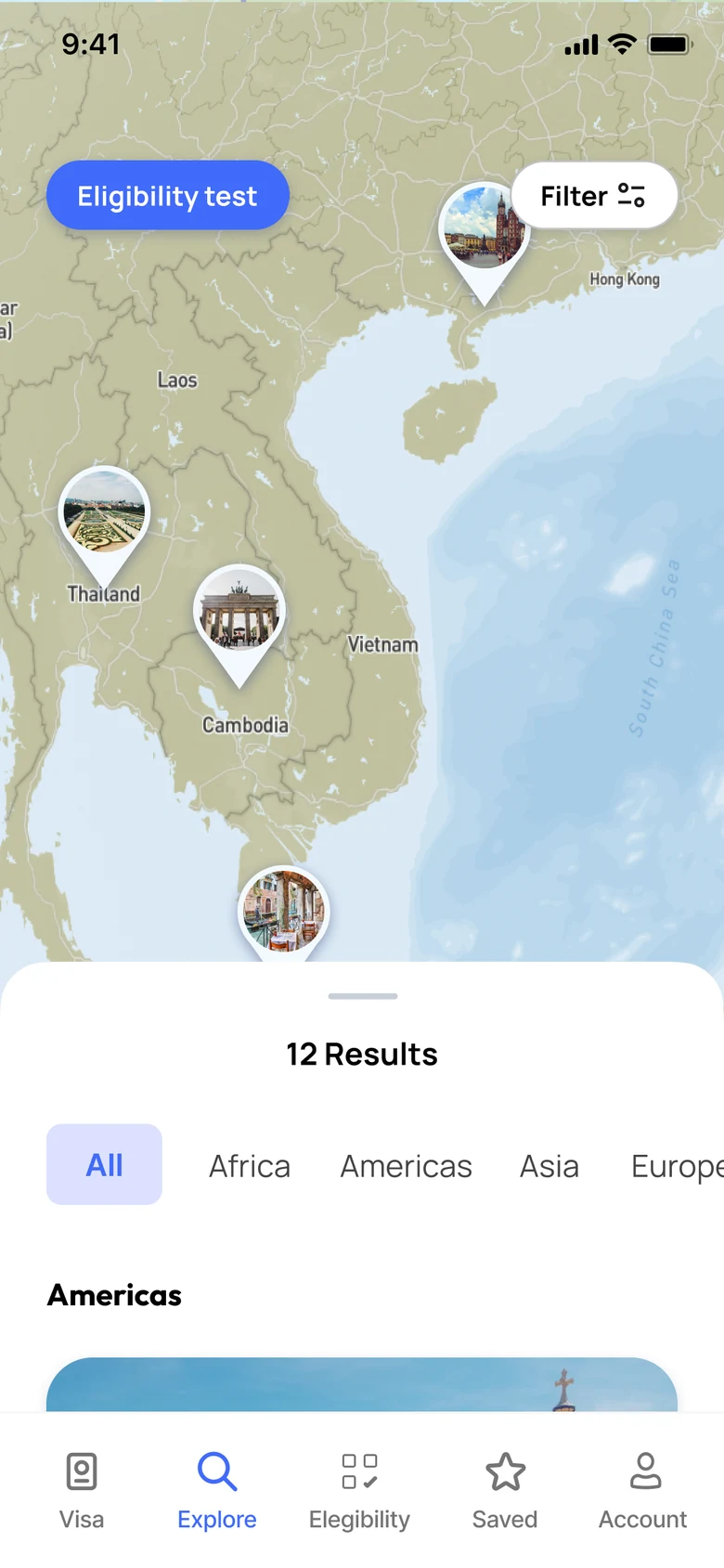
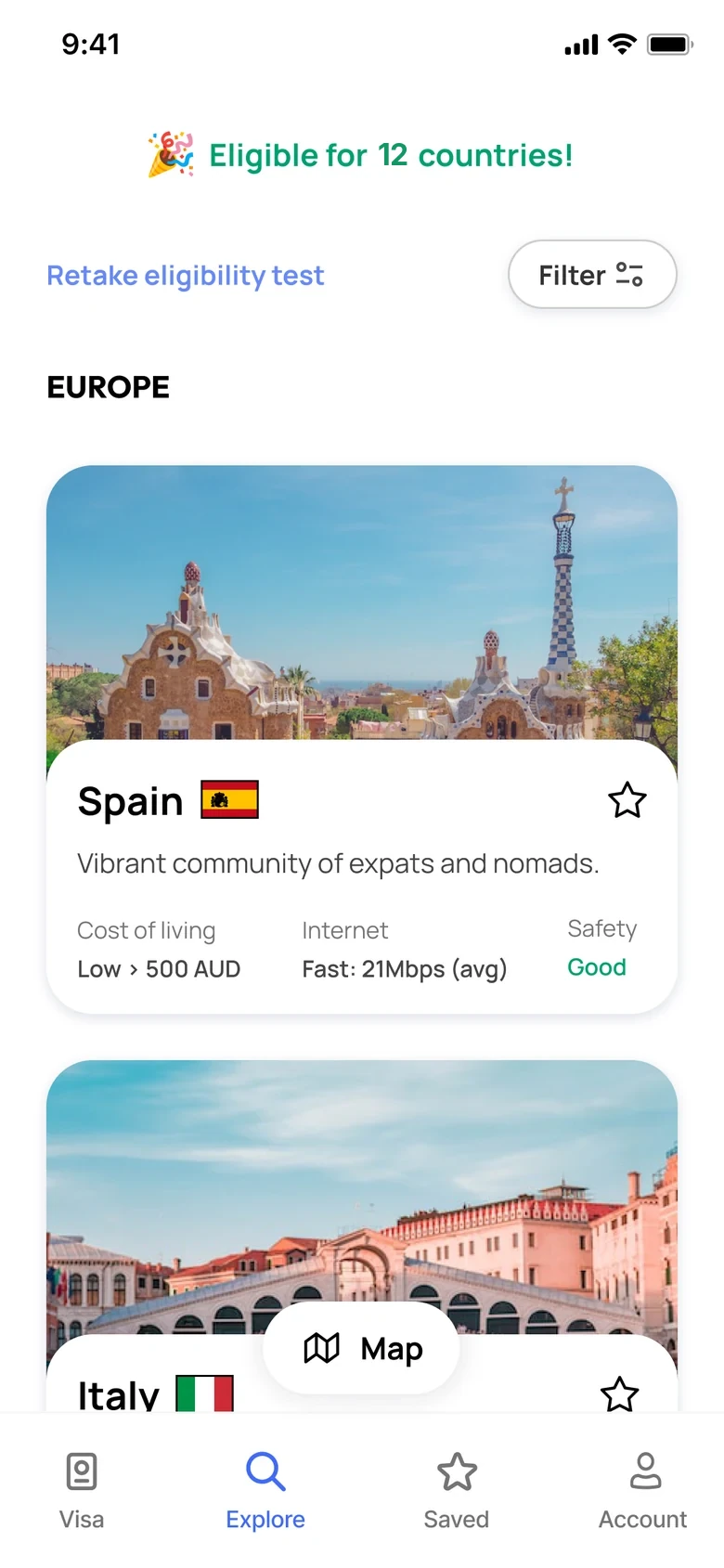
On mobile: eligible for 12 countries, with the destinations to explore listed by region
The employer’s service map, from the guided interview to compliance, and the person’s eligibility result on mobile.
For employers and their people · the product

From the request
to compliance while away.

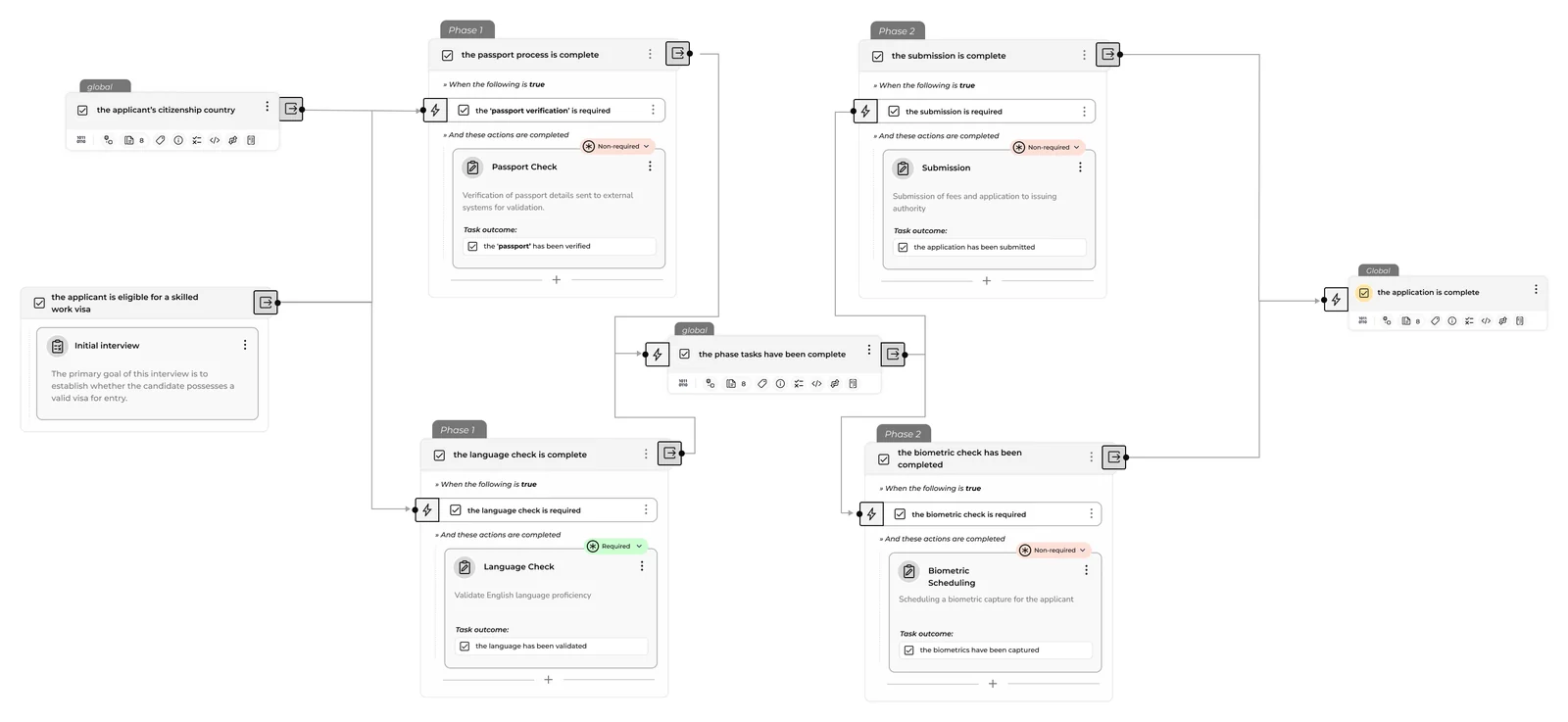
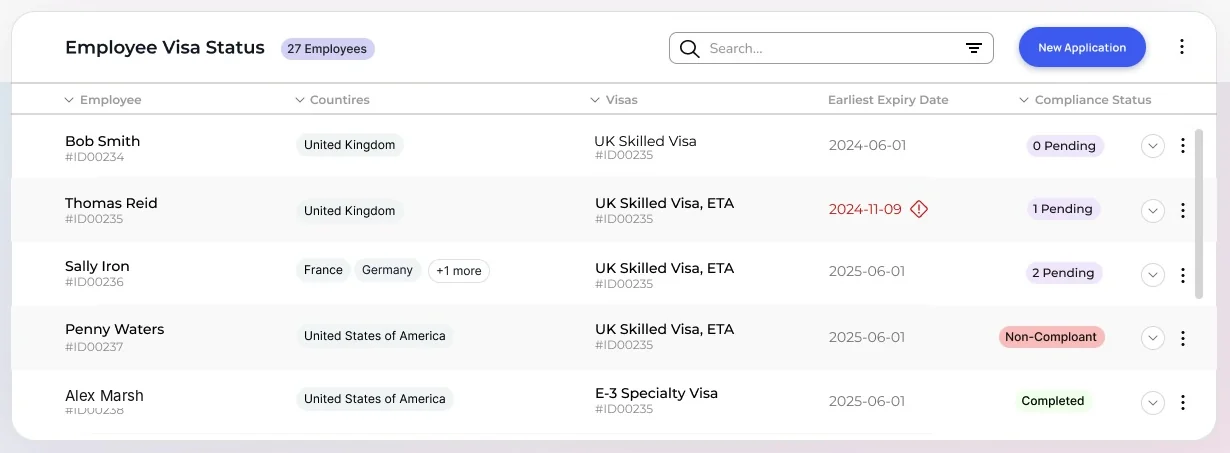
One move, screen by screen: the employee’s pre-filled interview, the workflow the rules set, the mobility team’s tasks, the tax documents, the adviser’s case review, notifications, approval and the obligations that follow. Each step says whose screen it is.

Employee, mobility team and adviser

A UK skilled work visa, end to end.

Every screen in the order the move happens, on both sides: what the employee sees, what the mobility team works on and what the rules decide.

01 / 09
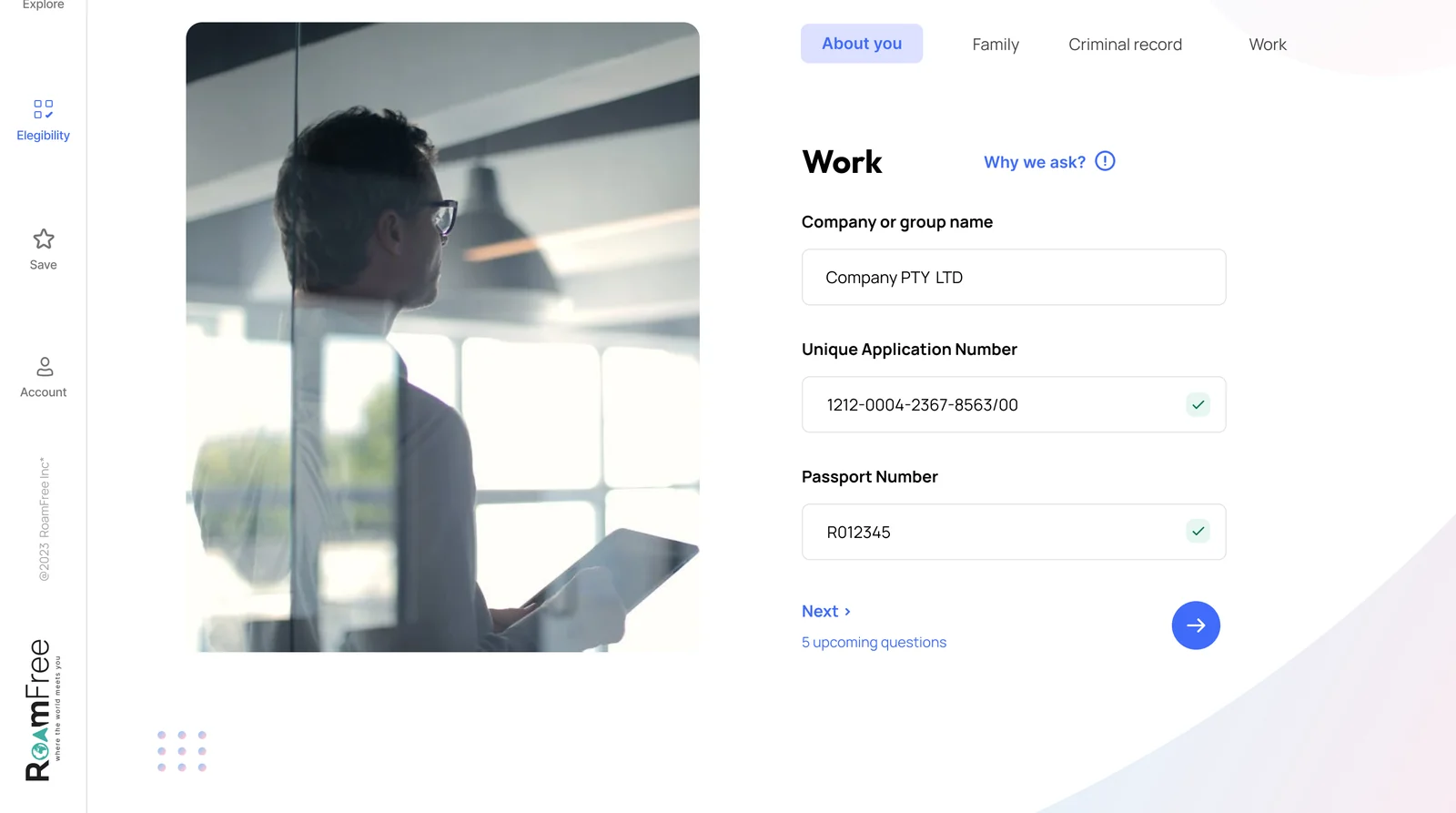
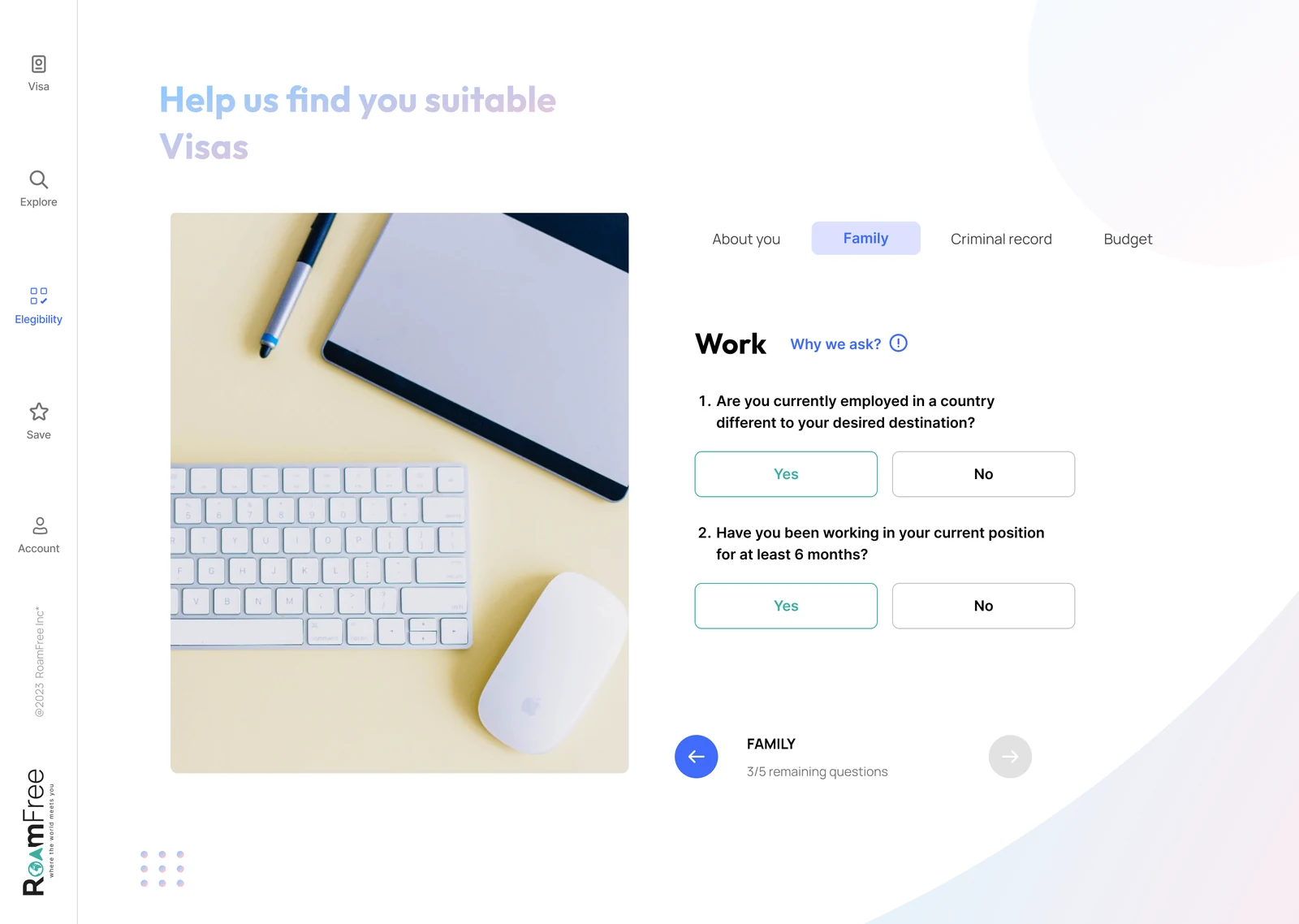
Global Mobility Management · the employee’s interviewGuided interview, Work: company or group name, unique application number and passport number already filled in and checked, with why we ask and five upcoming questions
Step 01 of 09 · Employee

The employee starts with what HR already holds.

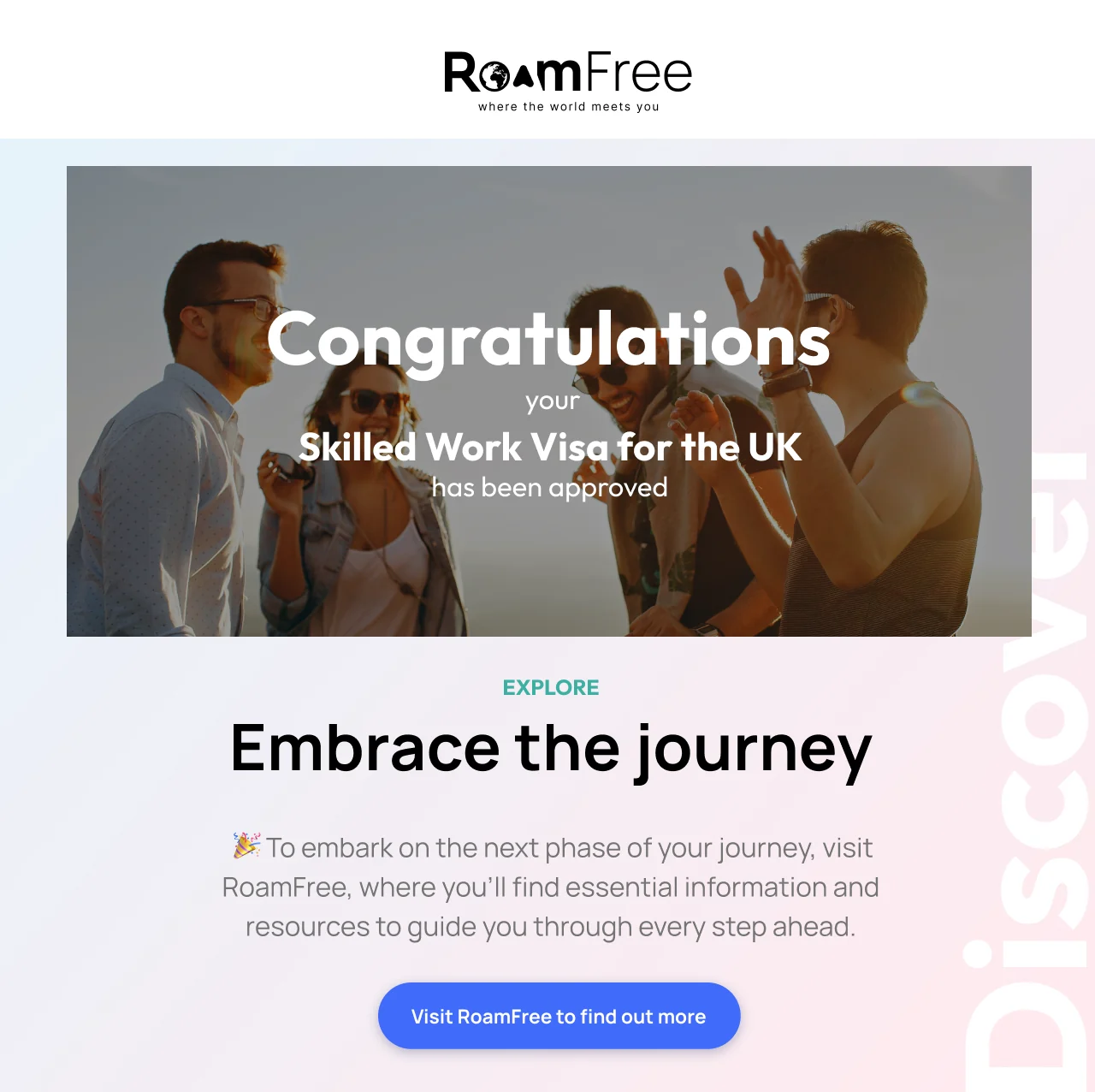
The move begins with the employer. The employee’s guided interview opens with the company, the application number and the passport number already filled in and checked, then asks only for the facts the rules still need, and says why each question is asked.

Kyle, the company, the documents and the dates shown are an example. Visa and tax requirements shown are not advice.

The rules it reasons over

Immigration, posting,
social security and tax.

A move across a border engages several bodies of law at once, from a short business trip to a four-year assignment. These are the rules Global Mobility Management brings into one journey.

The moments in a moveFrom planning to the obligations while away
01 · Before the move

Plan

Where the person can go and on which visa, the employer’s sponsorship, and the posted worker and social security position for the trip.

02 · The application

Prepare and submit

Documents uploaded and verified, the embassy or consulate appointment, biometric and health check scheduling, and submission.

03 · The decision

Decide

Each condition decided from the facts and traced to its source, with the outcome and its reasons kept in the case.

04 · On arrival

Arrive

The biometric residence permit collected within the days allowed after arrival, and contact details kept current.

05 · While away

Stay compliant

The salary threshold, travel reported to HR, days spent in the host country, tax at home and abroad, expiry dates, extensions and sponsorships.

Immigration and entry

Who may enter, and to do what

Leave to enter, the visitor rules and the activities a business visitor may undertake, the visa national list, the electronic travel authorisation with its transitional provisions, and payments from a source in the host country.

Work visas and sponsorship

Skilled work and remote work

A job offer from a sponsoring employer, a role on the list of skilled occupations, a certificate of sponsorship, English language, the salary threshold, and health and character checks. Digital nomad visas across a shortlist of countries, with minimum-stay logic for the Schengen area.

Posted workers

Notifications and equal pay

Whether a posted worker notification is required, from the industry sector, the employer’s and host countries, the activities and the days; equal pay for posted workers; and intra-corporate transfer notifications and permits within the EU.

Social security

Which system the employee stays in

Whether a totalisation agreement covers the secondment, whether the assignment is within its limits, and the A1 or certificate of coverage that keeps the employee in the home system.

Tax

Residency and obligations across countries

Stays that risk unintended tax residency, cross-border tax obligations and tax equalisation, with tax mobility tasks and the individual tax return and tax file number collected in the journey.

Conditions after the visa

Staying within the grant

Job role, salary and location conditions, limits on length of stay, the 90 days in 180 test for business travel, extensions and sponsorships, biometric capture and reporting travel to HR.

Posted workers and transfers

One posting,
four determinations.

When an employee is sent to another European country to install equipment for a client, the same facts decide whether a business visa is needed, whether a posted worker declaration must be filed, which social security system applies and whether an intra-corporate transfer notification is required. One interview covers all four.

01

Trip and traveller

Trip start and end dates, the destination, the country where the employer is based, nationality and industry sector.

02

Business visa

The outcome for each citizenship and each activity on the trip.

03

Posted worker notification

Whether the host country requires one for this sector, these activities and this number of days.

04

Social security

Whether a totalisation agreement covers the secondment, its duration limits, and the A1 or certificate of coverage.

05

Intra-corporate transfer

The EU notification where the host country requires it, or the permit the employee already holds.

a business visa is required for the trip

Value:Not requiredBusiness visa outcome · for each citizenship and activity

the traveller holds the citizenship of an EU member stateSatisfied

Value:trueInput
the destination is another EU member stateSatisfied

Value:trueInput
a posted worker declaration must be filed in the host country

Value:RequiredPosted worker outcome

the activity is a provision of services in the host countrySatisfied

Value:trueInterpretation

the employer is established in another member stateSatisfied

Value:trueInput
the host country requires a prior declaration of posted workersSatisfied

Value:trueInterpretation

the worker stays insured in the home country, with an A1 portable document

Value:RequiredSocial security outcome

the home and host countries are both covered by the EU social security coordination rulesSatisfied

Value:trueInterpretation

the posting is expected to last no more than 24 monthsSatisfied

Value:trueInterpretation

the worker is not replacing another posted workerSatisfied

Value:trueInput
an EU intra-corporate transfer notification is required

Value:Not requiredEU ICT assessment

the traveller is a third-country nationalNot satisfied

Value:falseInterpretation

The same facts decide all four, and each outcome names the facts behind it.Legal Reasoning Platform · example posting
The Legal Reasoning Platform’s decision report for one posting, on an example: four determinations from the same facts, two of them filings.
For people on the move

Where can I go,
and what will it take?

For individuals, Global Mobility Management starts with exploring: where they can live and work, what each country requires and how to apply. Our consumer film tells it in five moments; the product screens below show each one.

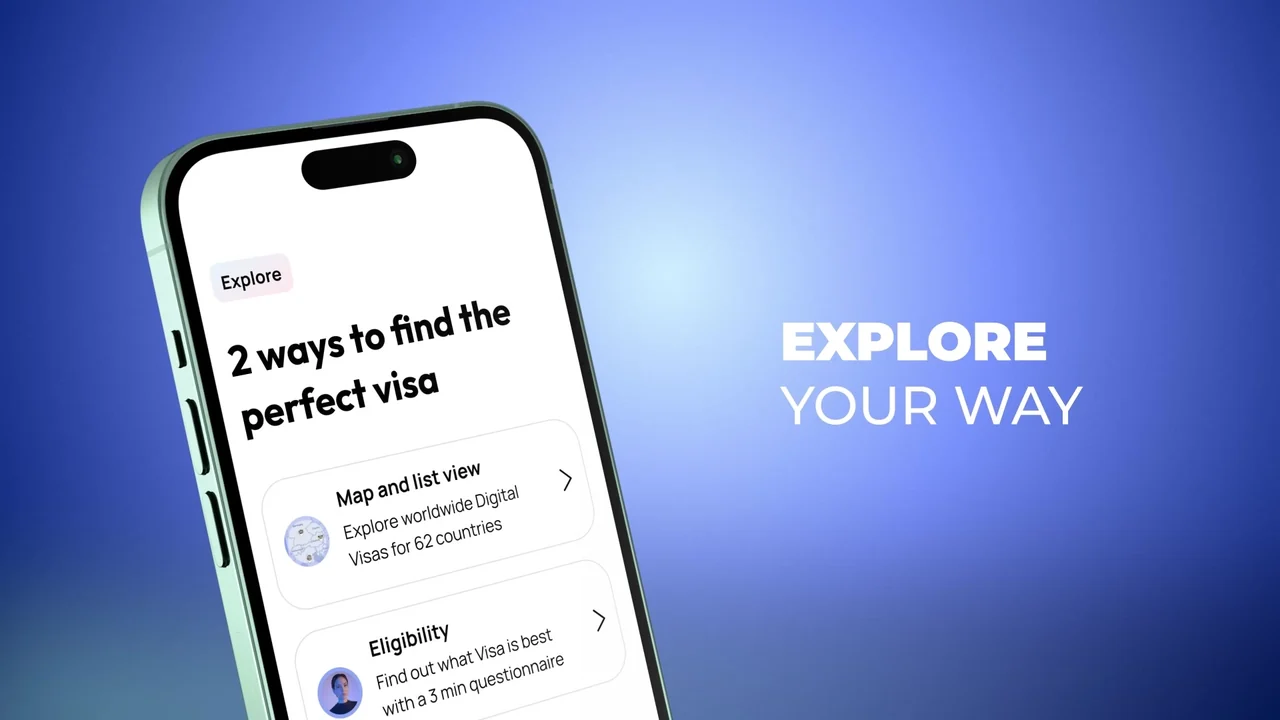
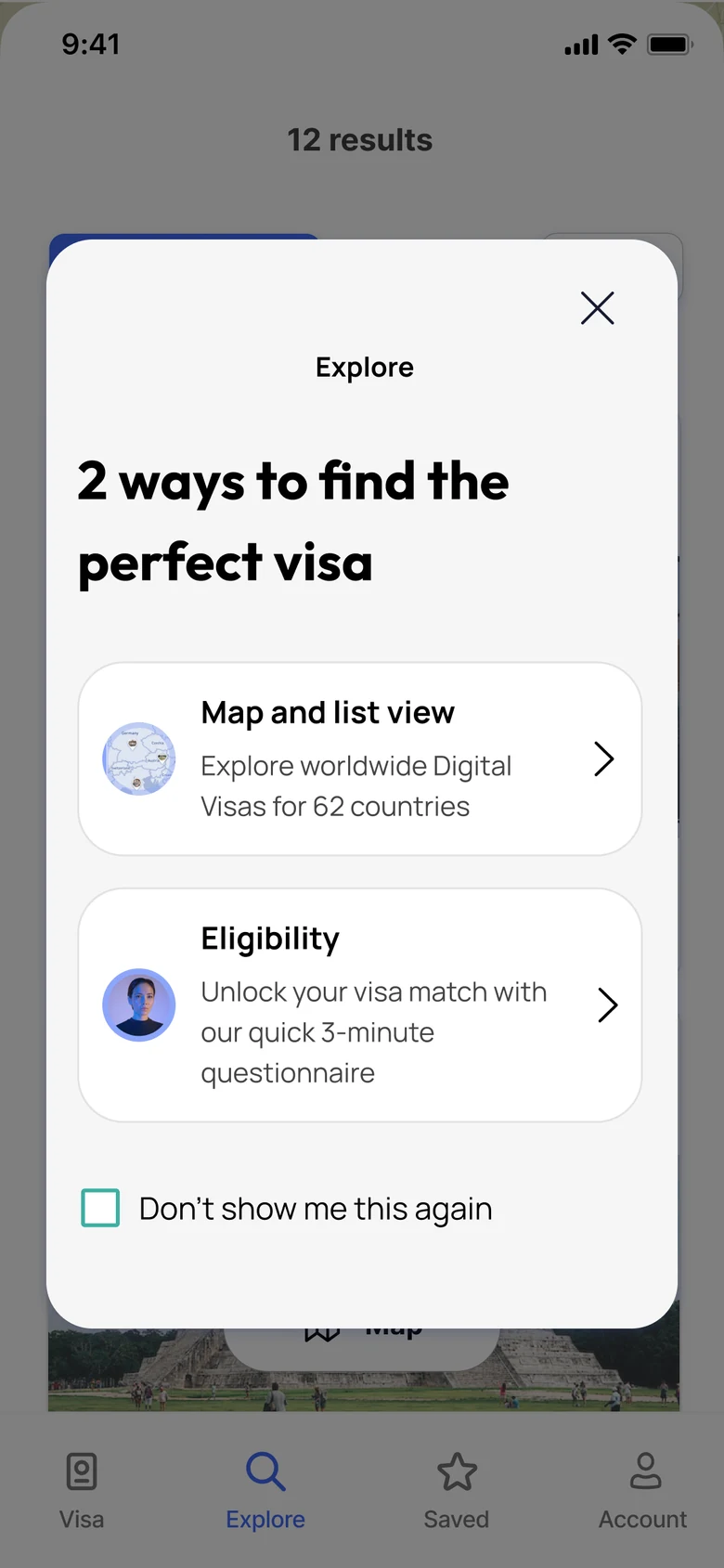
  1. Film still: the explore screen, two ways to find the perfect visa, captioned Explore your way
    01Explore your wayTwo ways to find the perfect visa: a map and list of digital visas, or a short eligibility questionnaire.
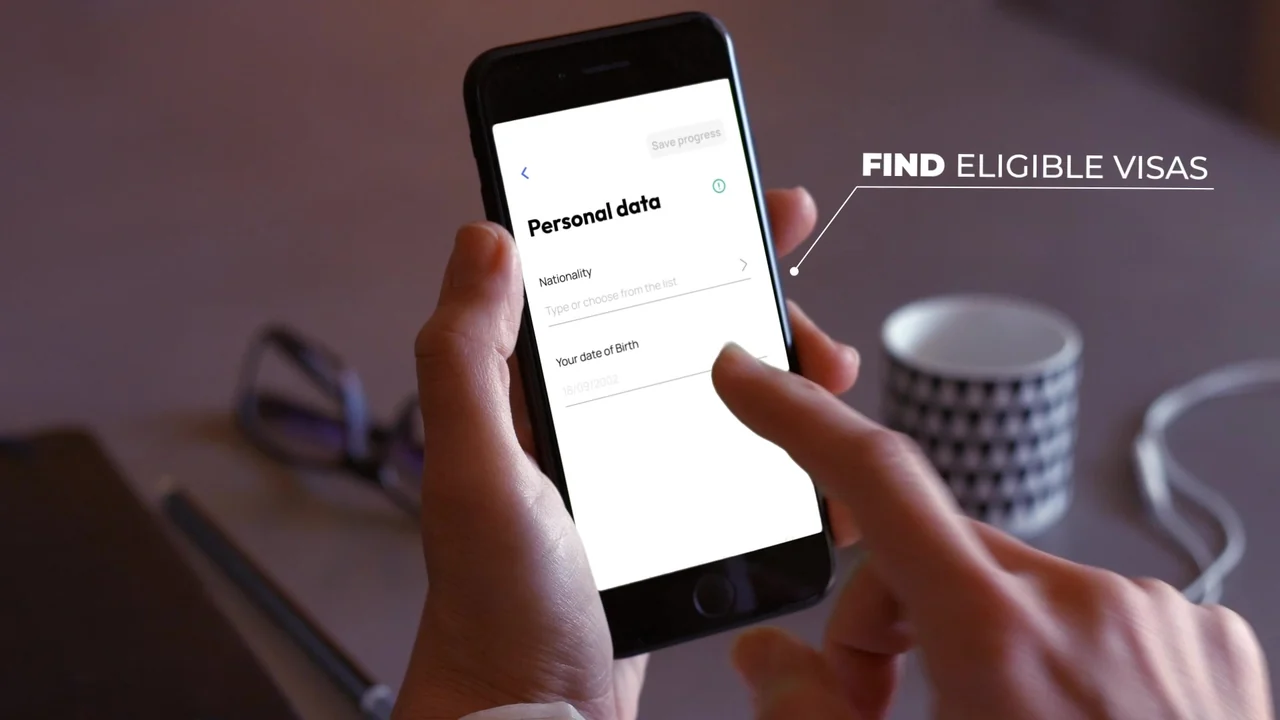
  2. Film still: a phone showing the personal data questions, captioned Find eligible visas
    02Find eligible visasThe questionnaire starts with personal data, such as nationality and date of birth.
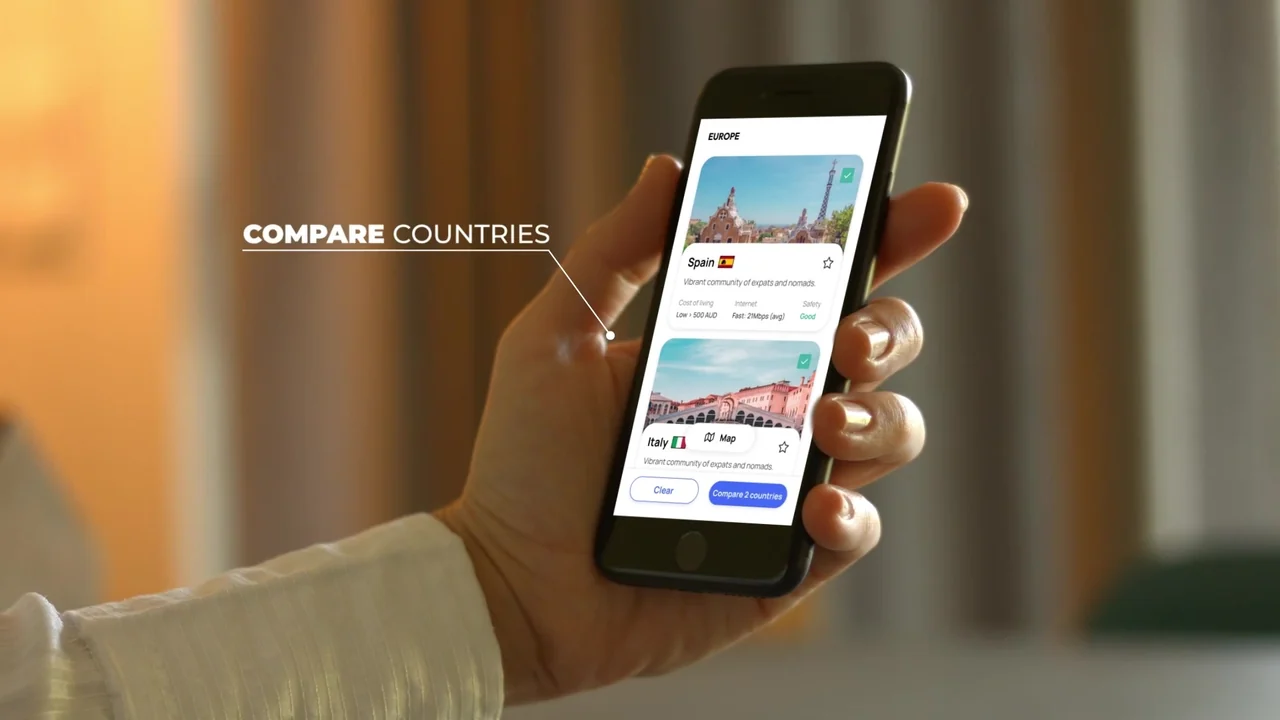
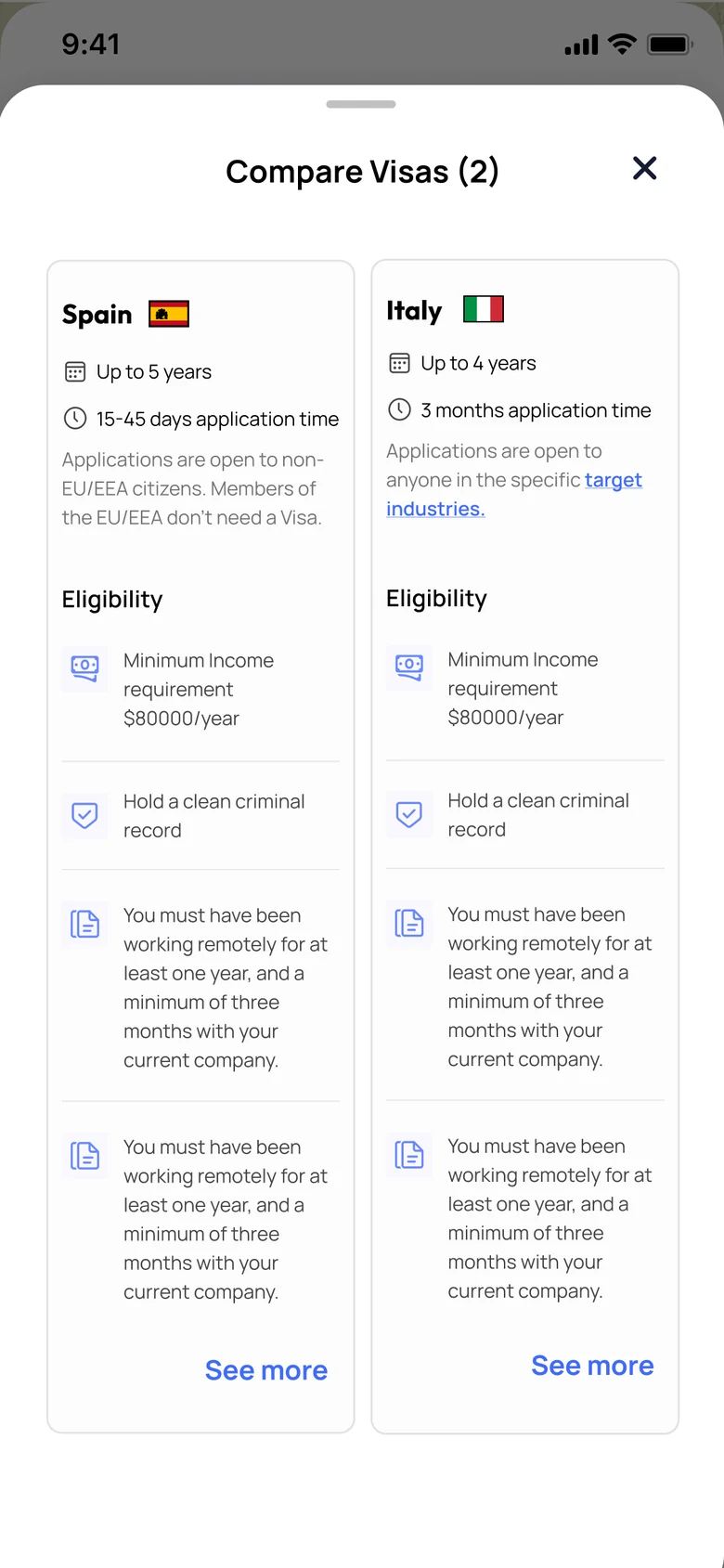
  3. Film still: Spain and Italy selected to compare, captioned Compare countries
    03Compare countriesTwo destinations selected, Spain and Italy, ready to compare.
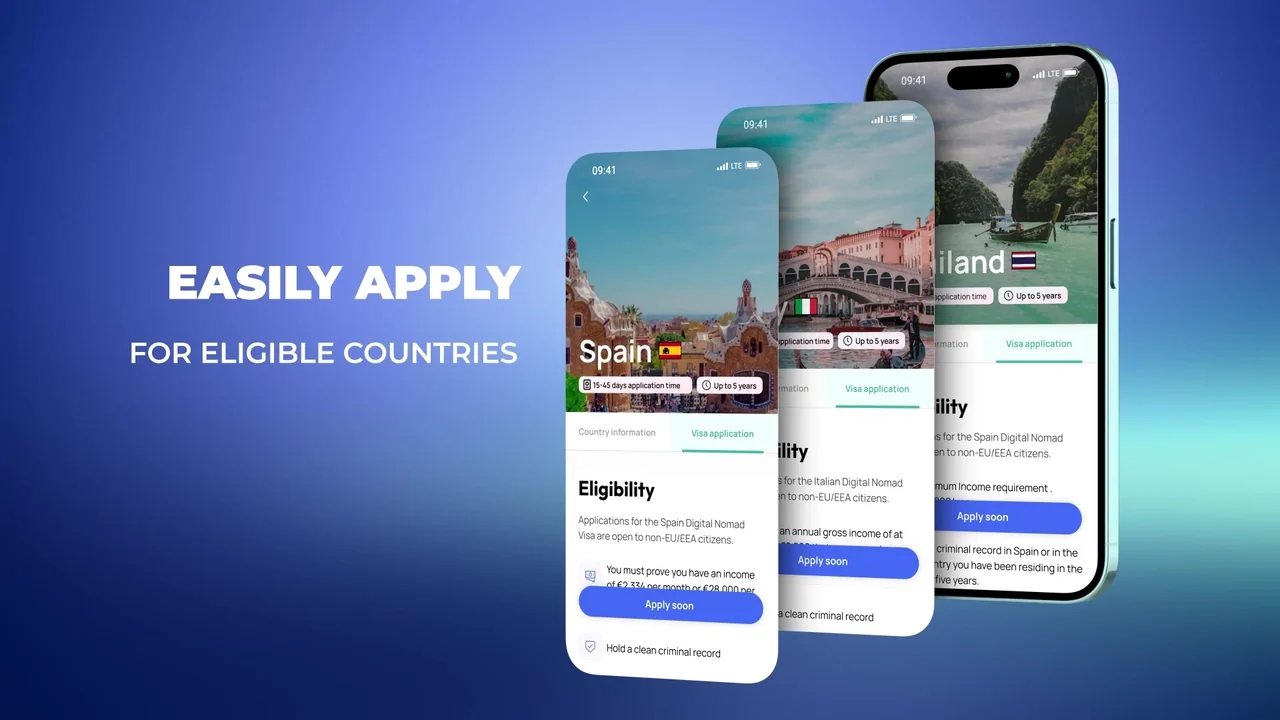
  4. Film still: visa pages for Spain, Italy and Thailand with eligibility and apply, captioned Easily apply for eligible countries
    04Apply where you are eligibleEach visa sets out its eligibility before the person applies.
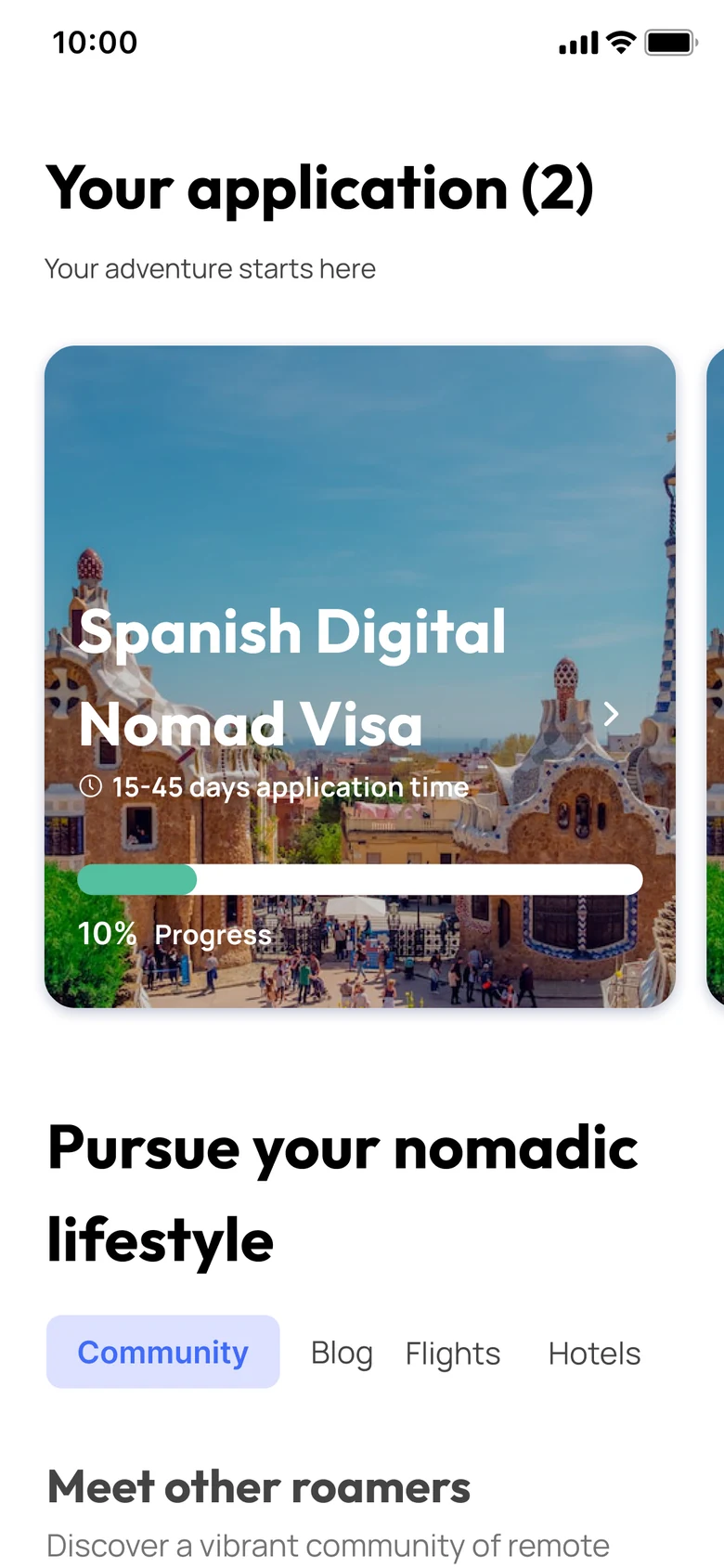
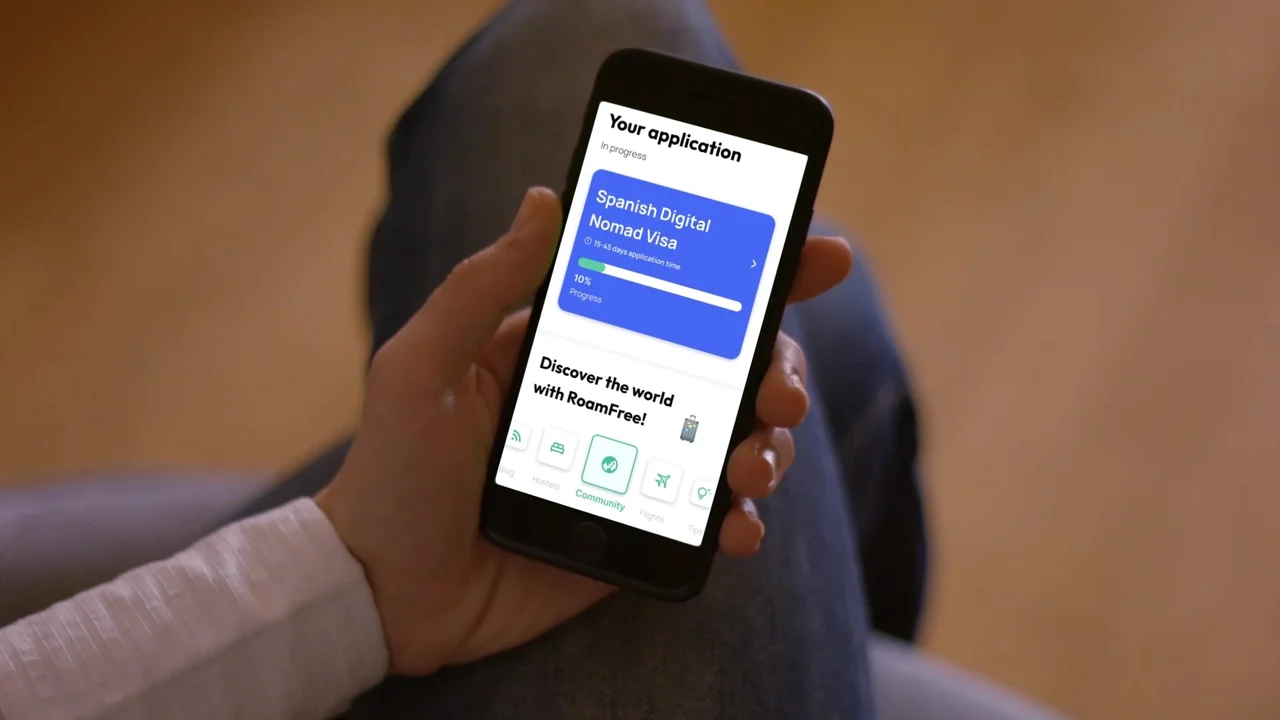
  5. Film still: a phone showing your application, a Spanish digital nomad visa in progress
    05Your applicationThe application in progress, followed step by step on the phone.

Stills from our film for people on the move.

On mobile · check eligibilityFrom welcome to a shortlist of countries
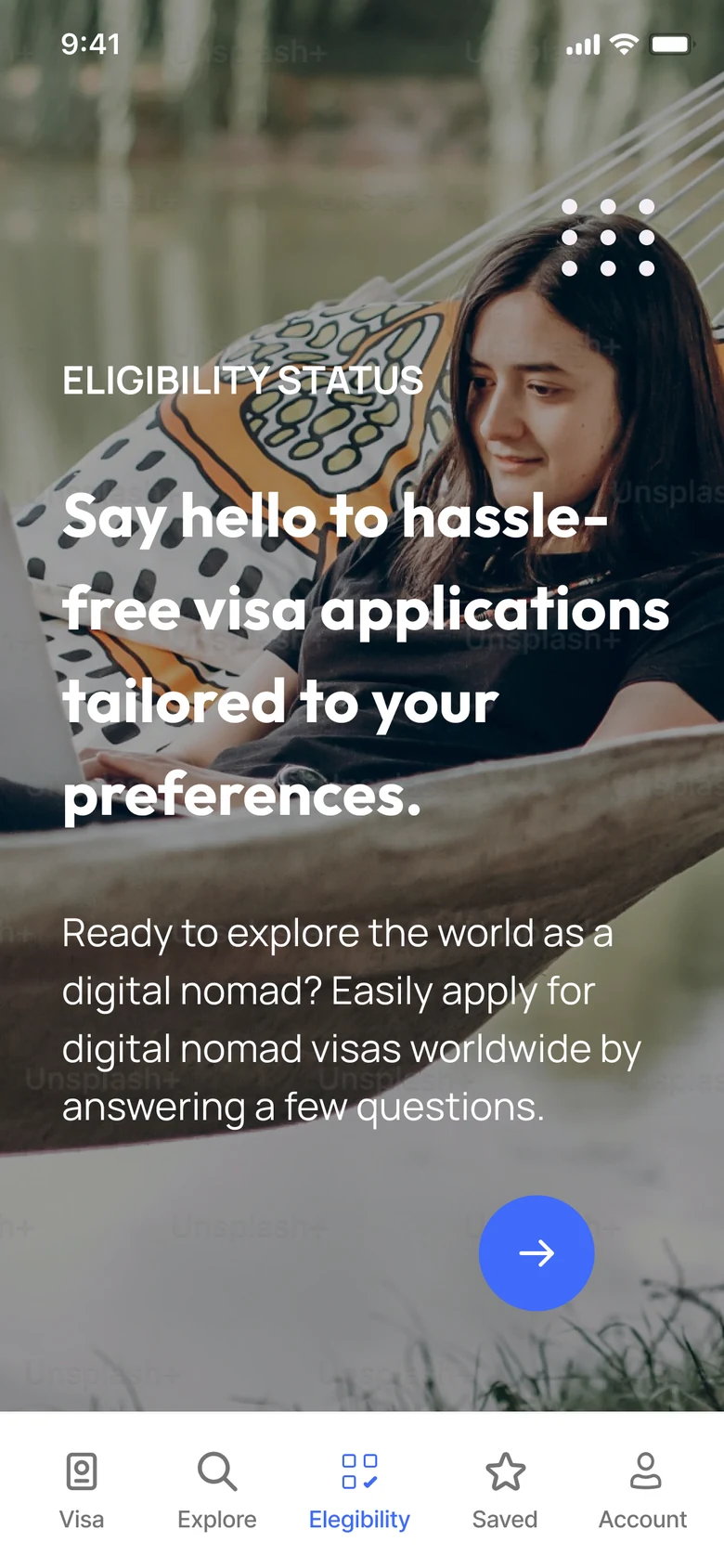
Welcome: Visa applications tailored to the traveller’s preferences.
01WelcomeVisa applications tailored to the traveller’s preferences.
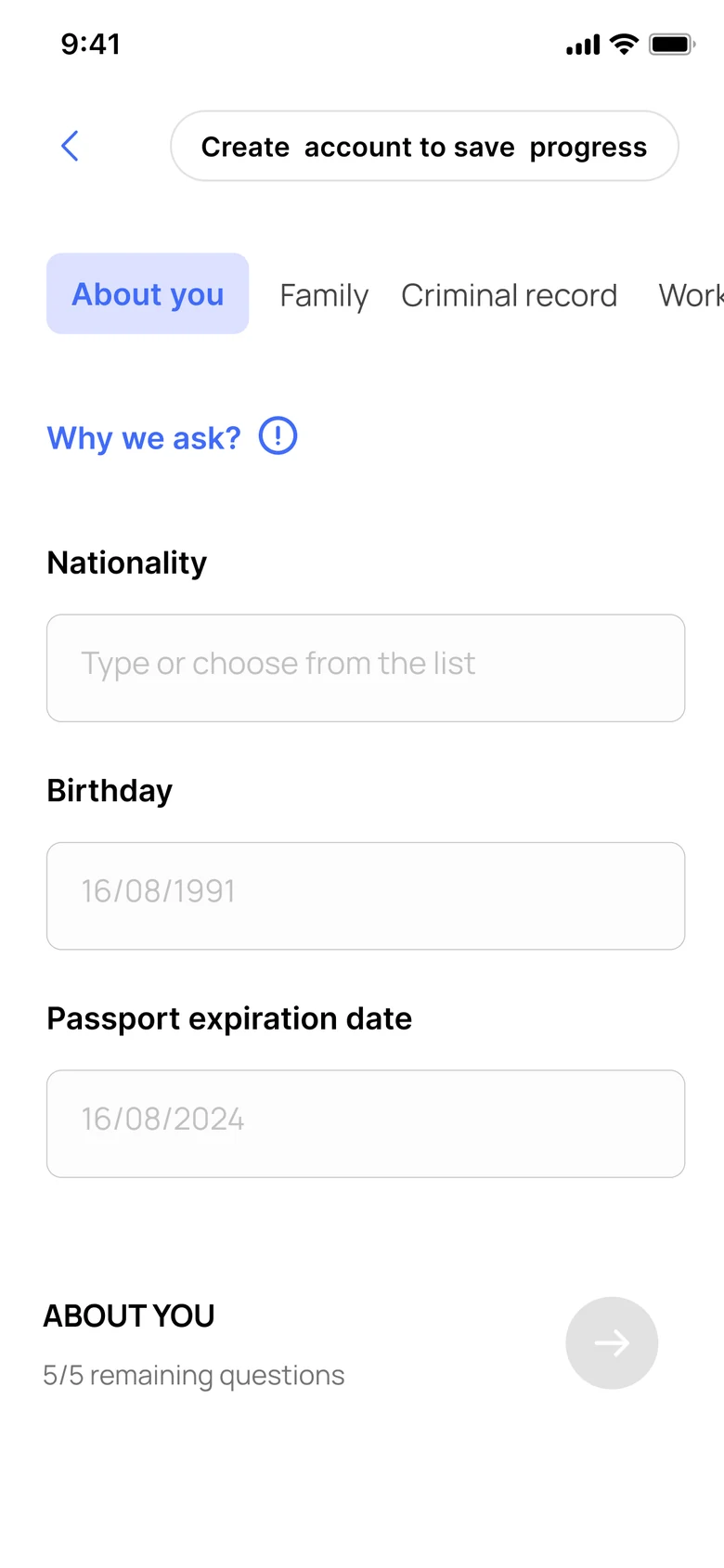
About you: Nationality, birthday and passport expiry, with why each is asked.
02About youNationality, birthday and passport expiry, with why each is asked.
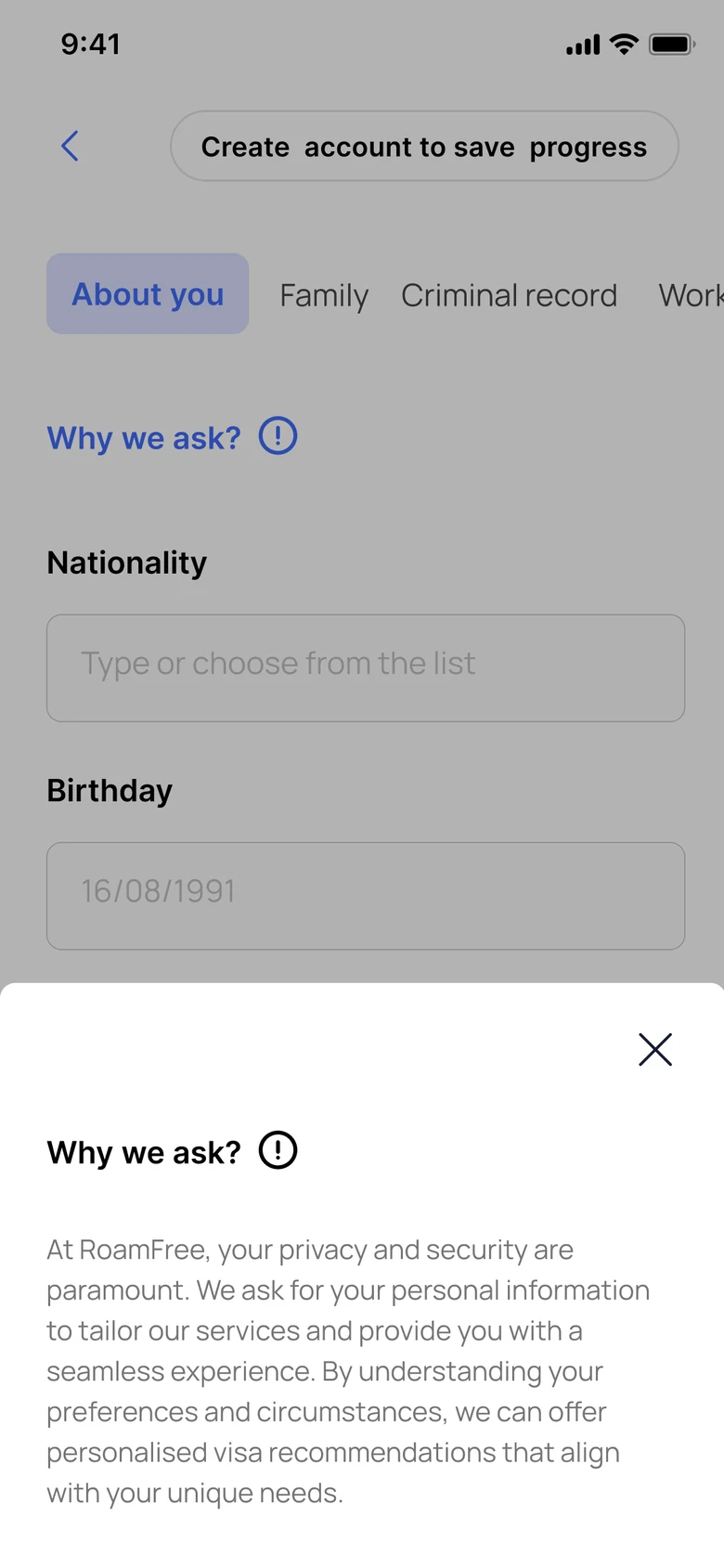
Why we ask: The privacy reason behind every question.
03Why we askThe privacy reason behind every question.
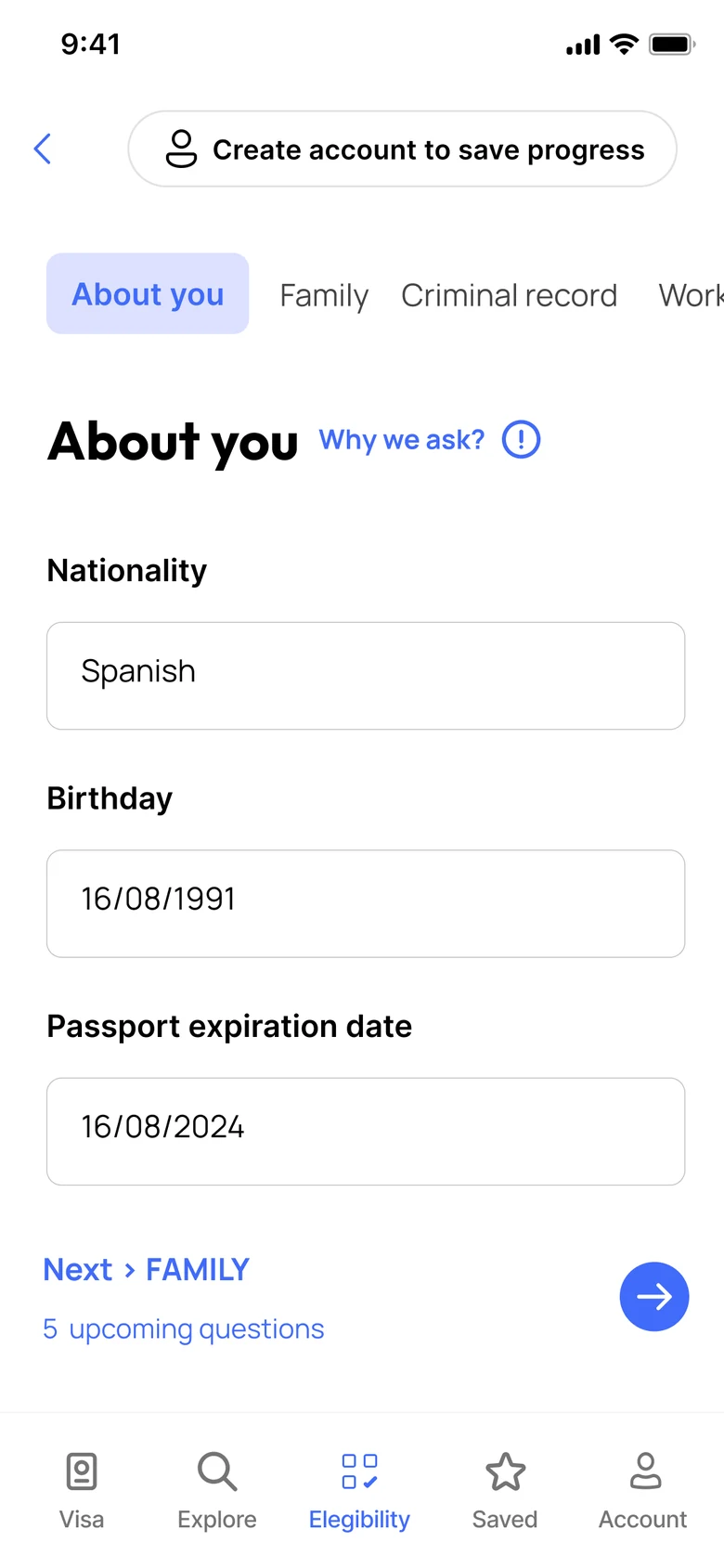
About you, completed: Nationality, birthday and passport expiry entered, with five questions to come.
04About you, completedNationality, birthday and passport expiry entered, with five questions to come.
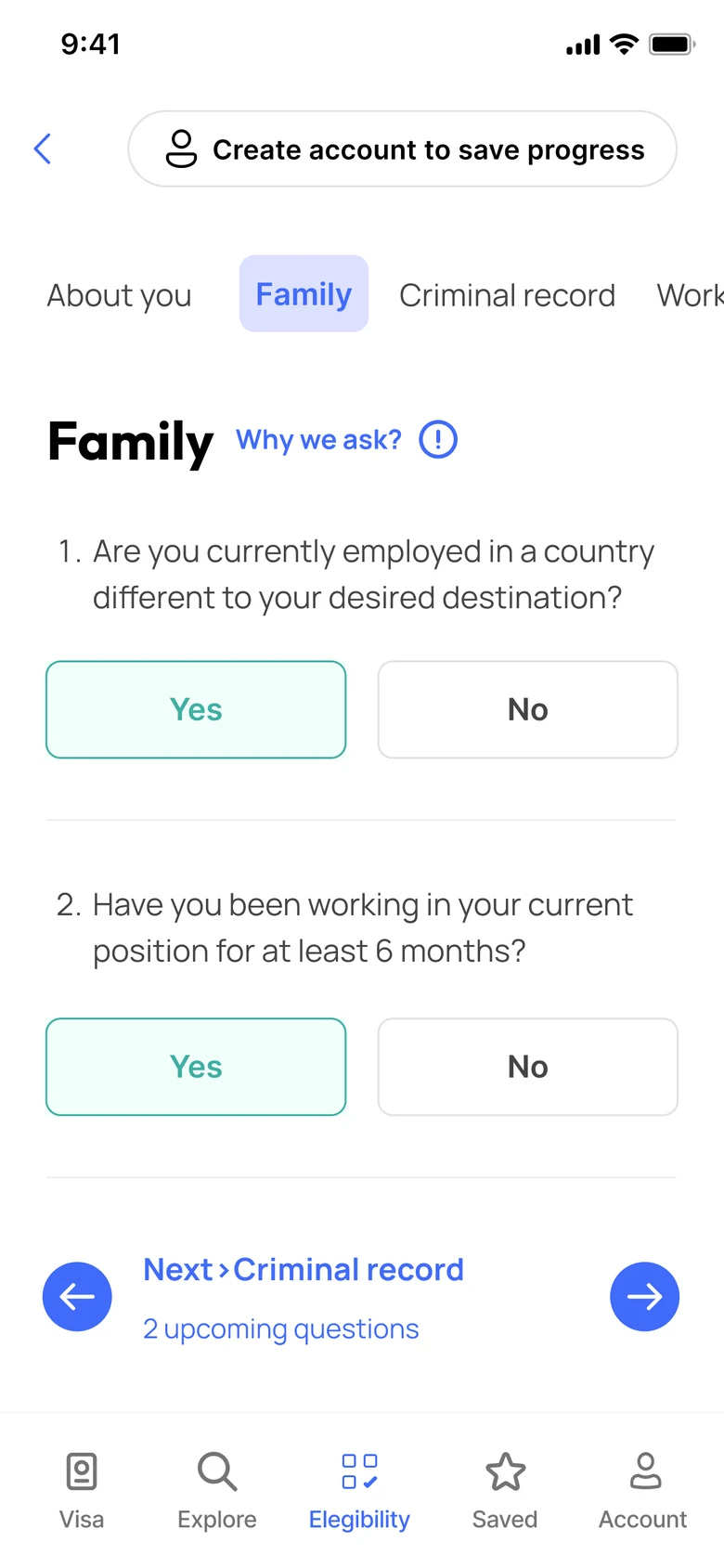
Family and work: Employment abroad and time in the current role.
05Family and workEmployment abroad and time in the current role.
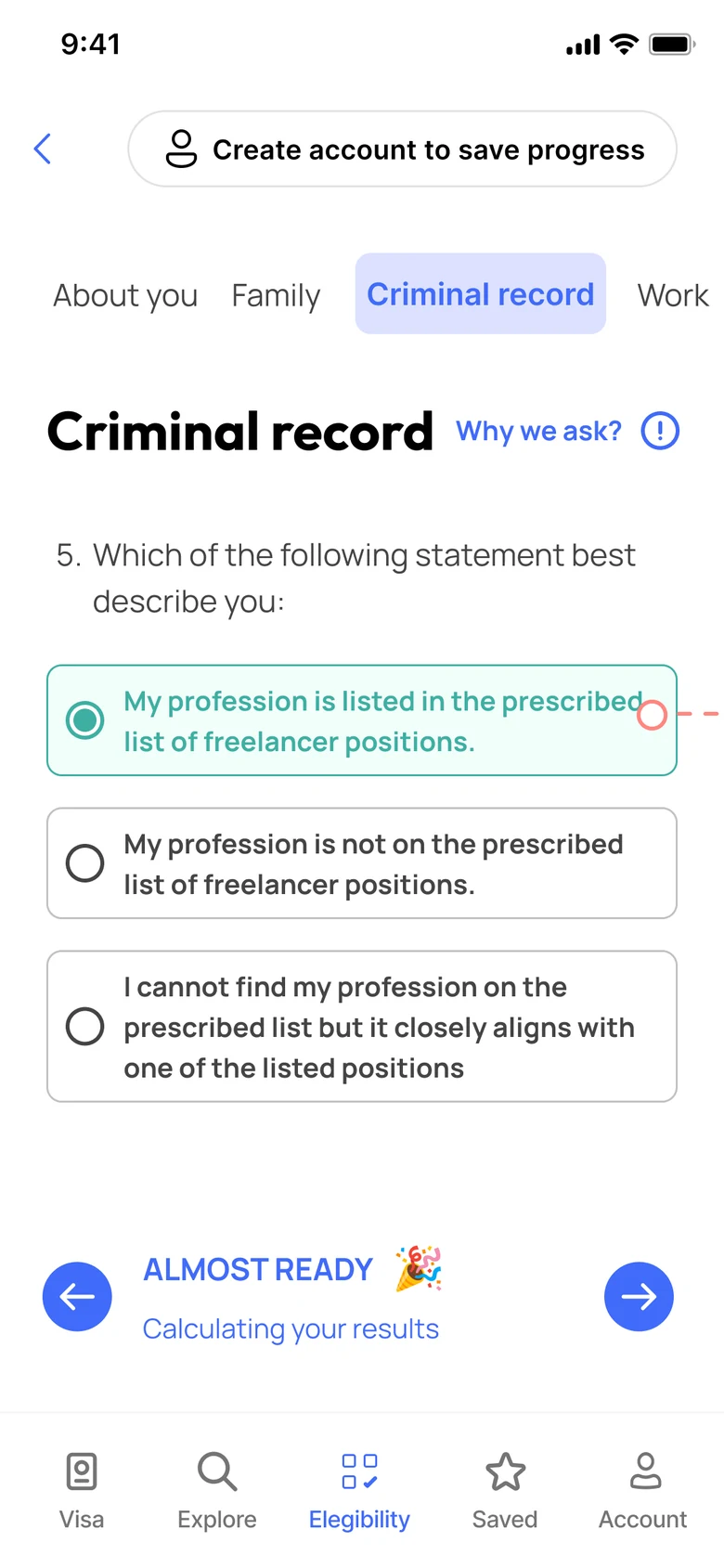
Criminal record, then almost ready: The statement that best describes the person’s profession, then the results are calculated.
06Criminal record, then almost readyThe statement that best describes the person’s profession, then the results are calculated.
The result: The countries the person is eligible for.
07The resultThe countries the person is eligible for.
On mobile · explore and compareMap and list, destination cards and a side-by-side comparison
Two ways in: A map and list, or the eligibility questionnaire.
01Two ways inA map and list, or the eligibility questionnaire.
Explore the map: Destinations with the eligibility test and filters.
02Explore the mapDestinations with the eligibility test and filters.
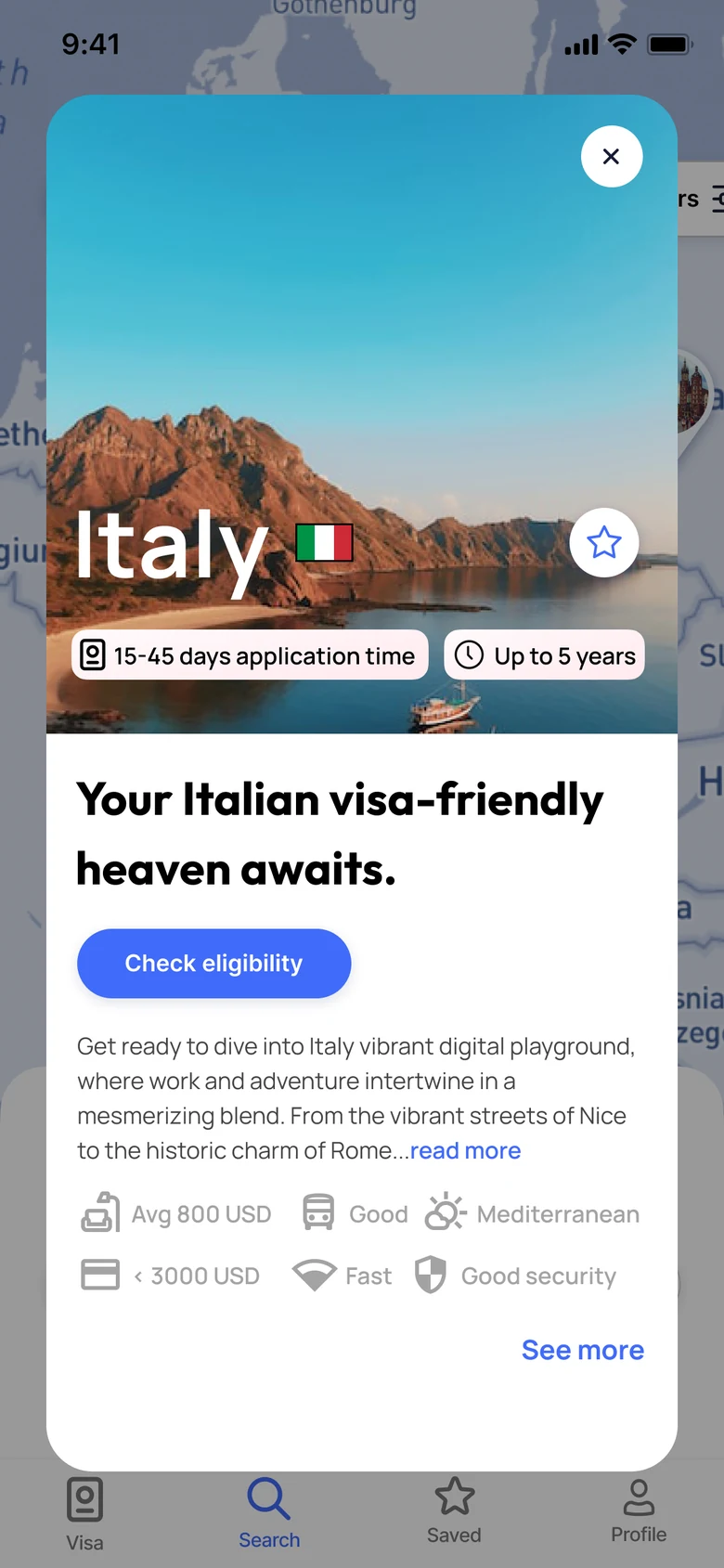
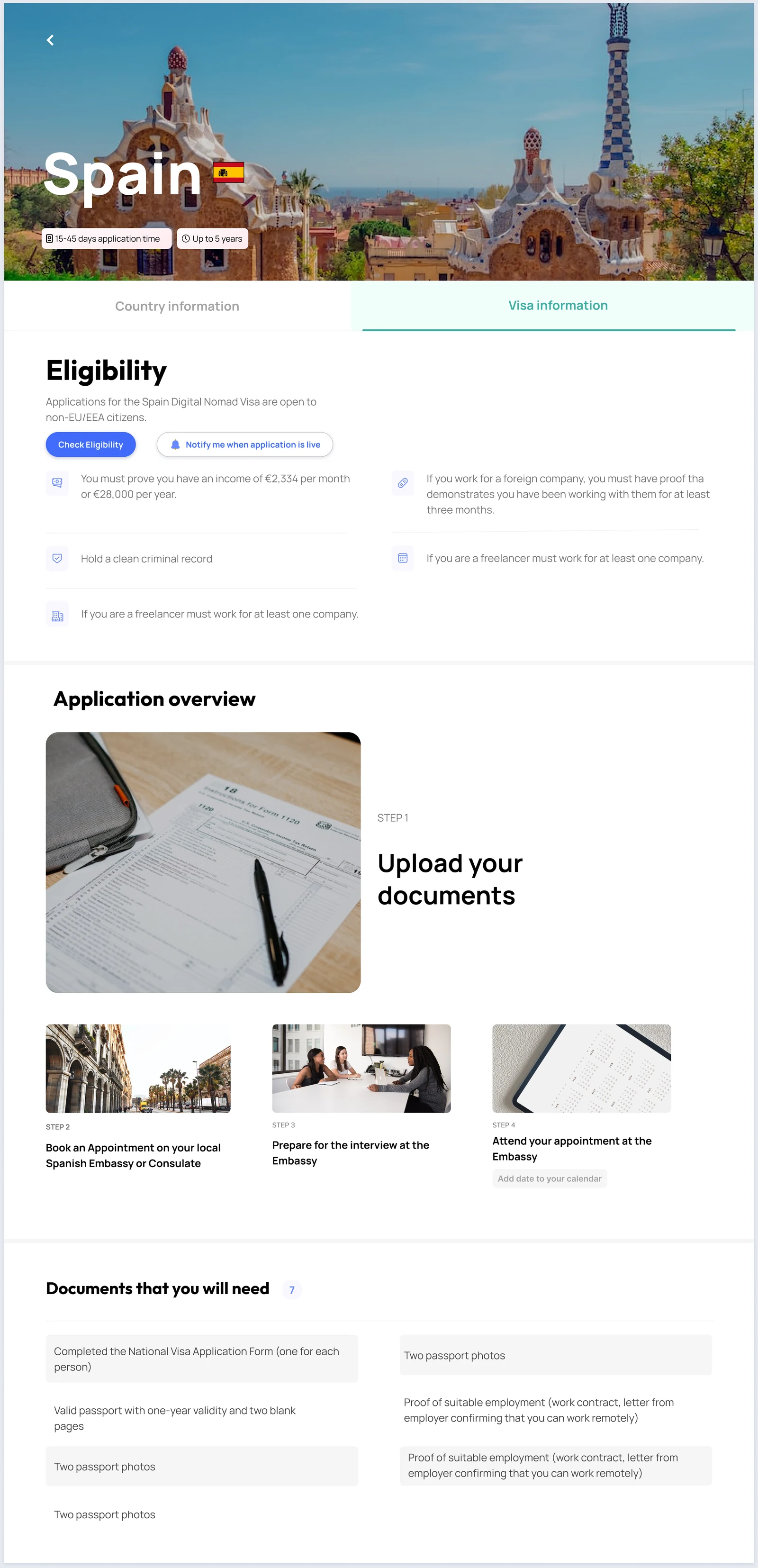
A destination: Application time, visa length and cost of living.
03A destinationApplication time, visa length and cost of living.
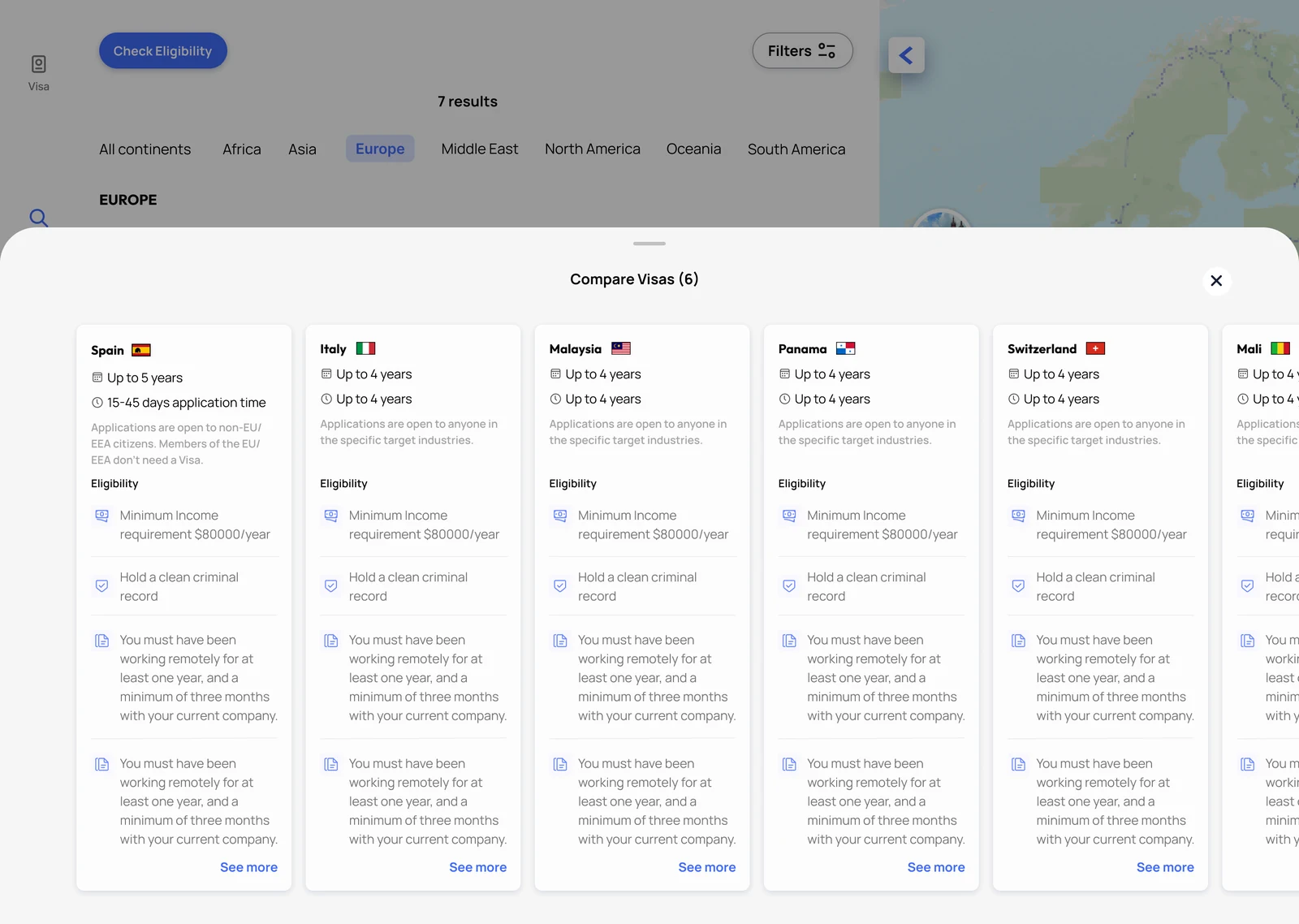
Compare visas: Length, application time and eligibility side by side.
04Compare visasLength, application time and eligibility side by side.
Eligible countries: Every destination the person may apply to, by region.
05Eligible countriesEvery destination the person may apply to, by region.
On mobile · applyThe application, its steps, documents and appointment
Your application: Progress and the application time.
01Your applicationProgress and the application time.
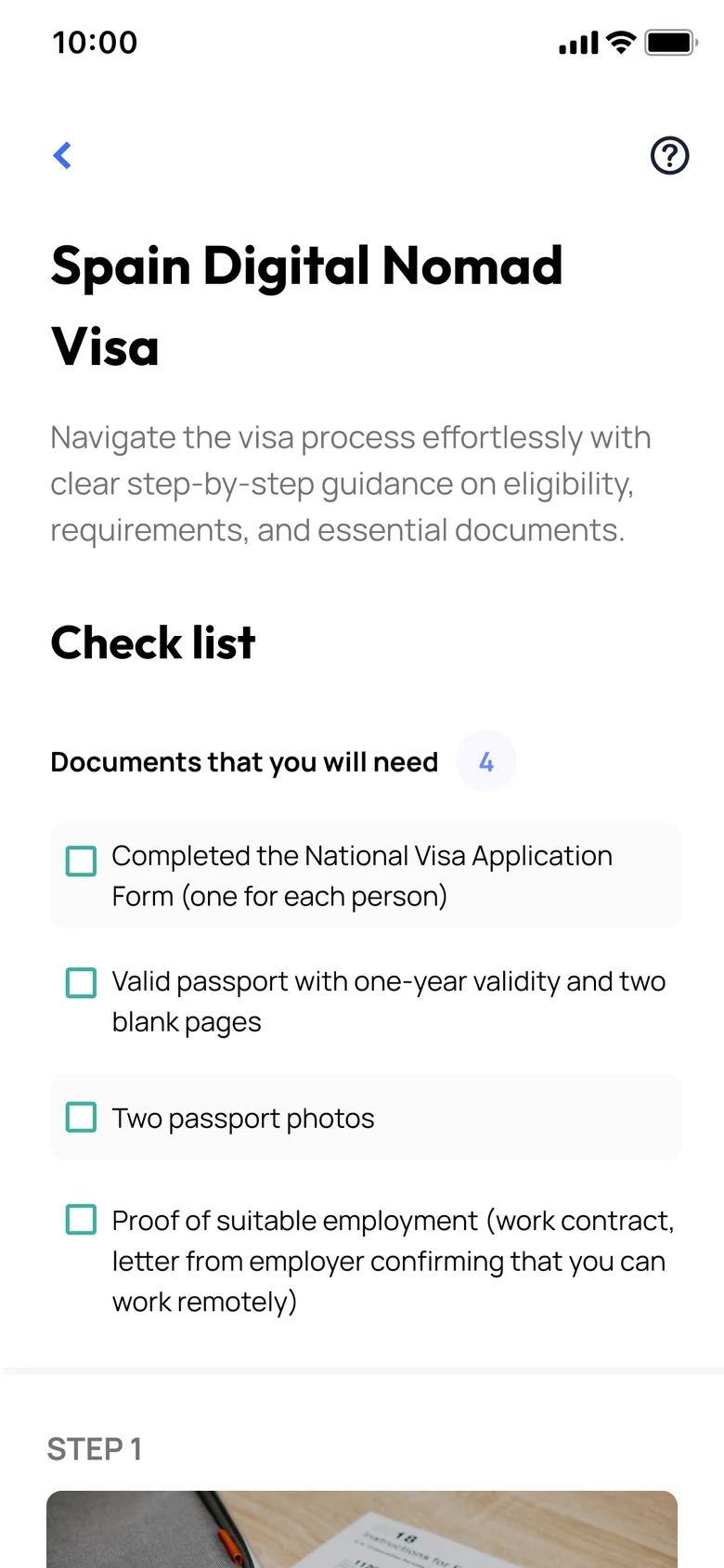
The steps: The documents checklist, then steps 1 to 4.
02The stepsThe documents checklist, then steps 1 to 4.
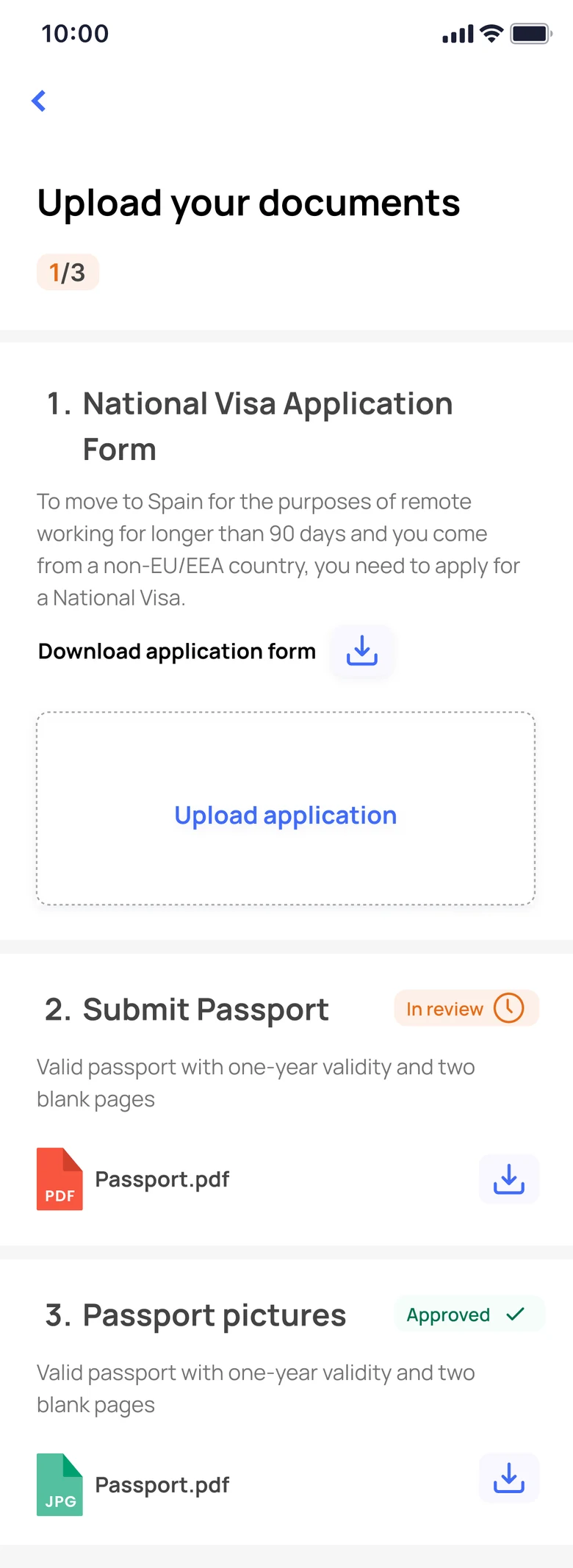
Upload documents: One in review, one approved.
03Upload documentsOne in review, one approved.
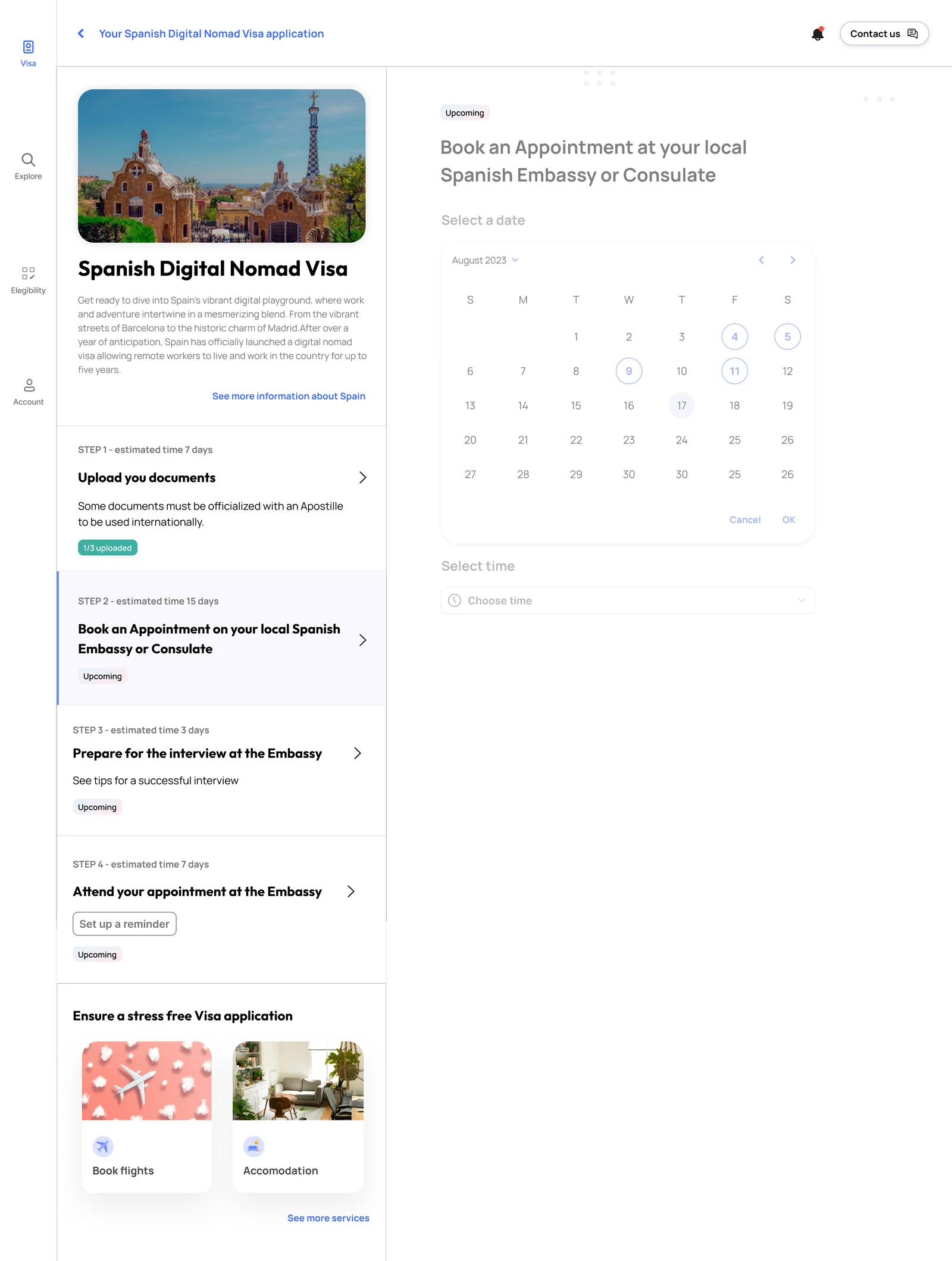
Appointment booked: The embassy appointment, in the calendar.
04Appointment bookedThe embassy appointment, in the calendar.

Answers and country content are examples, not immigration advice.

Global Mobility Management · for people on the move01 / 05
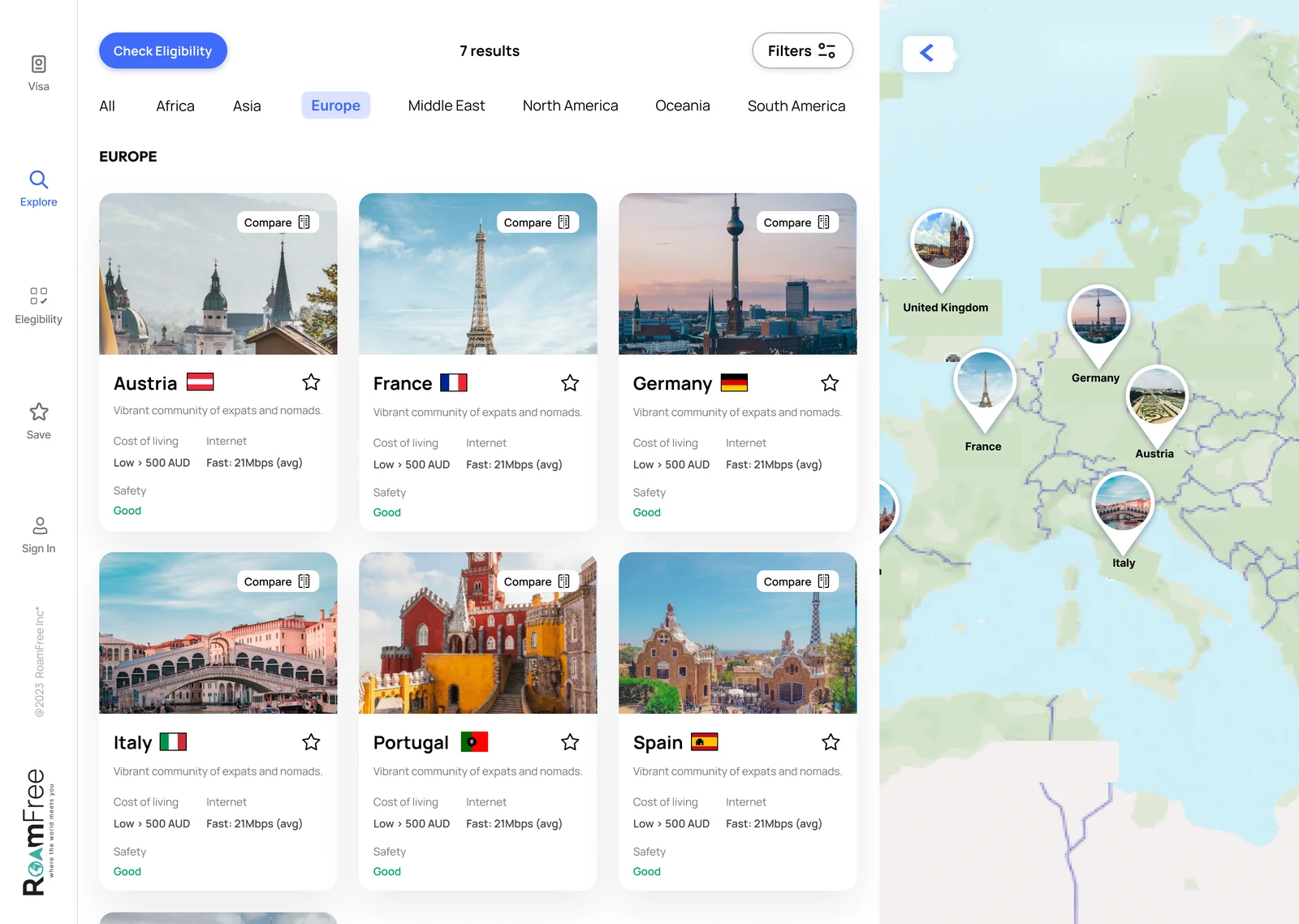
Global Mobility Management · for people on the move · Explore
Explore by region, Europe: destination cards for Austria, France, Germany, Italy, Portugal and Spain beside the map, with compare and save

Start with where life could take you.

Destinations by region on a map and a list, with the practical facts people weigh first, and the option to compare or save.

Regions · destinations · compare

Answers and country content are examples, not immigration advice.

For governments, regions and professional bodies

Bring in the skills.
Keep the people.

Beyond one employer and one move, the same reasoning serves a whole cohort: a profession a country is short of, or a region that needs skills its own labour market cannot supply. The person follows one pathway instead of many agencies; the government or professional body receives applications that already meet the rules.

A pathway for a skilled profession

Overseas-qualified medical professionals, from first search to practice.

Today they work through many websites, agencies and bodies to find out whether they fit, with no single guide that keeps pace with the legal requirements and little support once they are registered. One pathway changes that.

  1. 01Research

    Find fit and eligibility in one place: the visas and registration pathways that apply, compared side by side, instead of agency by agency and website by website.

  2. 02Guide

    One guide that follows the current legal requirements and changes when they do: what is required, which documents, and which agency does what, with an application personalised to the person.

  3. 03Nurture

    Still connected after registration to practise: visa renewals and accreditation requirements in view, so the person stays compliant, with support to settle in.

PersonalisedPathways and guidance tailored to the person and their circumstances.
ConnectedOne journey from registration through the migration application and assessment.
SupportedStill connected once registered to practise, with ongoing compliance kept in view.

For the profession and the health systemAssessment and entry to the workforce streamlined; support to find work in regional and remote areas; mobility across states and territories; visa and accreditation support coordinated.

A region that needs skills

Regional migration, local first.

A council or industry body presents its region to the world and attracts the people it needs to fill critical skill gaps, while the rules about who may be offered a role are applied the same way every time.

  1. 1
    Local first

    Local applicants are considered first; skilled migration opens where positions remain unfilled.

  2. 2
    Skills matched

    Roles are checked against the skilled occupation lists that apply, so essential roles come first.

  3. 3
    Visa allocation checked

    Only positions within the available visa allocations are offered to people from overseas.

  4. 4
    A ready pool

    Qualified people who already meet the skill and visa prerequisites, ready when a role opens.

  5. 5
    Matched and notified

    Employers are paired with suitable candidates, and both are told.

  6. 6
    Evidence kept

    Each local hiring attempt is recorded before a candidate from overseas is considered.

  7. 7
    Kept current

    Monitored as work and the law change, with feedback to the region.

  8. 8
    Settled in

    Community and support services that help people make the region their home.

For the regionEconomic diversification, employment creation, skill development, targeted attraction and social inclusion.

Two examples of what Global Mobility Management makes possible for a cohort.

Legal reasoning inside

The rules, written
beside the law.

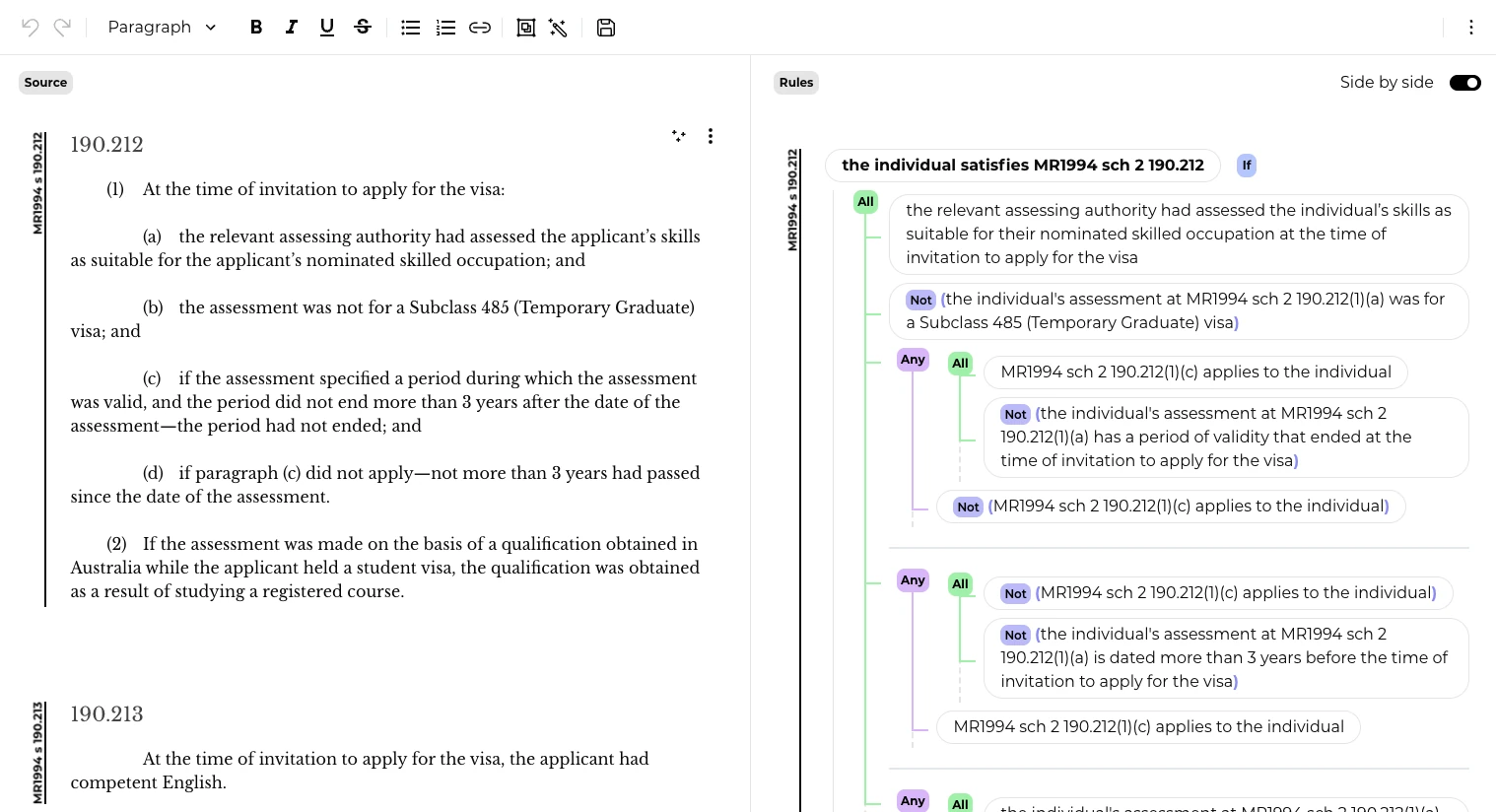
Every determination comes from rules written beside the law they interpret: here a skilled visa criterion of the Migration Regulations 1994. Our Work in the UK model does the same for the Immigration Rules, appendix by appendix. The guided interview then asks only for the facts those rules need.

Our engine’s Documents view, side by side: a skilled visa criterion of the Migration Regulations 1994 in the Source pane with its clause marker, and the rules written beside it with If, All, Any and Not groups
Rules beside the Migration Regulations. A skilled visa criterion of the Migration Regulations 1994, with the rules written beside it in our engine’s Documents view.
Where it applies
  • Work in the UKBusiness visitors, permitted activities, visa nationals and the electronic travel authorisation, with its transitional provisions.
  • Skilled workJob offer, sponsorship, skilled occupation, English language and salary conditions, with the skilled occupations list as data.
  • Australian visasVisa pathways including skilled migrant visas and pathways for international medical graduates.
  • Digital nomad visasExploratory search and prequalification across a shortlist of countries, with minimum-stay logic for the Schengen area.
  • Posted workers in EuropePosted worker notifications, social security and intra-corporate transfers.
  • An e-Visa schemeTourism, business on arrival or in advance, and employment categories for a new jurisdiction, with a decision report for every applicant.
Who it serves and what it connects to

One record for
everyone in the move.

A visa involves many parties, and one person can play several roles. Global Mobility Management keeps them in one customer record with a data model built for migration, connected to the systems that hold the facts.

Visaone record for everyone in the move
  • Companysponsors the visa; the traveller works for it
  • Travellerapplies for the visa
  • Partnerpartner of the traveller; may apply too
  • Assistantworks for the traveller; may apply on their behalf
  • Agentmanages the application
  • Governmentapproves the visa
One person can hold several roles: a traveller on one visa can be the sponsor on another.

HR and ERP systems

The employee’s details come from the employer’s systems, so the interview starts pre-filled. Travel plans and salary changes are reported back to the employer.

Government processes

Submission, biometric and health check scheduling and the government’s response are tracked as tasks in the case.

Documents and evidence

Passports, sponsorship letters, police checks and tax returns are uploaded once, verified and kept with the case.

Notifications

The employee and the mobility team are told when a document is verified or missing and when an obligation falls due.

Decision API

Other systems request determinations through the engine’s Decision API.

Corporate

Employers and mobility teams

Organisations moving people across borders, with sponsorship, posted worker, social security, tax and post-visa obligations to manage.

Corporate

Employees and business travellers

People on assignment or travelling for work, who need to know what each trip requires and what to do while away.

Consumer

Remote workers

People working remotely who want a clear view of where they can live and work, and what each country requires.

Advisers

Migration firms and advisers

Advisers who want consistent, source-linked assessments behind their advice, with the reasoning attached.

Government

Governments

Agencies that administer visa rules and want them applied the same way in every digital service.

Questions

The practical detail.

Which moves and countries does it cover?

Coverage is agreed for each implementation. It spans business visitors and skilled work in the UK, Australian visa pathways, digital nomad visas across a shortlist of countries, an e-Visa scheme, and posted worker, social security and intra-corporate transfer assessments within Europe.

Does it replace immigration or tax advice?

No. It applies the configured rules to the facts supplied and explains the result. Complex or unusual cases go to an authorised specialist with the reasoning attached.

How does it work with our HR and payroll systems?

The employee’s journey starts from the employer’s systems with known details filled in, and travel plans and salary changes are reported back. Integration with your HR, payroll and travel systems is scoped for each implementation.

Where does generative AI fit?

It assists the people working the case: it summarises a decision and reviews uploaded documents against the criteria. The determination comes from the rules and the facts supplied, and is the same every time.

Can people use it on their phones?

Yes. The person’s journey has mobile and desktop applications: exploring, the eligibility interview, the application steps, document uploads and appointments.

Services as Software · Global Mobility Management

Countries change their rules.
Every move keeps up.

We deploy the mobility journeys for your organisation and the people you move, with the rules for your destinations loaded: immigration and visa conditions, posted worker, social security and tax. When a country changes its rules, the change is made, tested and released as part of the service, and each move is assessed under the rules in force for its dates.

See it in your context

Bring a move
you need to get right.

Bring the countries, the people and the systems involved. We will show you the reasoning on your own example.